
Ingredients
The yam
- 1large ʻufi yam
- or several smaller ones
- about 5 kg
- scrubbed
- left whole or halved
The oven
- hot stones
- basalt or volcanic
- hardwood and coconut husks
- banana leaves, plenty
- sacking or more leaves
- earth, to cover
To serve
- coconut cream
- roast pork or fish
- at a feast
Or in an oven
- a very hot domestic oven
- foil, to wrap
- a baking tray
Directions
- Roast yam is yam baked in the earth. It steams and bakes for hours. Use dense volcanic stone such as basalt. Never use river stones at all. Use only dry stones that have been used before. Keep everyone well back from the fire. Do not stand over heating stones. Use long green sticks to move them. Never handle them by any other means.
- Let the first burst escape entirely. That is what most readers should use. Make it about one metre across. Make it about half a metre deep. Larger feasts need a larger pit. Keep it clear of tree roots above. Keep it away from anything flammable. Lay wood in the pit and light it.
- Pile all the stones on top of it. They heat right through over hours. Let the fire burn for two hours. The stones must heat right through. Rinse it thoroughly afterward. It also keeps all the ash out. Cut a very large yam into sections.
- Cut it into manageable pieces. Leave the hot stones in place. Work quickly as they lose heat. Lay banana leaves over the stones. The leaves stop food touching the stones. Lay them thickly across the stones. Lay all the yam on the leaves. Spread it out in a single layer. Leave gaps for the steam to move. Work fast to keep the heat in. Cover everything with more leaves.
- Pile the leaves thickly on top. The seal must be genuinely complete. Pile more earth on where it escapes. Leave it sealed for about three hours. A large yam needs genuinely long baking. Stand on the far side as you rake.
- Let the first burst escape entirely. Only then should you reach in at all. Work from the outer edges inward. Lift the leaves off carefully. Judging it takes a proper test. Wrap the scrubbed yam in foil. Bake it at two hundred degrees. Give a large piece about two hours. Peel the skin off the hot yam. Use a knife to lift up the edge. Handle it with a cloth as it is hot.
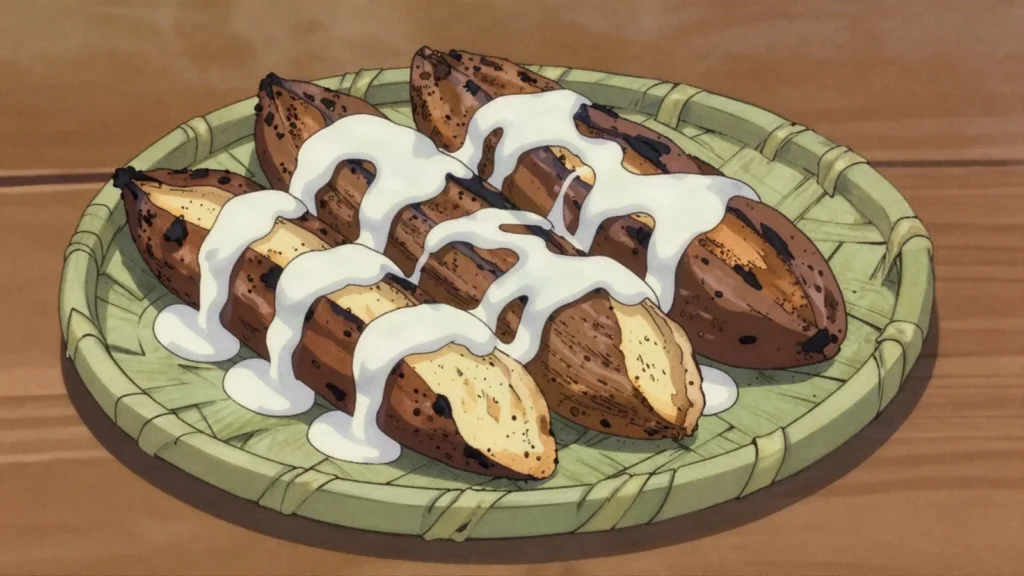
- Cut it into thick slices or chunks. Serving it up is done with coconut cream. Pour coconut cream over the yam. Serve roast pork or fish alongside. Leftovers keep three days refrigerated. Fry cold slices to reheat them.
Technique
- Earth-oven stones can explode: trapped water turns to steam inside them and shatters the stone violently, sending fragments at real speed. Use dense volcanic stone such as basalt and never river stones, which hold water inside them. Use only dry stones that have been fired before, keep everyone well back, and do not stand over heating stones — this risk is genuine rather than theoretical.
- Opening an umu releases scalding steam that causes serious burns: rake the earth off from the far side, let the first burst escape entirely and only then reach in. Move hot stones with long green sticks and never by any other means, and wear closed shoes throughout.
- Do not open the oven to check early, since that releases all the heat and it cannot be resealed hot — judge the time by the size of the yam instead and err on the side of longer. A very large yam should be cut into sections, since a whole one cooks unevenly with the outside overcooking before the centre.
Substitutions
- A domestic oven at two hundred degrees with the scrubbed yam wrapped in foil takes about two hours for a large piece — but it will not taste smoky, since the umu’s flavour comes from the leaves and stones and an oven cannot reproduce that. The atlas states that plainly.
- The ʻufi is a true yam rather than a sweet potato — the two are unrelated despite the names being confused in many places, and it is starchy rather than sweet, closer to a potato. Some wild yam species are genuinely toxic, so buy from an ordinary food seller and never dig up unknown wild tubers.
Variations
- Lay banana leaves thickly over the hot stones before any food goes on, since direct contact burns it black, then cover with more leaves, sacking and heaped earth. The seal must be genuinely complete — watch for escaping steam and pile more earth wherever it leaks.
- The ʻufi is a genuine status crop rather than simply a staple: it is presented to the monarch at the ʻinasi first-fruits ceremony, grown deliberately to enormous size in competition, and distributed by rank at feasts. That is a real social institution, not a symbolic gesture. The atlas also carries Pohnpei yam and puaka tunu, which follow the same Pacific pattern of presentation and rank.
- Leave the skin on for baking, since it protects the flesh and keeps ash out, and peel it after cooking when it comes away easily — lift an edge with a knife and pull it off in strips, holding the hot yam in a cloth.
History
ʻUfi yams are the prestige crop, presented to the monarch at the ʻinasi first-fruits ceremony and grown to enormous size for competition.
Frequently asked questions
What is Roast Yam?
Roast Yam is a salad & side from Tonga: earth-baked yam, the prestigious staple of Tongan feasts. ʻUfi yams are the prestige crop, presented to the monarch at the ʻinasi first-fruits ceremony and grown to enormous size for competition.
How long does Roast Yam take to make?
Roast Yam takes 1 hour of preparation and 3 hours of cooking. The recipe makes serves many. It is rated hard to make.
What can I substitute in Roast Yam?
Yes, within limits. A domestic oven at two hundred degrees with the scrubbed yam wrapped in foil takes about two hours for a large piece — but it will not taste smoky, since the umu’s flavour comes from the leaves and stones and an oven cannot reproduce that. The atlas states that plainly. The ʻufi is a true yam rather than a sweet potato — the two are unrelated despite the names being confused in many places, and it is starchy rather than sweet, closer to a potato. Some wild yam species are genuinely toxic, so buy from an ordinary food seller and never dig up unknown wild tubers.
What is the most important thing to get right in Roast Yam?
Roast yam is yam baked in the earth. It steams and bakes for hours. Use dense volcanic stone such as basalt. Never use river stones at all. Use only dry stones that have been used before. Keep everyone well back from the fire. Do not stand over heating stones. Use long green sticks to move them. Never handle them by any other means.