
Ingredients
Dough
- 600 gplain flour
- 7 ginstant yeast
- 1 tspsugar
- 2 tspsalt
- 350 mlwarm water
- 2 tbspoil
To finish
- 1 tbspnigella or sesame seeds
- a little milk or water for brushing
Equipment
- a chekich stamp, or a fork
- a tandyr or a very hot oven
To serve
- green tea
- kaymak
- jam
Directions
- Make a firm dough with the flour, yeast, sugar, salt, warm water and oil, and knead it 12 minutes until smooth and quite stiff.
- Keep it firmer than a European bread dough. A slack dough will not hold the stamped pattern and it slumps off the tandyr wall.
- Prove for an hour until doubled.
- Divide into eight and shape each into a tight ball, then rest them 15 minutes.
- Flatten each ball with your fingers into a round, working outward from the centre but leaving a raised rim about 2 cm wide.
- Press the centre thin and leave the rim thick. That difference is the whole shape of the bread: the middle stays flat and crisp while the rim puffs.
- Now stamp the flat centre with a chekich, the spiked bread stamp, pressing right through to the surface below.
- Dock the centre thoroughly, with a fork if you have no stamp. Any part left unstamped balloons up in the heat and the bread loses its shape.
- Brush the centre with a little milk and scatter nigella or sesame seeds over it.
- Prove for a further 20 minutes only.
- Do not over-prove them. These are meant to be dense and chewy rather than airy, and a long second rise gives something closer to a pizza base.
- Heat the oven as hot as it will go, ideally 250°C (480°F), with a stone or heavy tray inside.
- In Tajikistan they are slapped onto the inside wall of a clay tandyr, which is why one face is always smooth and slightly blistered.
- Bake for 12 to 15 minutes, until the rim is deep golden and the stamped centre is dry and pale.
- Wrap them in a cloth as they come out, which softens the crust slightly and keeps them pliable.
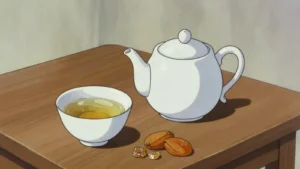
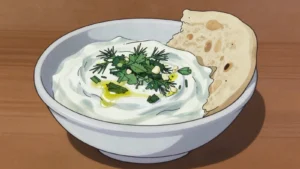
- Serve warm with green tea, and with kaymak and jam at breakfast.
- Bread is treated with real respect in Tajikistan: it is torn rather than cut, never placed upside down, and never thrown away.
Technique
- The chekich stamp is cheap, sold in every Central Asian market, and there is no real substitute for the pattern it makes.
- Kulcha in Tajikistan is a small stamped tandyr bread; the Indian and Pakistani kulcha under the same name is a soft leavened flatbread, often stuffed, and a different thing.
- It keeps a couple of days and is revived by a moment in a hot oven.
Substitutions
- A fork or a skewer in place of a chekich.
- A pizza stone and the hottest oven you have, in place of a tandyr.
Variations
- Larger, as non, the everyday round bread.
- With onion worked into the dough.
- Brushed with butter as it comes out.
History
Baked in clay tandoors and central to Tajik weddings, where the bread is broken to seal an engagement.
Frequently asked questions
What is Kulcha?
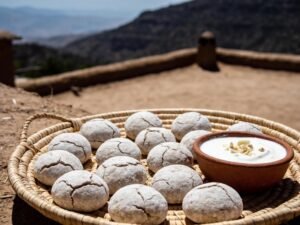
Kulcha is a bread & pastry from Tajikistan: small round tandoor bread stamped in the centre, eaten with tea. Baked in clay tandoors and central to Tajik weddings, where the bread is broken to seal an engagement.
How long does Kulcha take to make?
Kulcha takes 20 min plus 1 hr 30 min rising of preparation and 20 min of cooking. The recipe makes 8 breads. It is rated medium to make.
What can I substitute in Kulcha?
Yes, within limits. A fork or a skewer in place of a chekich. A pizza stone and the hottest oven you have, in place of a tandyr.
What is the most important thing to get right in Kulcha?
Press the centre thin and leave the rim thick. That difference is the whole shape of the bread: the middle stays flat and crisp while the rim puffs.