
Ingredients
The apricots
- 2 kgripe apricots
- fully ripe but still firm
- unblemished
- washed and dried
- halved and stoned
For drying
- clean racks or trays
- fine netting or muslin, to cover
- or a dehydrator
- or a very low oven
Sometimes used
- the stones, reserved
- for the kernels inside
- see the safety notes carefully
- a nutcracker or a stone
To serve
- green tea
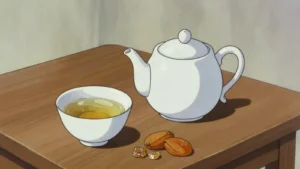
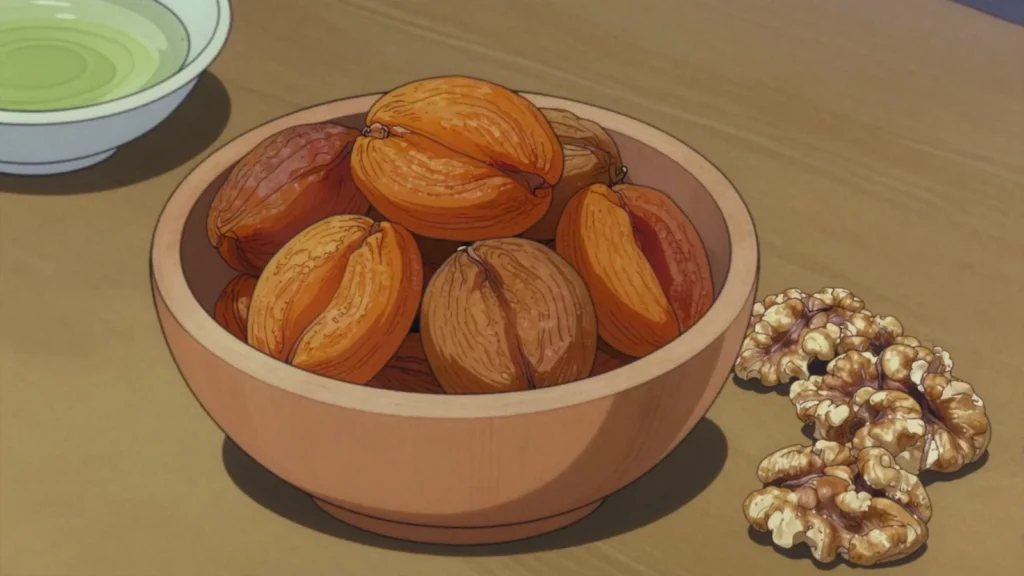
- walnuts and almonds
- dried mulberries
- fresh bread
Directions
- Use fully ripe fruit for the best flavour. Underripe apricots dry into sour leather. Discard anything with soft brown patches. Discard anything with any mould. Wash the apricots and dry them completely. That version takes much longer to dry.
- Cut around the natural seam of the fruit. Twist the two halves gently apart. Lift the stone out and set it aside. Keep the stones if you intend to use them. Lay the apricot halves cut side up. Do not let them touch each other.
- Use racks rather than solid trays if you can. Set them out in full direct sunlight. Cover them with fine netting or muslin. That keeps flies and wasps off them. Bring the trays in every night without fail. Put them out again each morning. Turn the halves once they begin to firm.
- Continue for four to seven days. They should be leathery and pliable. Squeeze one and no moisture should appear. Tear one open and check the centre. It should be dry right through.
- Discard any piece showing mould. Do not cut mould off and keep the rest. Leave the oven door slightly ajar. This step is worth knowing about. Put the dried apricots in a sealed jar. Leave them in the jar for about a week.
- Shake the sealed jar every day. Condensation means they are not dry enough. Return them to the trays if you see it. Keep them somewhere cool and dark. They keep six months to a year that way. Check them occasionally for mould. Crack the dried stones with a nutcracker. Take the smallest fragment you can. If it is bitter at all, spit it out.
- Discard that whole batch of kernels. Never eat bitter kernels under any circumstances. Discard any that develop mould. They freeze indefinitely if you prefer. Crack them only as you need them.
Technique
- Apricot kernels contain amygdalin, which the body converts to cyanide during digestion. Poisoning is documented, including hospitalisations and deaths. Bitter kernels contain far more than sweet ones, and bitterness is the warning signal — taste the smallest fragment first and spit it out and discard the batch if it is bitter at all.
- Sweet kernels are not risk free either. They still contain amygdalin, in amounts that vary between varieties, individual trees and seasons, and you cannot tell by looking. Food safety authorities have issued warnings and set very low intake limits; the atlas quotes no number, because doing so would imply a safe threshold. Never eat them in quantity, and never give them to children, whose lower body weight makes them far more vulnerable.
- Households in the region know their own trees and which are sweet or bitter, and eat kernels as a handful with tea rather than as a food. That knowledge is local and specific, and a reader elsewhere does not have it. The apricot flesh contains no amygdalin and is entirely safe — you lose nothing by discarding the stones.
- Bring the trays in every night without fail. Night dew rewets the fruit completely, undoing a day’s work and encouraging mould. Cover them with netting while they dry, since wasps are genuinely drawn to drying fruit.
- Halve and stone the apricots rather than drying them whole. Whole fruit is traditional in the region but takes far longer and risks spoiling in the middle; halves dry faster and more safely.
- The fruit must be dry right through. Tear one open and check the centre — any moisture means more drying. Incomplete drying allows moulds that produce toxins cooking does not destroy, and a mouldy piece must be discarded rather than trimmed.
- Condition the dried fruit in a sealed jar for a week, shaking daily. Remaining moisture redistributes from wetter pieces to drier ones, and condensation on the glass tells you they need more drying.
- Home-dried apricots turn dark brown, and that is entirely normal oxidation. Bright orange commercial dried apricots have been treated with sulphur dioxide to preserve the colour — a permitted additive that must be declared, and one some people, particularly asthmatics, react badly to.
- In a dehydrator or a very low oven with the door ajar, drying is safer than sunlight in a humid climate.
- Drying is not a preference in Badakhshan and the Zarafshan valley. Winters are long, fresh fruit is unavailable for months, and dried apricots are a daily staple rather than an occasional treat.
Substitutions
- A dehydrator or a low oven replaces sun drying and is genuinely safer in a humid climate.
- Whole apricots dried with the stone in are traditional in the region but slower and riskier at home.
- Commercial dried apricots replace homemade; the bright orange ones are sulphured and the brown ones are not.
- The kernels can simply be discarded, and the atlas suggests doing so unless you have local knowledge of the trees.
- Dried mulberries, walnuts and almonds are the usual companions on a Tajik table.
- Soaked and stewed, the dried fruit becomes kompot, drunk across the region.
Variations
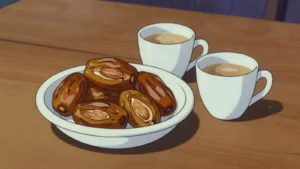
- Whole dried apricots with the stone left in are the traditional Badakhshan form.
- Kompot, dried fruit stewed with water and sugar, is the everyday drink made from them.
- Dried apricots are cooked into pilaf and into meat stews across Central Asia.
- Some households press dried apricots into cakes or pastes for storage.
- Dried mulberries are the other great mountain fruit staple and are often ground into flour.
- Turkish and Iranian dried apricots are close relatives, usually sulphured for the export market.
History
Dried on rooftops in Badakhshan and the Zarafshan valley, where apricots are a staple winter food.
Frequently asked questions
What is Zardolu?
Zardolu is a snack from Tajikistan: sun-dried apricots eaten with nuts and tea, the kernels cracked and eaten too. Dried on rooftops in Badakhshan and the Zarafshan valley, where apricots are a staple winter food.
How long does Zardolu take to make?
Zardolu takes 30 minutes of preparation and none, plus 4 to 7 days drying of cooking. The recipe makes makes about 500 g dried. It is rated medium to make.
What can I substitute in Zardolu?
Yes, within limits. A dehydrator or a low oven replaces sun drying and is genuinely safer in a humid climate. Whole apricots dried with the stone in are traditional in the region but slower and riskier at home. Commercial dried apricots replace homemade; the bright orange ones are sulphured and the brown ones are not. The kernels can simply be discarded, and the atlas suggests doing so unless you have local knowledge of the trees. Dried mulberries, walnuts and almonds are the usual companions on a Tajik table. Soaked and stewed, the dried fruit becomes kompot, drunk across the region.
What is the most important thing to get right in Zardolu?
Cut around the natural seam of the fruit. Twist the two halves gently apart. Lift the stone out and set it aside. Keep the stones if you intend to use them. Lay the apricot halves cut side up. Do not let them touch each other.