
Ingredients
Salad
- 600 gwaxy potatoes, boiled in their skins and cooled
- 3carrots, boiled whole and cooled
- 5eggs, boiled 9 minutes and cooled
- 300 gdoktorskaya kolbasa, or boiled chicken or beef
- 5salt-brined pickled cucumbers, plus 2 tbsp of their brine
- 250 gcooked green peas, drained
- 1small onion, finely diced (optional)
Dressing
- 300 gthick mayonnaise, ideally Provansal style
- 1 tspmustard
- 2 tbspchopped dill
- salt and white pepper
Directions
- Boil the potatoes and carrots whole and unpeeled, ideally the day before, and refrigerate them overnight. Cooking them whole keeps them from waterlogging and cold vegetables dice cleanly.
- Boil the eggs for 9 minutes, cool them in iced water and peel them.
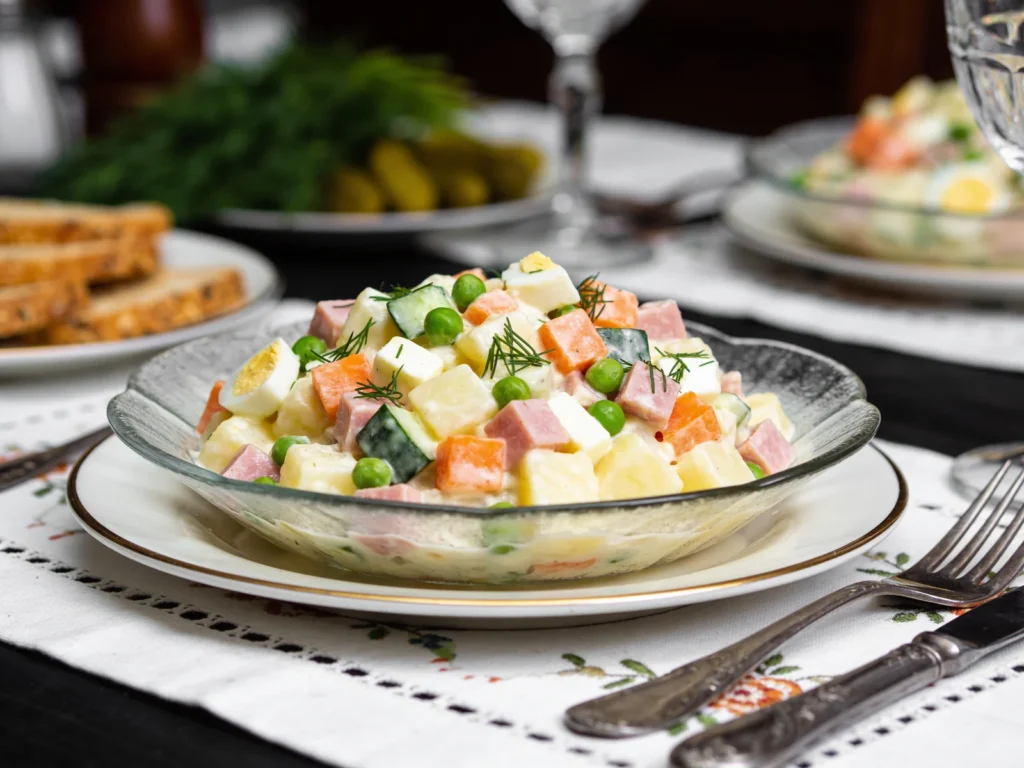
- Dice everything — potato, carrot, egg, sausage and pickles — into even 7–8 mm cubes. The evenness is the entire aesthetic of the dish, and it is why Russians take the chopping seriously.
- Squeeze the diced pickles lightly in your hand to shed excess brine, or the finished salad will weep in the bowl.
- Combine the diced ingredients and the peas in a wide bowl and fold gently with a spatula. Never stir hard: the potato breaks down and the whole thing turns to paste.
- Mix the mayonnaise with the mustard and 1 tbsp of the pickle brine, then fold it through in two additions, until everything is coated but the cubes are still distinct.
- Season with salt, white pepper and dill and taste. It should be salty, sour from the pickles, and rich.
- Chill at least 2 hours so the flavours settle, then pile into a serving bowl and top with more dill. It is eaten cold, in vast quantities, from 31 December onwards.
Technique
- The 1860s original by Lucien Olivier at the Hermitage restaurant in Moscow was a luxury dish of grouse, veal tongue, crayfish tails, capers and a secret dressing. The Soviet version of potato, peas, sausage and mayonnaise is what every Russian means by the name today.
- Use salt-brined pickles, not sweet or vinegar-pickled gherkins. The lactic sourness is structural and vinegar makes the salad taste sharp and thin.
- Dress it on the day you serve it. The components can be boiled and diced a day ahead, but dressed Olivier does not keep well past 24 hours.
- It is the New Year salad above all others, made in a washing-up bowl and eaten for a week.
Substitutions
- No doktorskaya: boiled chicken breast, which is a common home version, or good ham. A decent bologna is closer to the original than you might expect.
- No Russian mayonnaise: whisk 1 tsp mustard and 1 tbsp lemon juice into thick shop-bought mayonnaise to sharpen it.
- No brined cucumbers: dill pickles, rinsed and drained hard.
Variations
- Olivier with boiled beef tongue, the restaurant version and closer to the original.
- A fish version made with tinned salmon, popular in coastal cities.
- Adding diced apple, which is standard in Ukraine and fiercely disputed elsewhere.
History
A mayonnaise-dressed salad combining diced potato, carrot, pickle, egg, peas and meat, invented in the 1860s by Lucien Olivier, a Belgian or French chef working in Moscow, who created the original version as a signature dish for his upscale restaurant, closely guarding the exact recipe and specific sauce as a trade secret that reportedly died with him rather than being fully documented before his death. The dish that eventually spread widely across Russia and the wider Soviet Union bears only a general resemblance to Olivier’s original luxurious version, having been considerably simplified and adapted with more accessible ingredients over subsequent decades, particularly during the Soviet period, when it became an essential, virtually mandatory dish at New Year celebrations across Russian and former Soviet households.
Frequently asked questions
What is Olivier salad?
Olivier salad is a salad & side from Russia: potato, egg, pea and mayonnaise salad, New Year centerpiece. A mayonnaise-dressed salad combining diced potato, carrot, pickle, egg, peas and meat, invented in the 1860s by Lucien Olivier, a Belgian or French chef working in Moscow, who created the original version as a signature dish for his upscale restaurant, closely guarding the exact recipe and specific sauce as a trade secret that reportedly died with him rather than being fully documented before his death. The dish that eventually spread widely across Russia and the wider Soviet Union bears only a general resemblance to Olivier’s original luxurious version, having been considerably simplified and adapted with more accessible ingredients over subsequent decades, particularly during the Soviet period, when it became an essential, virtually mandatory dish at New Year celebrations across Russian and former Soviet households.
How long does Olivier salad take to make?
Olivier salad takes 40 min of preparation and 30 min boiling, plus 2 hr chilling of cooking. The recipe makes 8 servings. It is rated easy to make.
What can I substitute in Olivier salad?
Yes, within limits. No doktorskaya: boiled chicken breast, which is a common home version, or good ham. A decent bologna is closer to the original than you might expect. No Russian mayonnaise: whisk 1 tsp mustard and 1 tbsp lemon juice into thick shop-bought mayonnaise to sharpen it. No brined cucumbers: dill pickles, rinsed and drained hard.
What is the most important thing to get right in Olivier salad?
Dice everything — potato, carrot, egg, sausage and pickles — into even 7–8 mm cubes. The evenness is the entire aesthetic of the dish, and it is why Russians take the chopping seriously.