
Ingredients
Meat
- 1 kggoat or lamb on the bone, cut into large pieces
- 2 tbspxawaash spice mix (cumin, coriander, cardamom, cinnamon, clove, black pepper, turmeric)
- 3 tbspghee or vegetable oil
- 2onions, sliced
- 6garlic cloves, crushed
- 20 gginger, grated
- 2tomatoes, chopped
- 1 tspsalt
- 1.2 litreswater
Rice
- 600 gbasmati rice, rinsed until clear and soaked 30 min
- 3 tbspghee
- 1onion, finely sliced
- 1cinnamon stick
- 4cardamom pods, bruised
- 4cloves
- 1 tspcumin seeds
- 1 tspsalt
- 900 mlof the reserved meat broth
To finish
- 80 graisins, fried in 1 tbsp ghee until plump
- ½ tspsaffron threads steeped in 3 tbsp hot water, or a pinch of Somali rice colouring
- 1small bunch coriander, chopped
To serve
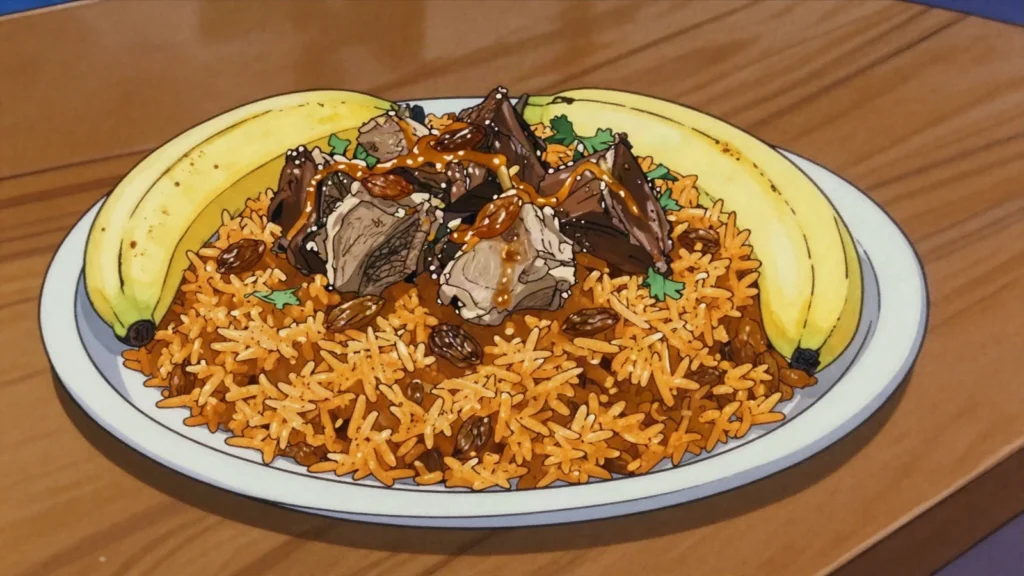
- 1banana, per person
- 4 tbspbasbaas (green chilli sauce)
- 1salad of shredded cabbage, tomato and lime
Directions
- Brown the meat in the ghee in a heavy pot over high heat for 6–8 minutes until well coloured on all sides, then lift it out.
- Fry the sliced onion in the same fat over medium heat for 10 minutes until deep gold, then add the garlic, ginger and xawaash and cook 2 minutes until fragrant.
- Return the meat, add the tomatoes, salt and water, bring to a simmer and cook covered for 50–60 minutes until the meat is tender enough to pull from the bone. Strain and reserve 900 ml of the broth, keeping the meat warm.
- In a wide pot, fry the second onion in 3 tbsp ghee with the cinnamon, cardamom, cloves and cumin seeds over medium heat for 6–8 minutes, until the onion is browned and the whole spices are perfumed.
- Drain the soaked rice and stir it through the spiced ghee for 2 minutes, until each grain is coated and slightly chalky-looking.
- Pour in the hot reserved broth, add the salt, bring to a boil and cook uncovered until the liquid falls to the level of the rice and craters appear on the surface, 6–8 minutes.
- Bury the meat in the rice, drizzle over the saffron water in streaks so the rice colours in patches rather than evenly, cover tightly and steam on the lowest possible heat for 20–25 minutes.
- Rest 10 minutes off the heat, then fluff with a fork from the edges inward, scatter over the ghee-fried raisins and coriander and serve on a communal platter with banana, basbaas and salad.
Technique
- Iskukaris means ‘cooked together’: the rice must take up the meat broth, so never cook it in plain water and reserve every drop of the braise.
- Streaking rather than stirring the colouring gives the patchwork of white, yellow and orange grains that Somalis expect on the platter.
- Soaking and then resting the rice is what keeps the grains long and separate; stirring hot rice breaks them and turns it sticky.
Substitutions
- Camel meat is the prestige choice in Somalia and needs 2–3 hours of braising; goat, lamb or beef shin all work on this timing.
- No saffron: a pinch of turmeric plus a few drops of food colouring is what most Somali kitchens actually use.
- Ghee can be replaced with the fat skimmed from the top of the braise for an even more traditional flavour.
Variations
- Bariis maraq, where the rice is served plain and the meat broth is poured over at the table.
- A festival version enriched with dates, whole almonds and extra ghee, made for Eid and weddings.
History
Spiced rice, cooked with raisins, meat and a distinctive Somali spice blend called xawaash, considered a significant celebratory dish across Somalia, reflecting the country’s historic position along Indian Ocean and Red Sea trade routes, which carried spices from Arabia, India and beyond into Somali cooking over many centuries. Its combination of savory spiced rice with sweet raisins reflects a broader East African and Arabian culinary pattern of balancing sweet and savory elements within a single celebratory rice dish, and bariis iskukaris is traditionally prepared for significant occasions including weddings and Eid celebrations rather than eaten as routine everyday food. It remains one of the most recognized and beloved traditional Somali dishes.
Frequently asked questions
What is Bariis iskukaris?
Bariis iskukaris is a main from Somalia: xawaash-spiced rice cooked with goat or camel meat and raisins. Spiced rice, cooked with raisins, meat and a distinctive Somali spice blend called xawaash, considered a significant celebratory dish across Somalia, reflecting the country’s historic position along Indian Ocean and Red Sea trade routes, which carried spices from Arabia, India and beyond into Somali cooking over many centuries. Its combination of savory spiced rice with sweet raisins reflects a broader East African and Arabian culinary pattern of balancing sweet and savory elements within a single celebratory rice dish, and bariis iskukaris is traditionally prepared for significant occasions including weddings and Eid celebrations rather than eaten as routine everyday food. It remains one of the most recognized and beloved traditional Somali dishes.
How long does Bariis iskukaris take to make?
Bariis iskukaris takes 30 min of preparation and 1 hr 20 min of cooking. The recipe makes 6 servings. It is rated medium to make.
What can I substitute in Bariis iskukaris?
Yes, within limits. Camel meat is the prestige choice in Somalia and needs 2–3 hours of braising; goat, lamb or beef shin all work on this timing. No saffron: a pinch of turmeric plus a few drops of food colouring is what most Somali kitchens actually use. Ghee can be replaced with the fat skimmed from the top of the braise for an even more traditional flavour.
What is the most important thing to get right in Bariis iskukaris?
In a wide pot, fry the second onion in 3 tbsp ghee with the cinnamon, cardamom, cloves and cumin seeds over medium heat for 6–8 minutes, until the onion is browned and the whole spices are perfumed.