
Ingredients
Rice
- 600 glong-grain rice
- 1 tspsalt
Rendang
- 1 kgbeef shin, cubed
- 1 litrethick coconut milk
- 8dried chillies
- 8shallots
- 6 clovesgarlic
- 4cm galangal
- 3cm ginger
- 3cm turmeric
- 3 stalkslemongrass
- 6kaffir lime leaves
- 2turmeric leaves
- 1 tspsalt
Gulai ayam
- 6chicken thighs
- 400 mlcoconut milk
- 2 tbspcurry paste as above
- 1 tspturmeric
Gulai nangka
- 500 gyoung jackfruit
- 300 mlcoconut milk
- curry paste
Sides
- daun singkong, boiled cassava leaves
- telur balado, eggs in chilli
- dendeng balado, crisp fried beef in chilli
- perkedel, potato fritters
Sambal
- sambal ijo, green chilli sambal
- sambal lado merah
To serve
- kuah gulai, the thin curry broth, poured over the rice
Directions
- Make the rendang first, because it takes three hours and is the centrepiece. Blend the chillies, shallots, garlic, galangal, ginger and turmeric into a fine paste. Fry the paste in a little oil for 10 minutes until fragrant and darkened.
- Add the beef, the coconut milk, the bruised lemongrass, lime leaves and turmeric leaves. Now cook it uncovered on a low heat for 3 hours, stirring more and more often as it reduces.
- Keep stirring in the last hour, because once the liquid has gone it catches and burns within moments. It is finished when the sauce has all but disappeared and the meat is coated in a dark, almost dry paste.
- Make the chicken and jackfruit gulai from the same base paste, thinned with more coconut milk and cooked far less. The gulai are meant to be loose and soupy, and their thin broth is what gets poured over the rice at the table.
- Boil the cassava leaves until completely tender, which takes longer than you expect. Cassava leaves must be boiled thoroughly. Discard that water rather than using it. Fry the eggs and the beef separately and coat them in the red chilli sambal.
- Pound the green chilli sambal fresh: green chillies, shallot, garlic and tomato, steamed briefly then pounded coarse with salt. Sambal ijo is the sambal most associated with Padang food and it is coarse and green rather than smooth.
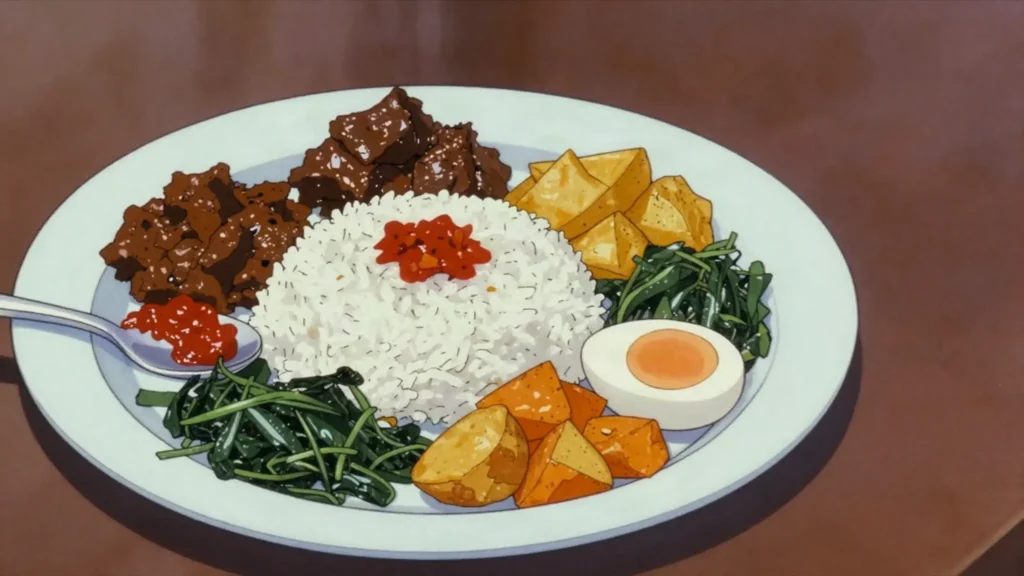
- Ladle a little of the thin gulai broth over the rice, which is standard and is what makes the plate. Take from each dish in turn rather than mixing them all together at once.
Technique
- Rendang is better on the second and third day, and Minangkabau cooks make it ahead.
- The dishes are cooked in the morning and sit out through the day, which is why they are highly spiced and reduced.
- Turmeric leaf is distinctive in rendang and worth finding in Asian shops.
Substitutions
- Beef chuck or brisket for shin in the rendang.
- Spinach or kale in place of cassava leaves, which needs no long boiling.
Variations
- With gulai tunjang, cow’s foot, which is a Padang classic.
- With ayam pop, the pale poached and fried chicken.
- Vegetarian, with jackfruit, cassava leaf and egg.
History
A style of serving rice alongside a wide array of pre-cooked dishes, typically including rendang and other rich meat, vegetable and sambal preparations displayed together and chosen by the diner, developed among the Minangkabau people of Padang in West Sumatra. Its distinctive serving style, in which numerous small plates of pre-cooked dishes are brought to the table for the diner to select from, with final payment based only on what is actually eaten, reflects a specific Minangkabau restaurant tradition that spread widely across Indonesia as Minangkabau merchants, following their long tradition of trade and travel, opened Padang-style restaurants in cities throughout the country. Nasi Padang remains one of Indonesia’s most widespread and recognizable restaurant traditions, found in nearly every Indonesian city.
Frequently asked questions
What is Nasi Padang?
Nasi Padang is a main from Indonesia: steamed rice with a spread of Padang curries and sambals. A style of serving rice alongside a wide array of pre-cooked dishes, typically including rendang and other rich meat, vegetable and sambal preparations displayed together and chosen by the diner, developed among the Minangkabau people of Padang in West Sumatra. Its distinctive serving style, in which numerous small plates of pre-cooked dishes are brought to the table for the diner to select from, with final payment based only on what is actually eaten, reflects a specific Minangkabau restaurant tradition that spread widely across Indonesia as Minangkabau merchants, following their long tradition of trade and travel, opened Padang-style restaurants in cities throughout the country. Nasi Padang remains one of Indonesia’s most widespread and recognizable restaurant traditions, found in nearly every Indonesian city.
How long does Nasi Padang take to make?
Nasi Padang takes 1 hr of preparation and 3 hr of cooking. The recipe makes 6 servings. It is rated hard to make.
What can I substitute in Nasi Padang?
Yes, within limits. Beef chuck or brisket for shin in the rendang. Spinach or kale in place of cassava leaves, which needs no long boiling.
What is the most important thing to get right in Nasi Padang?
Boil the cassava leaves until completely tender, which takes longer than you expect. Cassava leaves must be boiled thoroughly. Discard that water rather than using it. Fry the eggs and the beef separately and coat them in the red chilli sambal.