
Ingredients
The chicken
- 1.5 kgchicken
- in large pieces, skinned
- 200 gthick yoghurt
- 2 tablespoonsginger and garlic paste
- 1 teaspoonwhite pepper
- 1 teaspoonsalt
The rice
- 700 gchinigura rice
- or basmati, rinsed and soaked
- 1.2 litreswater or light stock
The pot
- 150 gghee
- 3onions, thinly sliced
- 6green cardamom pods
- 2black cardamom pods
- 1cinnamon stick
- 6cloves
- 4bay leaves
- 2 tablespoonssugar
- 3green chillies, whole
- salt
To finish
- a pinch of saffron
- in warm milk
- 2 tablespoonskewra water
- 50 graisins, optional
- fried onions, to scatter
Directions
- Adjust the liquid if you substitute. That lets it cook hot without burning. Remove it entirely for this dish. Whisk the yoghurt in a large bowl. Add the ginger and garlic paste. Add the white pepper and salt. Coating it is straightforward enough.
- Rub the marinade into the chicken. Cover it over and refrigerate it. Give it at least two full hours. Rinse the rice until the water runs clear. Cover the rice with cold water. Let it soak for thirty minutes. Thirty minutes is enough for it. Drain all the rice very thoroughly.
- Let it sit in the sieve to dry. Wet rice added to hot ghee spits. Let it drain for a good ten minutes. Heat the ghee in a large heavy pot. Add all of the thinly sliced onions. Fry them all until golden brown. This takes fifteen minutes or more.
- Stir them regularly throughout. Lift out half the fried onions. Keep them to scatter at the end. Drain them all on kitchen paper. Add the cardamom, cinnamon and cloves. Add the bay leaves to the pot. Fry them for about one full minute. Add the marinated chicken to the pot. Fry it for about ten full minutes.
- Turn all the pieces as they cook. They should colour lightly rather than brown. Add a little water to the pot. Cover it and simmer for fifteen minutes. Take it off slightly underdone. Add the drained rice to the pot. Turn it gently through the ghee. That is what keeps them distinct.
- Turn it gently so grains do not break. Give it two or three full minutes. Pour in all the water or stock. Add the sugar and season it with salt. Add all the whole green chillies. Taste the liquid before the rice absorbs it. It should taste slightly over-seasoned. Bring the pot up to a full boil. Let it cook for about fifteen minutes. The rice must steam rather than boil.
- Take it off the heat with the lid on. Let it stand for fifteen full minutes. The grains firm up as they settle. Leave it alone entirely for that time. Steep the saffron in warm milk. Sprinkle the kewra water over as well. Too much tastes soapy and perfumed.
- Sprinkle it rather than pouring it. Bring the chicken up through it. Lift and fold rather than stirring. Serving it is done from a wide dish. Tip it into a wide serving dish. Scatter the reserved fried onions over. Add raisins if you are using them. It keeps two days refrigerated. Steam it again gently to reheat.
Technique
- This is deliberately mild rather than a hot curry: it descends from Mughal court cooking, which valued perfume over heat, so cardamom, saffron and kewra do the work and chilli plays almost no part. A little sugar goes in and Dhaka polao is noticeably sweeter than most pilafs — enough to be noticeable but not dominant.
- Taste the cooking liquid before the rice goes in and make it slightly over-seasoned, since the rice absorbs it entirely and dilutes it considerably; that is the moment to get the seasoning right.
- Drizzle the saffron milk over rather than stirring it through, which gives streaks of colour — the traditional look — where mixing colours everything evenly. Kewra water is easy to overdo and tastes soapy in quantity, so sprinkle rather than pour.
Substitutions
- Basmati stands in for chinigura, the small aromatic Bangladeshi rice; it gives long separate grains and absorbs more water, so adjust the liquid.
- Foil under the lid seals the pot as well as the traditional dough seal does.
Variations
- Whole spices are used rather than ground, perfuming the rice without colouring it, and are left in for diners to push aside.
- Green chillies go in whole and unpierced for aroma without heat, suiting the mild character.
- Fork it through gently at the end, lifting and folding rather than stirring, so the grains stay whole.
History
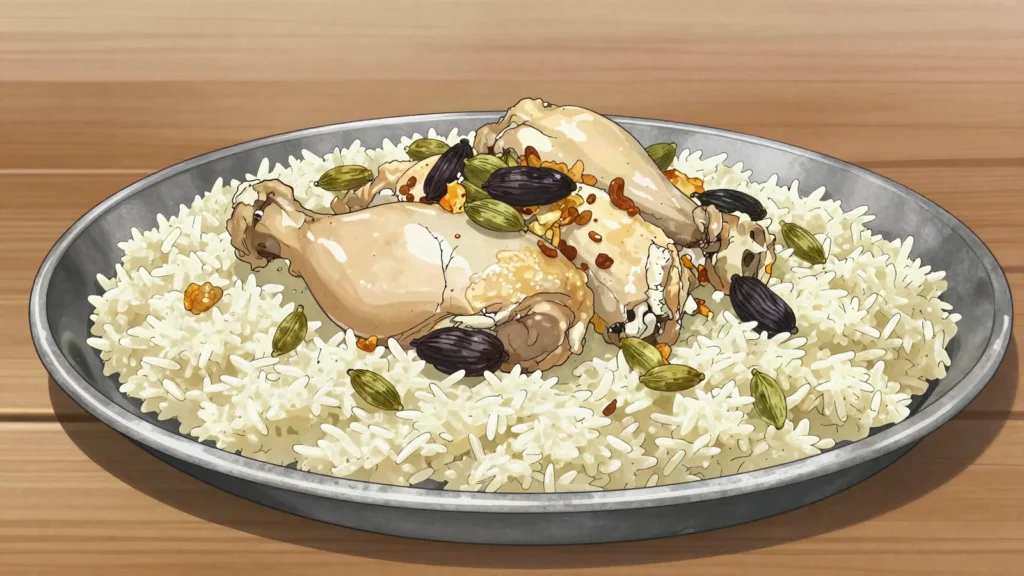
Chicken pilaf from Dhaka’s Mughal-descended kitchens, mildly spiced and sweetened, served at weddings and Eid.
Frequently asked questions
What is Morog Polao?
Morog Polao is a main from Bangladesh: celebratory chicken pilaf, mild and aromatic. Chicken pilaf from Dhaka’s Mughal-descended kitchens, mildly spiced and sweetened, served at weddings and Eid.
How long does Morog Polao take to make?
Morog Polao takes 40 minutes plus soaking of preparation and 1 hour of cooking. The recipe makes serves 8. It is rated hard to make.
What can I substitute in Morog Polao?
Yes, within limits. Basmati stands in for chinigura, the small aromatic Bangladeshi rice; it gives long separate grains and absorbs more water, so adjust the liquid. Foil under the lid seals the pot as well as the traditional dough seal does.
What is the most important thing to get right in Morog Polao?
Turn all the pieces as they cook. They should colour lightly rather than brown. Add a little water to the pot. Cover it and simmer for fifteen minutes. Take it off slightly underdone. Add the drained rice to the pot. Turn it gently through the ghee. That is what keeps them distinct.