
Ingredients
Dough
- 200 ggolden syrup, or inverted sugar syrup
- 50 mlpeanut oil
- 1 tsplye water, kansui
- 280 gplain flour
Filling
- 700 glotus seed paste
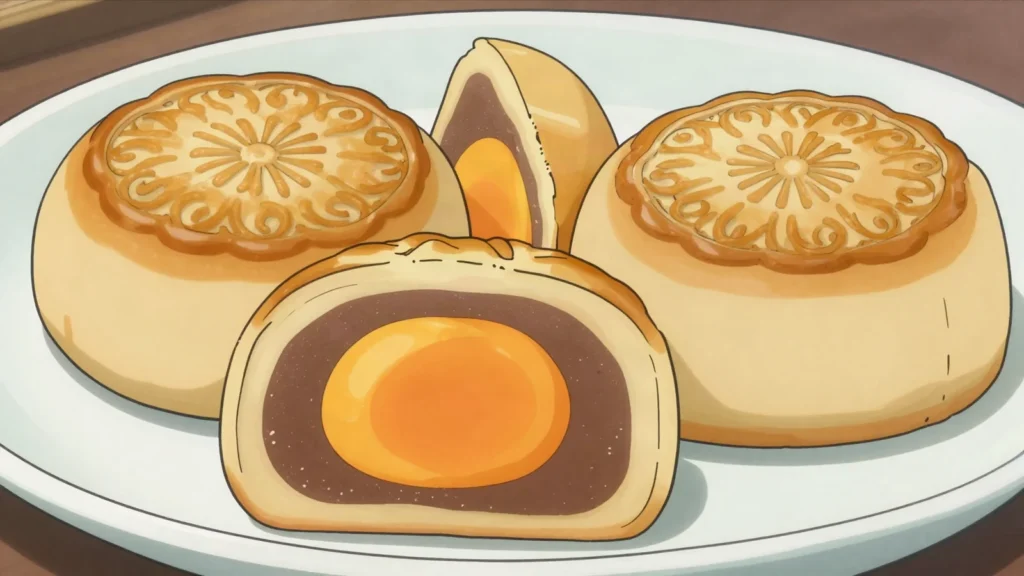
- 12salted duck egg yolks
- 2 tbsprose wine or rice wine
Glaze
- 1egg yolk
- 1 tbspmilk or water
Equipment
- a 50 g mooncake mould with a pattern plate
Directions
- Keep it off your skin and out of your eyes, and use the small amount specified. Whisk the golden syrup, oil and lye water together until fully emulsified and no oil is floating.
- Sift the flour over and fold it in until it just comes together into a soft, sticky dough. Do not knead it. Wrap it and rest it 1 hour at room temperature, which makes it far easier to handle.
- Rinse the salted egg yolks, roll them in rice wine, and bake them at 170°C for 8 minutes. The wine takes off the raw, slightly fishy smell that untreated salted yolks have, and the short bake firms them. Flatten a piece of lotus paste in your palm and wrap it completely around a yolk, rolling it into a smooth ball.
- Seal the paste with no gaps, because an exposed yolk cracks the cake open in the oven. Flatten a piece of dough between two sheets of cling film into a thin round. Set the filling ball on the dough and push the dough up around it with your thumbs, turning as you go.
- Dust the mould lightly with flour and tap out the excess. Press the ball into the mould, press down firmly, and eject it onto a lined tray. Press firmly enough to fill the pattern completely, or the design bakes out to a faint blur.
- Bake at 180°C (355°F) for 5 minutes, then take them out and let them cool 10 minutes. Brush thinly with the egg yolk glaze, using almost a dry brush. Use very little glaze and brush only the raised surfaces, because pooled egg fills the pattern and hides it.
- Bake a further 12 to 15 minutes until deep golden. The oil in the filling migrates out into the crust, which goes from hard and dull to soft, glossy and dark.
Technique
- The salted yolk stands for the full moon, which is why it sits at the centre.
- Lotus paste is the classic filling; red bean and mixed nut are the other traditional ones.
- They are rich and a whole one per person is far too much, which is why they are cut in quarters.
Substitutions
- Golden syrup for home-made inverted sugar syrup, which takes an hour to make.
- A pinch of bicarbonate dissolved in water at a pinch, in place of lye water, which is weaker.
Variations
- Snow skin mooncakes, unbaked and chilled.
- With red bean, black sesame or mixed nut and ham filling.
- With two yolks, which is a premium version.
History
A dense, round pastry, traditionally filled with lotus seed paste and often a whole salted duck egg yolk representing the full moon, eaten during the Mid-Autumn Festival, held on the fifteenth day of the eighth lunar month, a celebration tied to the full moon and family reunion documented in Chinese culture for well over a thousand years. One popular legend connects the mooncake’s more elaborate historical use to the overthrow of Mongol Yuan dynasty rule in the 1300s, with secret messages coordinating rebellion said to have been hidden inside mooncakes distributed among the population, though the full historical accuracy of that specific story is debated among historians. Regional and modern variations now include an enormous range of fillings well beyond the traditional lotus seed and egg yolk, including ice cream and chocolate versions developed more recently.
Frequently asked questions
What is Mooncake?
Mooncake is a dessert from China: dense pastry filled with lotus-seed paste and salted egg yolk for Mid-Autumn Festival. A dense, round pastry, traditionally filled with lotus seed paste and often a whole salted duck egg yolk representing the full moon, eaten during the Mid-Autumn Festival, held on the fifteenth day of the eighth lunar month, a celebration tied to the full moon and family reunion documented in Chinese culture for well over a thousand years. One popular legend connects the mooncake’s more elaborate historical use to the overthrow of Mongol Yuan dynasty rule in the 1300s, with secret messages coordinating rebellion said to have been hidden inside mooncakes distributed among the population, though the full historical accuracy of that specific story is debated among historians. Regional and modern variations now include an enormous range of fillings well beyond the traditional lotus seed and egg yolk, including ice cream and chocolate versions developed more recently.
How long does Mooncake take to make?
Mooncake takes 1 hr plus 3 days resting of preparation and 25 min of cooking. The recipe makes 12 mooncakes. It is rated hard to make.
What can I substitute in Mooncake?
Yes, within limits. Golden syrup for home-made inverted sugar syrup, which takes an hour to make. A pinch of bicarbonate dissolved in water at a pinch, in place of lye water, which is weaker.
What is the most important thing to get right in Mooncake?
Sift the flour over and fold it in until it just comes together into a soft, sticky dough. Do not knead it. Wrap it and rest it 1 hour at room temperature, which makes it far easier to handle.