
Ingredients
Vegetable
- 3 kgfresh mustard tuber stems (Brassica juncea var. tumida), the knobbly swollen stems sold as zha cai tou
- Trim the tough fibrous skin and any woody base
Salting
- 180 gcoarse non-iodised salt for the first salting (about 6% of the dried weight)
- 90 gcoarse salt for the second salting
Seasoning paste
- 60 gcoarse chilli powder
- 20 gground Sichuan peppercorn
- 20 gfive-spice powder
- 15 gsugar
- 20 mlbaijiu (sorghum spirit), for the surface
- 3sterilised glass jars with tight lids
Directions
- Trim the stems, cut any larger than a fist in half, and rinse and dry them completely; every following step is spoiled by residual dirt or moisture.
- Hang or rack the stems in a breezy, shaded place for 2–3 days (the traditional feng tuo shui, wind dehydration) until they lose about 40% of their weight, feel leathery and bend without snapping.
- Rub the first 180 g of salt into the dried stems, pack them into a crock and weight them down; leave 3–4 days, turning daily, until they release a brine that covers them.
- Drain off that brine, squeeze the stems firmly and taste one: it should be crunchy and clearly salty, with no raw mustard sharpness left.
- Salt again with the remaining 90 g, repack under the weight for 3 days, then drain, squeeze once more and dry the surface on racks for a few hours.
- Mix the chilli, Sichuan pepper, five-spice and sugar and rub the paste into every stem so each is evenly coated red.
- Pack tightly into sterilised jars, pressing out all air pockets as you go, then wipe the rims, splash a teaspoon of baijiu over the surface and seal.
- Ferment at a cool, stable 15–20°C (60–70°F), out of sunlight, for 2–3 months. The colour deepens, the smell turns pleasantly sour and savoury, and the crunch stays. Once open, refrigerate.
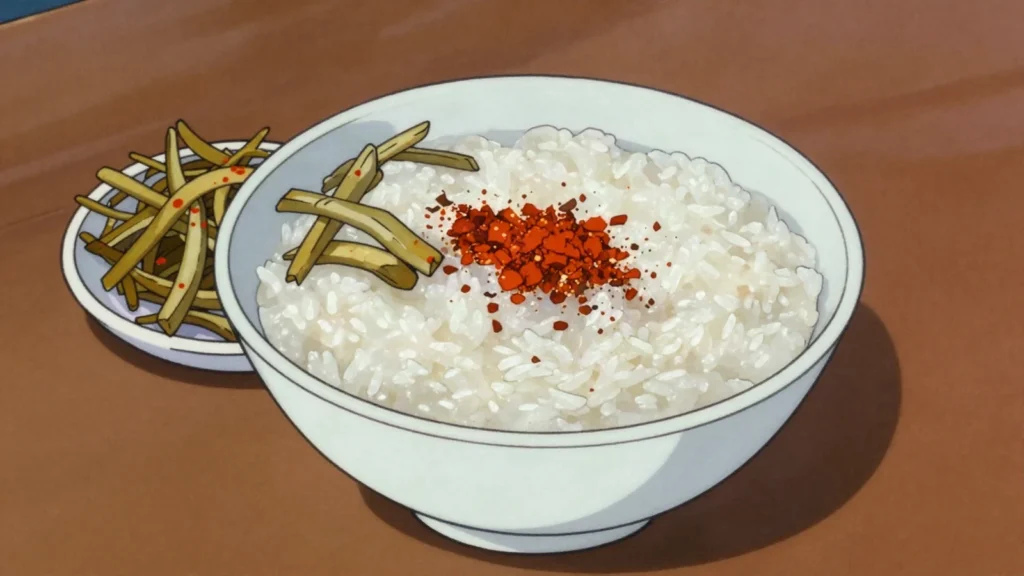
- To use, rinse briefly if very salty, then shred finely over congee, noodle soup or steamed rice, or stir-fry the shreds with slivered vegetables and a little sugar.
Technique
- Zhacai comes from Fuling in Chongqing, where the crop and its microclimate are protected by a geographical indication; zha means pressed, and the pressing between saltings is what gives the dense, snapping texture.
- Salt percentage is a safety control, not a flavour choice. Below about 5% of the vegetable weight you risk soft rot and off-fermentation; keep everything submerged or tightly packed and use scrupulously clean, non-metallic tools.
- Discard the whole jar if you see fuzzy coloured mould, slime, or smell anything putrid rather than sour. A white film of kahm yeast on the surface is harmless and can be lifted off.
- Commercial zhacai is heavily salted and sold in vacuum pouches; home batches are milder and should be eaten within a year.
Substitutions
- If you cannot find mustard tuber, kohlrabi is the closest match in density and crunch and takes the same treatment, though it lacks the mustardy bite.
- Radish or the thick base of gai choy stems also work, with the drying time cut to a single day.
Variations
- Ya cai, from Yibin, is the leafy stem version, dried and fermented sweet and dark, and is what goes into dan dan noodles.
- Da tou cai and Zhejiang-style sweet-salt pickles use the same tuber with sugar and less chilli.
History
Developed in Fuling, Chongqing, in the 1890s by the Qiu family, who exported it down the Yangtze.
Frequently asked questions
What is Zhacai?
Zhacai is a fermented & pickled from China: sichuan mustard stem salted, pressed and chilli-cured; shredded over noodles and congee. Developed in Fuling, Chongqing, in the 1890s by the Qiu family, who exported it down the Yangtze.
How long does Zhacai take to make?
Zhacai takes 1 hr over three days of preparation and 2–3 days drying, then 2–3 months fermenting of cooking. The recipe makes about 1.5 kg pickle. It is rated medium to make.
What can I substitute in Zhacai?
Yes, within limits. If you cannot find mustard tuber, kohlrabi is the closest match in density and crunch and takes the same treatment, though it lacks the mustardy bite. Radish or the thick base of gai choy stems also work, with the drying time cut to a single day.
What is the most important thing to get right in Zhacai?
Discard the whole jar if you see fuzzy coloured mould, slime, or smell anything putrid rather than sour. A white film of kahm yeast on the surface is harmless and can be lifted off.