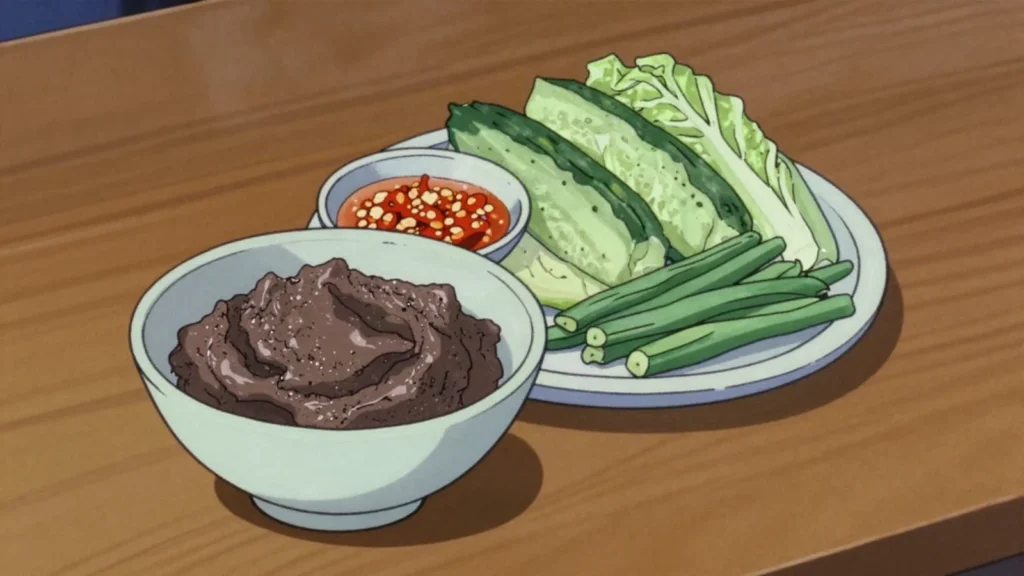

Fermented fish or shrimp paste, salty and pungent, behind almost every Burmese dish. It is made on the Rakhine and Ayeyarwady coasts by salting and pounding fish or shrimp, then fermenting in vats for months before pressing into blocks.
It is a long low-acid ferment of raw seafood at ambient temperature, kept safe only by a salt ratio measured against the catch — the same class as prahok and mahyawa, and sold in every Burmese market.
What goes into it
- small fish, or tiny shrimp
- coarse salt, at a quarter or more of the weight
How it is made
The catch is mixed with a heavy weight of salt and left in the sun for a day or two to begin breaking down, then pounded and packed into large vats or clay jars, weighted and left for months. The proteins break down entirely; what is left is pressed into dense blocks and cut as needed.
How long it takes: three months to a year
How it is eaten
A spoonful into almost any curry or soup, or made into ngapi yay dip with garlic and chilli.
History
Made on the Rakhine and Ayeyarwady coasts by salting and pounding fish or shrimp, then fermenting in vats for months before pressing into blocks.
Frequently asked questions
What is Ngapi?
Ngapi is a fermented & pickled from Myanmar: fermented fish or shrimp paste, salty and pungent, behind almost every Burmese dish. Made on the Rakhine and Ayeyarwady coasts by salting and pounding fish or shrimp, then fermenting in vats for months before pressing into blocks.
How is Ngapi made?
The catch is mixed with a heavy weight of salt and left in the sun for a day or two to begin breaking down, then pounded and packed into large vats or clay jars, weighted and left for months. The proteins break down entirely; what is left is pressed into dense blocks and cut as needed. It takes three months to a year.
Can I make Ngapi at home?
No, and the atlas gives no method for it. It is a long low-acid ferment of raw seafood at ambient temperature, kept safe only by a salt ratio measured against the catch — the same class as prahok and mahyawa, and sold in every Burmese market.
What goes into Ngapi?
Small fish, or tiny shrimp, coarse salt, at a quarter or more of the weight.
How is Ngapi eaten?
A spoonful into almost any curry or soup, or made into ngapi yay dip with garlic and chilli.