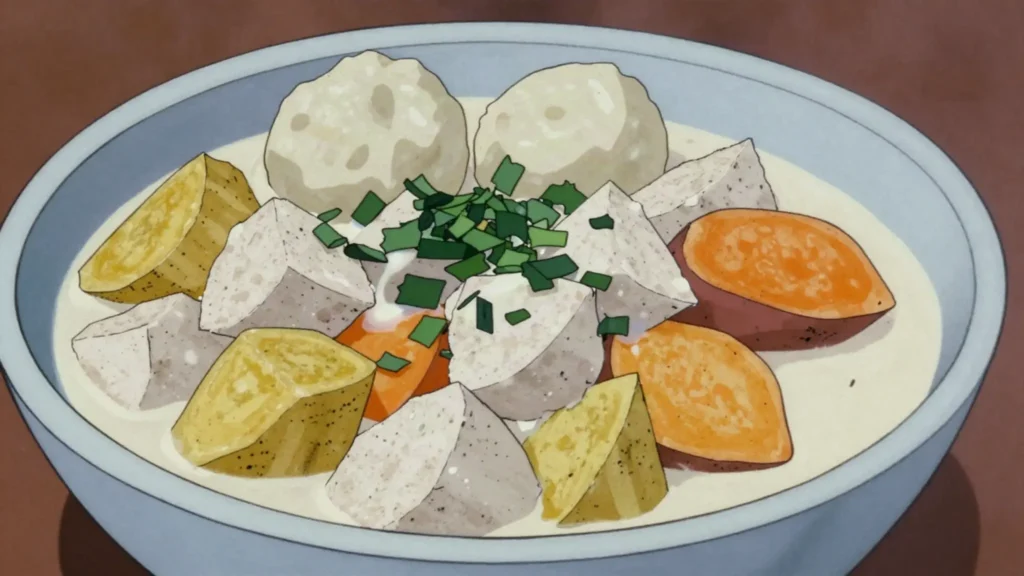

Ingredients
Ground provisions
- 500 gcassava
- peeled and cut in chunks
- 500 gyam, peeled and cut
- 400 geddoes or taro, peeled
- 3green plantains, peeled and cut
- 300 gsweet potato, peeled and cut
The broth
- 800 mlthick coconut milk
- 400 mlthin coconut milk
- or water
- 2onions, sliced
- 6garlic cloves, crushed
- 3cm ginger, grated
- 3 sprigsthyme
- 6spring onions, chopped
- 1wiri wiri or scotch bonnet
- whole and unpierced
- salt and black pepper
Duff dumplings
- 300 gplain flour
- 1 teaspoonbaking powder
- 1/2 teaspoonsalt
- about 150 ml water
Often added
- 300 gsaltfish, soaked and flaked
- or smoked fish
- or fried fish alongside
Directions
- Peel it thickly with a sharp knife. Cut away the pink layer beneath as well. Never eat cassava raw or undercooked. Pull it out once the cassava is soft. Those cause itching if undercooked. Oil your hands before peeling them. Cook them thoroughly to break the crystals down.
- Taste a piece to check for any prickle. They must go in by cooking time. Peel the cassava thickly with a knife. Cut down through it with a knife. Take off the pink layer beneath as well. Cutting it is straightforward enough. Cut the peeled cassava into thick chunks. Put them into cold water as you go. Peel the yam and cut it into chunks. Peel the eddoes with oiled hands.
- Peel the sweet potato and cut it up. It is starchy and quite dry when cooked. Cut the ends off with a knife. Score the skin lengthways in three places. Oil your hands before you start. Put the flour into a large bowl. Add the baking powder and the salt. Add water gradually as you work.
- Bring it together into a firm dough. It should be firm rather than soft. Knead it for about three minutes. It should become quite smooth. Roll the dough into small logs. Make them smaller than you want them. About the size of a thumb is right. Put the thin coconut milk in a large pot. Add the sliced onions in to it. Add the garlic and the grated ginger. Add the thyme sprigs and spring onions.
- Add the whole pepper carefully. It must not burst inside the pot. Bring it up to a gentle simmer. Season it with salt and black pepper. Adding the firm provisions is the next step.
- Add the cassava and the yam first. Cassava and yam take the longest. Add the eddoes and the plantain. Give them about ten full minutes. Add the sweet potato to the pot. Give it about eight full minutes. Drop the dumplings into the pot. They must be submerged to cook.
- Cover the pot and simmer it gently. Give the dumplings about fifteen minutes. Cut one dumpling open to look. It should be cooked right through. Add the soaked flaked saltfish. Let it warm through with everything else. It must be soaked for hours beforehand. Taste a piece to check the salt. Adding the thick coconut is the last step.
- Pour in the thick coconut milk. Stir it gently through the pot. Let it warm through for five minutes. The thick milk must not boil at all. Take the pot off as soon as it is hot. Pull out the fibrous central cords. Return the cassava to the pot. It takes a moment and is worth doing. Lift the whole pepper out carefully. Discard it entirely before serving. Judging the pot takes a careful look.
- Taste it and adjust the salt as needed. Taste properly before adding more. Serving it is always done hot. Ladle it out into deep warm bowls. Add a dumpling or two to each bowl. Serve fried fish alongside if you like. It keeps two days refrigerated.
Technique
- Cassava contains cyanogenic compounds and is dangerous raw: peel it thickly with a knife including the pink layer beneath the skin, and cook it right through. Eddoes are an aroid and contain calcium oxalate crystals that itch if undercooked and irritate the hands when peeling, so oil your hands and cook them thoroughly. Pull the fibrous cord out of the cassava once it is soft.
- The provisions cook at different rates and must go in by cooking time — cassava and yam first, then eddoes and plantain, then sweet potato, which cooks fastest and breaks up most easily. Adding them all together ruins some of them.
- The thin coconut milk cooks the provisions and the thick goes in only at the end to warm through, since thick coconut milk splits with long boiling. Starch from the roots thickens the broth from milky to creamy as it cooks, which is expected.
Substitutions
- Water stands in for thin coconut milk, though the fullest versions use no water at all.
- Smoked fish or fried fish served alongside replace the soaked saltfish.
Variations
- Wiri wiri, the small round Guyanese chilli, goes in whole and unpierced for aroma without heat and is lifted out before serving.
- Duff is a plain flour dumpling boiled in the pot, from an old British word for a boiled pudding.
- These crops were grown on provision grounds by enslaved people, and the atlas records that rather than passing over it.
History
Afro-Guyanese one-pot of ground provisions simmered in coconut milk with duff dumplings, built on plantation-era yam, cassava and plantain.
Frequently asked questions
What is Metemgee?
Metemgee is a soup & stew from Guyana: coconut broth of cassava, plantain and yam with duff dumplings. Afro-Guyanese one-pot of ground provisions simmered in coconut milk with duff dumplings, built on plantation-era yam, cassava and plantain.
How long does Metemgee take to make?
Metemgee takes 45 minutes of preparation and 1 hour of cooking. The recipe makes serves 8. It is rated medium to make.
What can I substitute in Metemgee?
Yes, within limits. Water stands in for thin coconut milk, though the fullest versions use no water at all. Smoked fish or fried fish served alongside replace the soaked saltfish.
What is the most important thing to get right in Metemgee?
Peel it thickly with a sharp knife. Cut away the pink layer beneath as well. Never eat cassava raw or undercooked. Pull it out once the cassava is soft. Those cause itching if undercooked. Oil your hands before peeling them. Cook them thoroughly to break the crystals down.