
Ingredients
Biscuit
- 200 gbutter, softened
- 75 gcaster sugar
- 175 gplain flour
- 25 gcocoa powder
- 50 gcornflakes
Icing
- 150 gicing sugar
- 2 tbspcocoa powder
- 25 gbutter, melted
- about 2 tbsp hot water
To finish
- 20walnut halves
To serve
- with tea or coffee, from the tin
Directions
- Crush them lightly, so most flakes are broken into two or three pieces rather than reduced to crumbs. Now folding them in, which needs a light hand. Fold the cornflakes in at the very end, gently, with a spatula.
- Fold rather than beat, since a mixer will pulverise them in seconds. Stop as soon as they are distributed through the dough. Sift the flour and cocoa together and fold them in. Fold the flour in rather than beating it, since overworking develops gluten and makes the biscuit tough. The mixture will be stiff and crumbly, which is correct.
- Take heaped tablespoons and press them into rough mounds on a lined tray. Press them together firmly, since the dough is crumbly and a loose mound falls apart. Do not flatten them much, since they spread very little in the oven.
- Leave a couple of centimetres between them. Bake at 180°C for fifteen to eighteen minutes. Judge them by firmness rather than colour: they should be set at the edges and just firm on top.
- Sift the icing sugar and cocoa, then beat in the melted butter and hot water a little at a time. Add the water very gradually, since icing goes from stiff to runny in a matter of drops. It should be thick enough to sit on the biscuit in a mound rather than running down the sides.
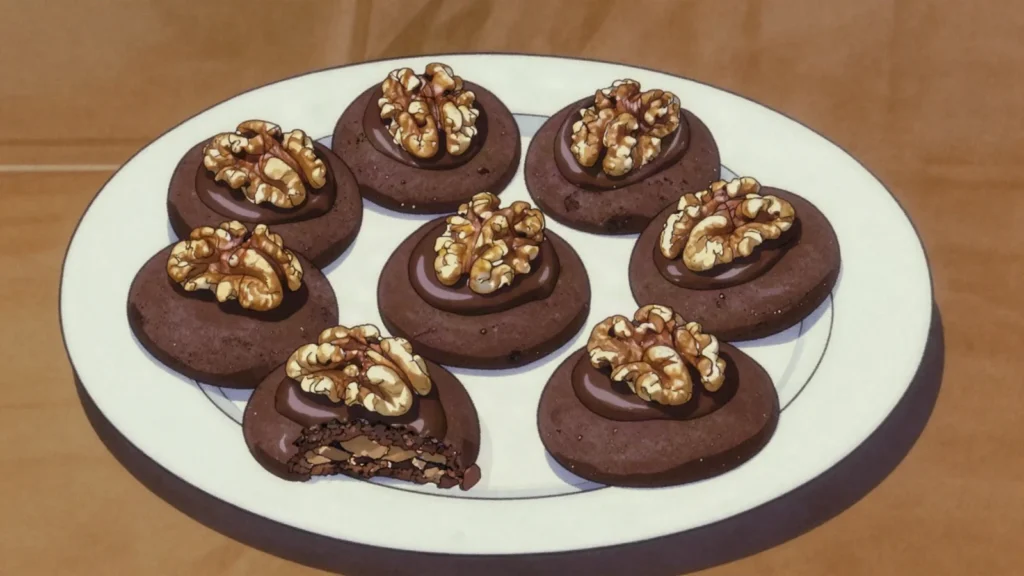
- Spread a spoonful on each biscuit with a small palette knife. Press a walnut half into the centre while the icing is still soft. Do it straight away, since the icing sets within a few minutes and a walnut pressed onto set icing falls off.
- Let the icing set completely before storing. They keep a week in an airtight tin and they are better after a day, once the icing has softened the biscuit slightly.
Technique
- The origin of the name is genuinely unknown.
- Crush the cornflakes lightly, leaving recognisable pieces.
- The biscuit gives no colour cue, so judge doneness by firmness.
Substitutions
- Any plain cornflake, and the cheaper ones work fine.
- A pecan or almond in place of the walnut.
Variations
- Made without nuts on top.
- With a little coffee in the icing.
- Made larger, as a single tray-baked slice.
History
A cornflake and cocoa biscuit printed in the Edmonds Cookery Book since the 1930s; the origin of its name remains unexplained.
Frequently asked questions
What is Afghan Biscuit?
Afghan Biscuit is a snack from New Zealand: chocolate cornflake biscuit topped with chocolate icing and a walnut. A cornflake and cocoa biscuit printed in the Edmonds Cookery Book since the 1930s; the origin of its name remains unexplained.
How long does Afghan Biscuit take to make?
Afghan Biscuit takes 20 min of preparation and 18 min of cooking. The recipe makes about 20. It is rated easy to make.
What can I substitute in Afghan Biscuit?
Yes, within limits. Any plain cornflake, and the cheaper ones work fine. A pecan or almond in place of the walnut.
What is the most important thing to get right in Afghan Biscuit?
Crush them lightly, so most flakes are broken into two or three pieces rather than reduced to crumbs. Now folding them in, which needs a light hand. Fold the cornflakes in at the very end, gently, with a spatula.