
Ingredients
Purple corn base
- 500 gdried purple corn on the cob, maiz morado
- 3 litreswater
- the skin and core of 1 pineapple
- 1quince, quartered, optional
- 2cinnamon sticks
- 6whole cloves
Fruit
- 150 gdried prunes
- 100 gdried apricots
- 100 gdried peaches or pears
- 200 gfresh pineapple, diced
To finish
- 300 gsugar, or to taste
- 80 gsweet potato starch, or cornflour
- juice of 2 limes
To serve
- ground cinnamon, for dusting
- arroz con leche, rice pudding, for a combinado
Directions
- Rinse the corn cobs under cold water. Break them into pieces with your hands. Strip some of the kernels off into the pot as well. Wash the pineapple thoroughly before cutting it. Keep the skin and the core for the pot. They carry flavour and would otherwise be wasted. Use the flesh for the diced fruit later. Put the corn and cobs into a large pot.
- Add the three litres of water. Add the pineapple skin and core. Add the quince, cinnamon and cloves. Bring it to a boil over a high heat. Let it cook for about an hour. The water turns deep purple within minutes. Top it up with hot water if it reduces too far.
- Pour the whole pot through a large sieve. Press the solids gently with a ladle. Discard the cobs, skins and spices. You should have about two litres of purple liquid.
- Return that liquid to the clean pot. Chop the dried fruit into bite-sized pieces. Add them to the purple liquid. Simmer them for about twenty minutes. Add the diced fresh pineapple. Give it five more minutes to cook. Add the sugar and stir until it dissolves.
- Taste it and adjust the sweetness. It should be clearly sweet but not cloying. Mix the starch with cold water into a smooth slurry. There must be no lumps at all. Pour it into the simmering pot in a thin stream. Stir it constantly as you pour. Let it bubble gently for three minutes. Judging the thickness takes a little care.
- Add more slurry if it is too thin. Add hot water if it has gone too thick. Finishing it is done off the heat. Take the pot off the heat completely. Squeeze in the lime juice and stir it through. Taste it one last time and adjust. Pour it into a wide dish or into bowls. Let it cool to room temperature. Then refrigerate it for several hours.
- Stir it back in or press film onto the surface. Serving it is always done cold. Spoon it into bowls or glasses. Dust ground cinnamon generously over the top. It keeps for four days refrigerated.
Technique
- Purple corn is an Andean maize variety grown for its deeply coloured cobs and is used for both this pudding and the drink chicha morada.
- The two are made from the same base, with chicha morada left as a thin drink and mazamorra thickened with starch.
Substitutions
- Cornflour replaces sweet potato starch and gives a slightly different set.
- Any dried fruit can be used, and Peruvian versions vary widely in what goes in.
Variations
- Chicha morada is the unthickened drink made from the same purple corn base.
- The combinado pairs it with arroz con leche and is sold everywhere in Lima.
- Some households add dried cherries or raisins to the fruit.
History
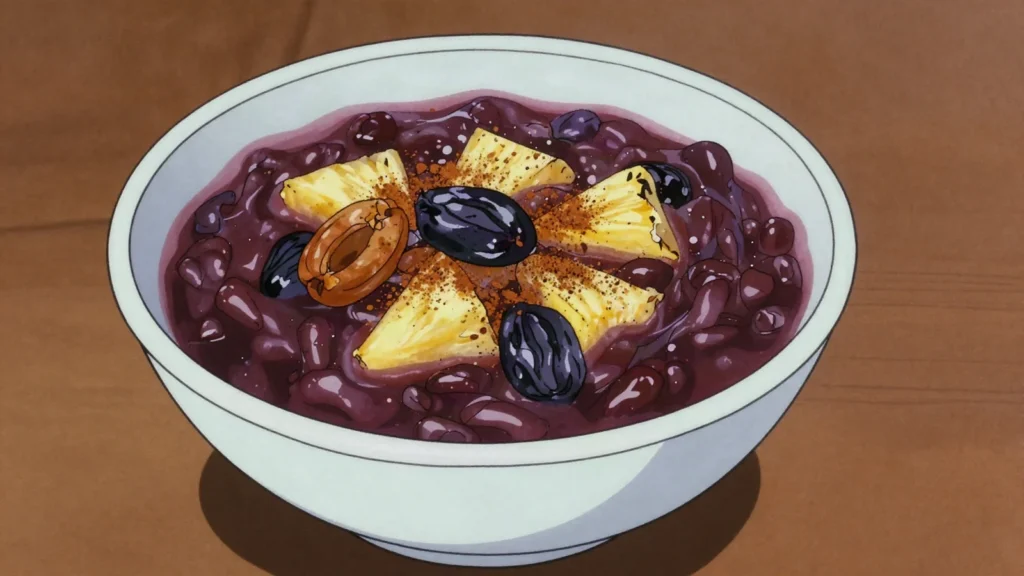
A thick pudding made from purple corn, sweetened and thickened with cornstarch and often combined with dried fruit including apple, quince and prunes, developed in Peru using the same distinctive purple corn variety central to chicha morada, with the two dishes often prepared from a shared base liquid, since Peruvian cooks commonly boil purple corn once to produce liquid usable for both the drink and this thicker dessert pudding. Its combination of dried fruits reflects Andean and colonial-era Spanish influence layered together over the dish’s development, and mazamorra morada is traditionally paired with arroz con leche, a rice pudding, served together on the same plate in a combination widely recognized across Peru as a classic dessert pairing.
Frequently asked questions
What is Mazamorra morada?
Mazamorra morada is a dessert from Peru: purple-corn fruit pudding, often paired with rice pudding. A thick pudding made from purple corn, sweetened and thickened with cornstarch and often combined with dried fruit including apple, quince and prunes, developed in Peru using the same distinctive purple corn variety central to chicha morada, with the two dishes often prepared from a shared base liquid, since Peruvian cooks commonly boil purple corn once to produce liquid usable for both the drink and this thicker dessert pudding. Its combination of dried fruits reflects Andean and colonial-era Spanish influence layered together over the dish’s development, and mazamorra morada is traditionally paired with arroz con leche, a rice pudding, served together on the same plate in a combination widely recognized across Peru as a classic dessert pairing.
How long does Mazamorra morada take to make?
Mazamorra morada takes 30 minutes of preparation and 1 hour 30 minutes of cooking. The recipe makes serves 8. It is rated medium to make.
What can I substitute in Mazamorra morada?
Yes, within limits. Cornflour replaces sweet potato starch and gives a slightly different set. Any dried fruit can be used, and Peruvian versions vary widely in what goes in.
What is the most important thing to get right in Mazamorra morada?
Rinse the corn cobs under cold water. Break them into pieces with your hands. Strip some of the kernels off into the pot as well. Wash the pineapple thoroughly before cutting it. Keep the skin and the core for the pot. They carry flavour and would otherwise be wasted. Use the flesh for the diced fruit later. Put the corn and cobs into a large pot.