
Ingredients
The beans
- 400 gdried black-eyed peas
- soaked overnight
- skins rubbed off
- or 400 g dried split cowpeas
- which are already skinned
The seasoning
- 1onion, roughly chopped
- 6 clovesgarlic
- 2hot green chillies
- or to taste
- a thumb of fresh ginger
- optional
- 1 teaspoonground cumin
- 1 teaspoonsalt
- half a teaspoon black pepper
- a handful of coriander leaf
- optional
To bind
- 2 tablespoonswater
- only if needed
- half a teaspoon baking powder
- optional, for lightness
For frying
- 1 litrevegetable oil
- or enough for 6 cm depth
To serve
- a hot chilli sauce
- or a tamarind sauce
- lime wedges
- sweet tea
Directions
- Put the dried beans in a large bowl. Cover them with plenty of cold water. Leave them overnight, or at least eight hours. Soak them in the refrigerator in hot weather. Beans left soaking warm begin to ferment. Rub handfuls of soaked beans between your palms. Pour off the floating skins and add fresh water.
- Repeat until almost all the skins have gone. It takes about ten minutes of steady work. Drain the beans thoroughly after skinning. Put them in a food processor with the onion and garlic. Add the chillies, ginger and cumin. Add the coriander leaf if you are using it. Use as little water as you possibly can. The beans hold enough moisture from soaking.
- Add water a teaspoon at a time only if the machine stalls. Grind it to a thick coarse paste. It should hold its shape on a spoon. Beat the paste hard with a spoon for two minutes. Or whip it in the processor for a minute.
- Add salt at this stage rather than earlier. Salt added before beating draws out water. Add the baking powder if you are using it. Use a deep heavy pot or a wok. Fill it no more than one third full. Oil bubbles up sharply when batter goes in. Never leave hot oil unattended at any point.
- Keep a well fitting lid within reach. If the oil catches fire, turn off the heat. Scoop the paste with a wet spoon. Wetting the spoon stops it sticking. Fry five or six at a time only. Do not crowd the pot at any point. Turn them so they colour all over. Fry them for four or five minutes. They should be deep golden brown.
- Break it open and look inside. It should be cooked through and light. Lift them out with a slotted spoon. Drain them on a rack over kitchen paper. A rack keeps them crisper than paper alone.
- Let the oil recover between batches. Serve them hot, within minutes of frying. Serve a hot chilli sauce alongside. Squeeze lime over them if you like. They keep a day in an airtight tin.
Technique
- Use as little water as possible when grinding. The soaked beans hold enough moisture, and extra water gives a paste that will not hold together — those fritters fall apart in the oil, which is the commonest failure with this dish.
- Beat the paste hard for two minutes after grinding. That incorporates air and makes the fritters noticeably lighter. Test it by dropping a small piece into water: sufficiently beaten paste floats rather than sinking.
- Add the salt after beating, not before. Salt draws water out of the paste and loosens it.
- The skins must come off. Rub handfuls of soaked beans between your palms in a bowl of water and pour off the floating skins, repeating until most have gone — about ten minutes. Split cowpeas, sold ready-skinned by Indian and African grocers, skip the step entirely.
- Soak the beans in the refrigerator in hot weather. Beans left soaking warm begin to ferment.
- Fry at 170 degrees and check the first one by breaking it open. A raw wet centre means the oil is too hot; lower the heat and give the rest longer. That single check saves the batch.
- Deep-frying rules apply: fill the pot no more than a third, never leave it unattended, keep a lid within reach, and if the oil catches fire turn off the heat and smother it. Never throw water on burning oil.
- Wet the spoons or your hands before shaping. The paste sticks to everything dry, and the shape is meant to be irregular rather than neatly spherical.
- Drain on a rack rather than on paper alone, which lets them sit in absorbed oil.
- Bajiya belongs to a very large family — akara in West Africa, acarajé in Brazil, ta’amiya in Egypt and Sudan, falafel in the Levant, bhajia and vada in India. The name sits close to the Indian bhajia, which is unsurprising in a Red Sea port where Indian, Arab, Somali, Afar and French influences all meet. The atlas records the family without claiming to trace this dish’s exact route.
Substitutions
- Split cowpeas replace whole black-eyed peas and come already skinned, saving the longest step.
- Dried broad beans replace cowpeas and give something closer to Egyptian ta’amiya.
- Chickpeas make a falafel rather than a bajiya, though the method is nearly identical.
- The ginger and coriander leaf are both optional and both are used in some households.
- Baking powder adds lift and can be left out; many cooks use none.
- Any hot sauce serves; a tamarind sauce is the other common partner.
Variations
- Akara, the West African version, is made from the same bean and is usually less spiced.
- Acarajé in Bahia is the same fritter carried across the Atlantic, split and filled with dried shrimp and okra.
- Ta’amiya, made from skinned broad beans, is the Egyptian and Sudanese relative and is bright green inside.
- Falafel from chickpeas is the best known member of the family outside Africa.
- A version with chopped onion left visible in the paste is made in some households.
- Sambusa, the fried pastry parcel, is the other great snack of Djibouti and the Horn of Africa.
History
An Adeni street snack showing Indian influence from the port’s colonial trade, sold from pans on the pavement.
Frequently asked questions
What is Bajiya?
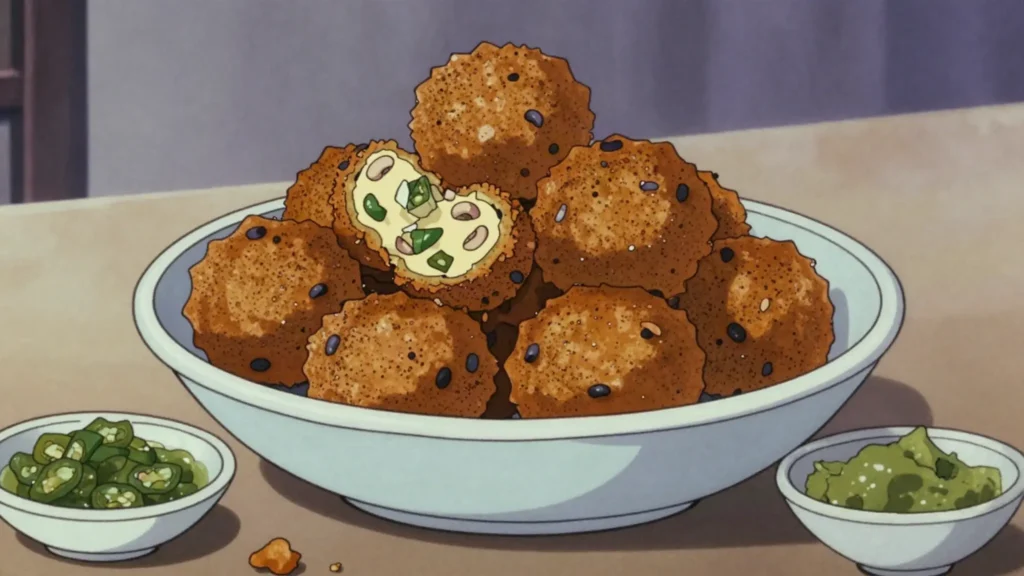
Bajiya is a snack from Djibouti: black-eyed pea fritters spiced with garlic and chili. An Adeni street snack showing Indian influence from the port’s colonial trade, sold from pans on the pavement.
How long does Bajiya take to make?
Bajiya takes 20 minutes plus overnight soaking of preparation and 25 minutes of cooking. The recipe makes makes about 30. It is rated medium to make.
What can I substitute in Bajiya?
Yes, within limits. Split cowpeas replace whole black-eyed peas and come already skinned, saving the longest step. Dried broad beans replace cowpeas and give something closer to Egyptian ta’amiya. Chickpeas make a falafel rather than a bajiya, though the method is nearly identical. The ginger and coriander leaf are both optional and both are used in some households. Baking powder adds lift and can be left out; many cooks use none. Any hot sauce serves; a tamarind sauce is the other common partner.
What is the most important thing to get right in Bajiya?
Add salt at this stage rather than earlier. Salt added before beating draws out water. Add the baking powder if you are using it. Use a deep heavy pot or a wok. Fill it no more than one third full. Oil bubbles up sharply when batter goes in. Never leave hot oil unattended at any point.