
Ingredients
The eggs
- 4to 8 trứng vịt lộn
- fertilised duck eggs
- from a reputable supplier
- read the safety note first
For boiling
- water, to cover
- 1 teaspoonsalt
To serve
- rau răm
- Vietnamese coriander
- or mint, as a substitute
- a thumb of ginger
- cut into fine threads
- salt and black pepper
- juice of 2 limes
- or kumquat juice
- 1chilli, sliced, optional
Equipment
- small egg cups
- or shot glasses
- small spoons
Directions
- Boil it for a full twenty to twenty-five minutes. Not the eight or ten minutes an ordinary egg takes. Discard any egg that smells wrong when opened. There is no ambiguity about it.
- Put the eggs in a pot. Cover them with cold water. Add the salt. Starting cold heats them evenly. Bring it to a boil.
- Simmer them twenty to twenty-five minutes. Do not shorten it. Drain them and serve them hot. Do not cool them in water.
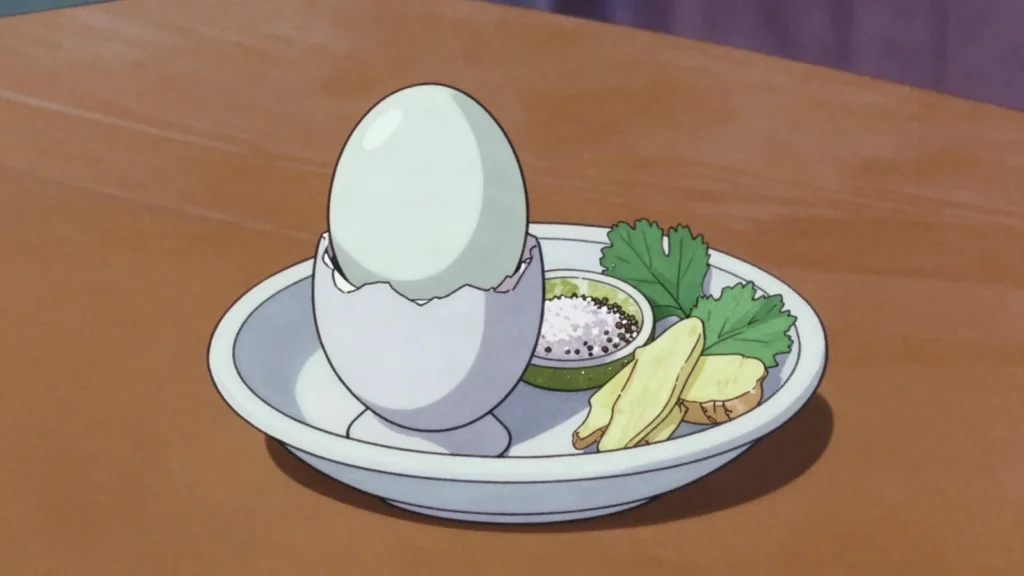
- Mix salt with black pepper. Add lime juice to make a wet dip. Cut fresh ginger into fine threads. Stand each egg in a small cup or glass. Stand it with the wider end up.
- Crack it and peel away a small opening. The broth is very hot. Let the egg stand a minute or two first.
- Peel more of the shell away. Season with the salt, pepper and lime. Add a leaf or two of rau răm.
- Add a thread of ginger. There is a firm white part at the base. Keep them refrigerated.
Technique
- Boil them a full twenty to twenty-five minutes, not the eight or ten an ordinary egg takes. Duck eggs carry a higher documented salmonella risk than hen eggs, the contents here are denser and the egg is larger, and thorough cooking is what removes the risk. Do not shorten it.
- Buy from a supplier with proper refrigeration and turnover, and eat them hot straight after boiling rather than letting them stand warm. Discard any egg that smells wrong when opened — a fresh one smells of cooked egg and broth, and a bad one is unmistakable.
- Start them in cold water. Dropping cold eggs into boiling water can crack them.
- Let the egg stand a minute or two before drinking the broth from the shell, and sip it. It is very hot.
- The atlas gives no method for incubating eggs. That needs equipment and controlled conditions, and buying them ready incubated from a Vietnamese or Filipino grocer is the only practical route.
- The accompaniments are half the dish, not a garnish. Rau răm — Vietnamese coriander, Persicaria odorata, unrelated to ordinary coriander — has a peppery bite that cuts the richness, and the pairing is fixed. Mint is the nearest substitute and is not the same.
- Cut the ginger into fine threads. It is fibrous and coarse pieces eat badly raw.
- Muối tiêu chanh — salt, black pepper and lime — is the standard Vietnamese dip and is what seasons this. Kumquat juice is used in Vietnam and is more aromatic; lime is the practical substitute.
- Vietnamese eggs are commonly incubated around nineteen to twenty-one days and Filipino balut often shorter, around sixteen to eighteen. Those figures are commonly reported rather than fixed rules, and a shorter incubation gives less developed contents.
- This food is often written about sensationally, as a dare. It is an ordinary food eaten by millions and the atlas records it as such. Many people find the idea difficult, which is a common reaction and not a wrong one — the atlas urges no one to eat it.
- It is widely regarded as strengthening and various claims are made about it. The atlas records that those claims exist and repeats none of them.
- The firm white part at the base is eaten by some and left by others, being harder and more rubbery. Both are common.
Substitutions
- Mint replaces rau răm where Vietnamese coriander is unavailable, without quite the same peppery bite.
- Lime replaces kumquat juice.
- Salt and pepper alone replace the wet lime dip.
- Filipino balut is prepared similarly and often eaten with vinegar rather than lime and herbs.
- An ordinary hard-boiled duck egg is the obvious alternative for anyone who would rather not.
- Chilli can be added to the dip for heat.
Variations
- Balut in the Philippines is the same food, often eaten with vinegar and salt.
- Pong tia koun in Cambodia is the local version.
- Trứng vịt lộn xào me stir-fries the shelled eggs in tamarind sauce.
- Trứng cút lộn uses quail eggs and is eaten by the handful.
- Hột vịt lộn served in a broth with herbs is another Vietnamese preparation.
- Ordinary salted duck eggs, trứng muối, are a quite different Vietnamese staple.
Frequently asked questions
What is Trung Vit Lon?
Trung Vit Lon is a street food from Vietnam: fertilised duck egg boiled and eaten from the shell with herbs and salt.
How long does Trung Vit Lon take to make?
Trung Vit Lon takes 5 minutes of preparation and 25 minutes of cooking. The recipe makes serves 4. It is rated easy to make.
What can I substitute in Trung Vit Lon?
Yes, within limits. Mint replaces rau răm where Vietnamese coriander is unavailable, without quite the same peppery bite. Lime replaces kumquat juice. Salt and pepper alone replace the wet lime dip. Filipino balut is prepared similarly and often eaten with vinegar rather than lime and herbs. An ordinary hard-boiled duck egg is the obvious alternative for anyone who would rather not. Chilli can be added to the dip for heat.
What is the most important thing to get right in Trung Vit Lon?
Simmer them twenty to twenty-five minutes. Do not shorten it. Drain them and serve them hot. Do not cool them in water.