
Ingredients
The pork
- 600 gpork shoulder
- or belly, cut into 2 cm cubes
- with the fat left on
- 1 tablespoonoil
The braise
- 2onions, finely chopped
- 6 clovesgarlic, crushed
- a thumb of ginger, grated
- 2 tablespoonsfermented soybean paste
- or pounded fermented soybean discs
- or miso, as a substitute
- 1 tablespoonpaprika
- or Kashmiri chilli, for colour
- 1 teaspoonturmeric
- 2tomatoes, chopped
- 1 tablespoonsoy sauce
- 1 teaspoonsugar
- about 500 ml water or stock
- salt, to taste
The noodles
- 600 gfresh round rice noodles
- mee shay noodles
- or thick rice vermicelli
- or fresh laksa noodles
The dressing and toppings
- 4 tablespoonsgarlic oil
- with the crisp garlic
- 2 tablespoonsrice vinegar
- or to taste
- 200 gpickled mustard greens
- rinsed and chopped
- 150 gbean sprouts
- blanched briefly
- 4spring onions, sliced
- a handful of coriander
- roasted chickpea flour
- or crushed roasted peanuts
- chilli oil, to taste
- lime wedges
Directions
- Use a red or brown miso rather than white. Use shoulder or belly. Both have enough fat and connective tissue. Heat the oil in a heavy pot. Brown the pork in batches. Do not crowd the pot. Brown it properly in two batches. Add the onions to the fat. Cook them for about ten minutes.
- Add the garlic and ginger. Cook them for two minutes. Add the paste and fry it for two minutes. Add the paprika and turmeric. Do not use a hot chilli powder in that quantity. Add it with the heat lowered. Add a splash of water if it threatens to catch.
- Cook them down for five minutes. Add the soy sauce and sugar. Add the water or stock. Bring it to a simmer. Cover it and simmer gently for an hour. The pork should become genuinely tender. Uncover it for the last twenty minutes. It should be thick enough to coat the noodles.
- Taste and correct the salt. Slice garlic thinly and evenly. Put it in a cold pan with the oil. Turn the heat to medium-low. Take it off while it is still pale gold. It keeps cooking in the residual heat.
- Strain it and keep both the oil and the garlic. Rinse them well. Squeeze them out and chop them. Unrinsed pickles make the dish far too salty. Drain them thoroughly. Dried rice noodles need soaking then brief boiling. Rinse them briefly in cold water after cooking. It stops them clumping into a solid mass.
- Put the noodles in first. Spoon over some garlic oil and vinegar. Toss the noodles to coat them. Otherwise the dressing sits on top. Ladle over the braised pork and its sauce. Add the chopped pickled greens. Add blanched bean sprouts.
- Add spring onion and coriander. Scatter the crisp fried garlic. Toast gram flour in a dry pan until it smells nutty. Add chilli oil to taste. Serve lime wedges. Do not serve it neatly arranged and untouched. Adjust the vinegar at the table. The braised pork keeps four days refrigerated. Cook fresh noodles when you serve it. Assembled bowls do not keep at all.
Technique
- Fry the fermented soybean paste for two minutes before the liquid goes in. It removes the raw sharpness and deepens it considerably — a small step with a real effect.
- Take the frying garlic off the heat while it is still pale gold. It darkens to golden off the flame, and waiting for brown in the pan gives burnt bitter garlic that ruins the oil. Keep both the oil and the crisp garlic; both go in the bowl.
- Rinse and squeeze the pickled mustard greens. They are packed in a very salty brine and unrinsed pickles make the whole dish inedibly salty — a common mistake.
- Rinse cooked rice noodles briefly in cold water and toss them in a little oil. That removes surface starch and stops them clumping into a solid mass.
- Dress the noodles with garlic oil and vinegar before the toppings go on. Otherwise the dressing sits on top and never reaches them.
- Use paprika or Kashmiri chilli for colour rather than a hot chilli powder. The red of mee shay is colour more than heat, and that quantity of hot chilli would be overwhelming. Lower the heat when it goes in, since paprika burns and turns bitter in seconds.
- Brown the pork in two batches without crowding the pot. Crowded meat steams instead of browning, and that browning is real flavour.
- Use shoulder or belly and leave the fat on. Lean pork goes dry and stringy in a long braise, and the rendered fat is part of the sauce.
- Uncover the pot for the last twenty minutes. The sauce should be thick enough to coat noodles rather than pool as a soup.
- Taste before adding salt. The soybean paste and soy sauce are both salty already.
- It is meant to be tossed thoroughly at the table before eating. Serving it neatly arranged and untouched misses the point.
- Red or brown miso, or Korean doenjang, substitutes for Burmese fermented soybean. Neither is the same thing and the atlas says so rather than pretending.
- This contains soy and often peanuts, both common allergens. Say so plainly.
- Make the braised pork ahead — it keeps four days, improves overnight and freezes for three months. Cook fresh noodles when you serve, since assembled bowls do not keep at all.
Substitutions
- Red or brown miso replaces Burmese fermented soybean paste; doenjang also works.
- Thick rice vermicelli or fresh laksa noodles replace mee shay noodles.
- Chicken replaces pork, with a shorter braise.
- Crushed roasted peanuts replace roasted chickpea flour.
- Any pickled mustard green or Chinese preserved vegetable serves, rinsed well.
- The soup version ladles broth over the same noodles and toppings.
Variations
- Shan khauk swe is the better-known Shan noodle dish, dressed with tomato and chicken.
- Mee shay served in soup is at least as common as the dry version.
- Nan gyi thoke is the thick rice noodle salad with chicken and chickpea flour.
- Mohinga, the fish noodle soup, is Myanmar’s national breakfast dish.
- Ohn no khao swè uses coconut milk and egg noodles.
- A version from other towns uses different proportions and toppings entirely.
Frequently asked questions
What is Mandalay Mee Shay?
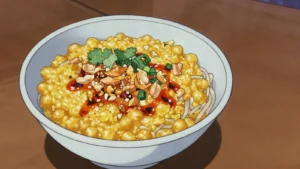
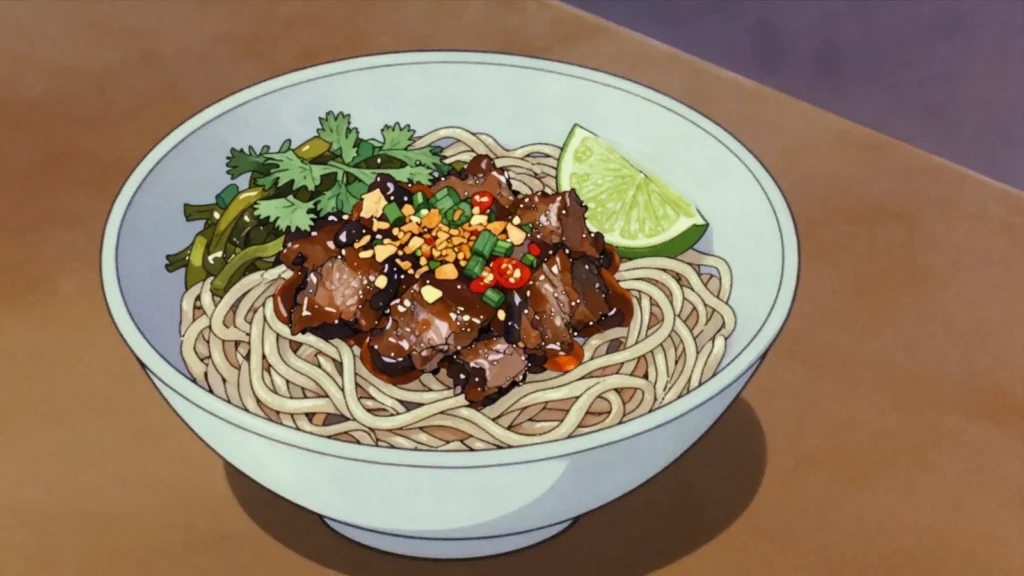
Mandalay Mee Shay is a main from Myanmar: rice noodles with braised pork, fermented bean sauce and pickled greens.
How long does Mandalay Mee Shay take to make?
Mandalay Mee Shay takes 30 minutes of preparation and 1 hour 15 minutes of cooking. The recipe makes serves 4. It is rated medium to make.
What can I substitute in Mandalay Mee Shay?
Yes, within limits. Red or brown miso replaces Burmese fermented soybean paste; doenjang also works. Thick rice vermicelli or fresh laksa noodles replace mee shay noodles. Chicken replaces pork, with a shorter braise. Crushed roasted peanuts replace roasted chickpea flour. Any pickled mustard green or Chinese preserved vegetable serves, rinsed well. The soup version ladles broth over the same noodles and toppings.
What is the most important thing to get right in Mandalay Mee Shay?
Use a red or brown miso rather than white. Use shoulder or belly. Both have enough fat and connective tissue. Heat the oil in a heavy pot. Brown the pork in batches. Do not crowd the pot. Brown it properly in two batches. Add the onions to the fat. Cook them for about ten minutes.