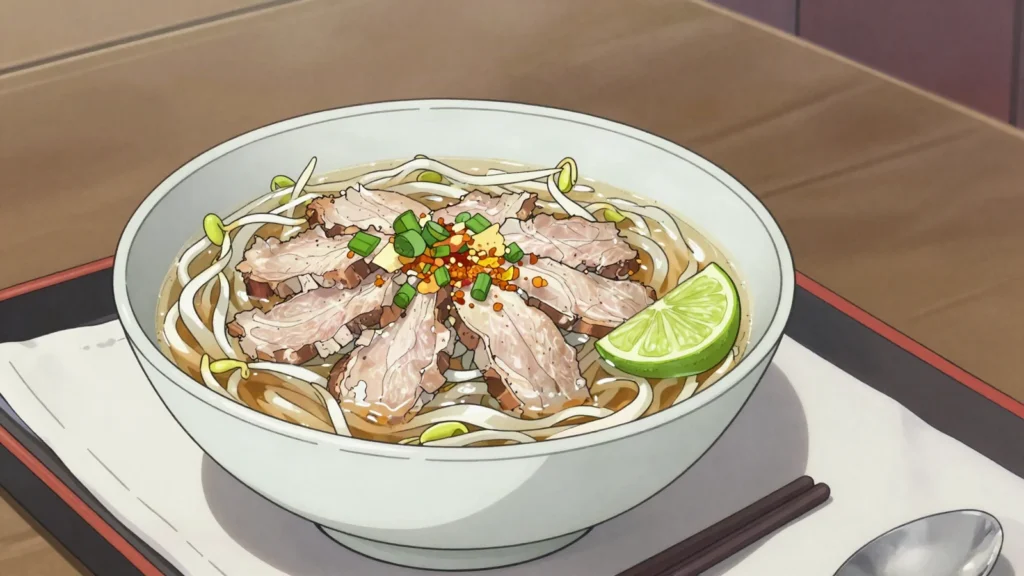

Ingredients
Broth
- 1.5 kgpork bones, preferably neck and leg, blanched
- 3 litreswater
- 1whole dried squid, rinsed
- 2dried scallops (optional)
- 1daikon, in thick rounds
- 2onions, halved and charred
- 50 grock sugar
- 1 tbspsalt
- 2 tbspfish sauce
Bowls
- 500 gfresh flat rice noodles (kuy teav)
- 300 gpork loin, sliced paper-thin
- 250 gminced pork
- 200 gbeansprouts
- 4 tbspfried garlic and its oil
Table
- 1 bunchgarlic chives, cut in 4 cm lengths
- Lettuce and Thai basil
- 2limes, in wedges
- Sliced bird’s eye chilli in fish sauce
- Chilli paste and sugar, to taste
Directions
- Cover the bones with cold water, bring to a boil for 5 minutes, then drain and rinse them and scrub the pot. This blanch is what makes the finished broth clear rather than muddy.
- Return the bones to the clean pot with 3 litres of fresh water and bring to a bare simmer. Skim the scum for the first 20 minutes and never let it boil.
- Add the charred onion, daikon, dried squid, scallops, rock sugar and salt, and hold at the barest simmer for 3 hours, uncovered, topping up to keep the bones covered.
- Strain the broth through a fine sieve or cloth, season with fish sauce, and taste — it should be clean, faintly sweet and deeply savoury, not salty.
- Fry the minced pork in a little oil until crumbly and browned, 6 minutes, and season it with a splash of fish sauce.
- Fry sliced garlic in oil over low heat until pale gold, then drain it the moment it turns colour — it keeps browning off the heat. Keep both the garlic and the oil.
- Blanch the noodles in boiling water for 20 to 30 seconds only and divide between four bowls. Blanch the beansprouts for 10 seconds and add them.
- Lay the raw sliced pork over the noodles, ladle the broth over at a rolling boil so it cooks the slices through in seconds, then top with minced pork, fried garlic and a spoon of the garlic oil. Serve with the herb plate and let each person add lime, chilli and sugar.
Technique
- Kuy Teav is a breakfast, sold from carts and shophouses from dawn and gone by ten. Eating it at night is possible but slightly odd, like ordering porridge for dinner.
- The dried squid is not optional in Phnom Penh. It gives the broth the particular sweet-marine backbone that distinguishes it from Vietnamese hu tieu and Thai kuay teow.
- Kuy teav kor ko is the beef version; the dish crosses the region under related names, and Cambodians will tell you the Khmer version is the older one — the history is genuinely disputed.
Substitutions
- No fresh rice noodles: use dried flat rice sticks, soaked 30 minutes in warm water then blanched 30 seconds.
- Dried squid can be replaced by 2 tbsp of dried shrimp for a similar sea-sweetness, though less complex.
Variations
- Kuy teav cha is the dry version: noodles tossed in the seasonings with the broth served alongside in a cup.
- Many stalls add pork liver, meatballs and a raw egg cracked into the hot broth at the counter.
History
Pork-broth rice noodle soup brought by Teochew Chinese migrants; Cambodia’s standard breakfast, related to Vietnamese hu tieu.
Frequently asked questions
What is Kuy Teav?
Kuy Teav is a breakfast from Cambodia: pork-bone noodle soup with beansprouts, lime and fried garlic. Pork-broth rice noodle soup brought by Teochew Chinese migrants; Cambodia’s standard breakfast, related to Vietnamese hu tieu.
How long does Kuy Teav take to make?
Kuy Teav takes 30 min of preparation and 3 hr of cooking. The recipe makes 4 servings. It is rated medium to make.
What can I substitute in Kuy Teav?
Yes, within limits. No fresh rice noodles: use dried flat rice sticks, soaked 30 minutes in warm water then blanched 30 seconds. Dried squid can be replaced by 2 tbsp of dried shrimp for a similar sea-sweetness, though less complex.
What is the most important thing to get right in Kuy Teav?
Cover the bones with cold water, bring to a boil for 5 minutes, then drain and rinse them and scrub the pot. This blanch is what makes the finished broth clear rather than muddy.