
Ingredients
Rice
- 100 graw red rice, or samba rice
- 800 mlwater
Greens
- a large bunch of gotu kola, or one of the leaves below
- or karapincha, curry leaf
- or hathawariya, or mukunuwenna, or polpala
Coconut
- 400 mlthick coconut milk
To season
- 1 tspsalt
- 3 clovesgarlic, crushed, if wanted
- 1small piece of ginger, if wanted
To serve
- a piece of jaggery, to bite alongside
Directions
- Use one leaf at a time rather than mixing several. Pick over the leaves and discard any that are yellowed or damaged. Wash them in several changes of water, since they carry grit. Rinse the rice and put it in a pot with the water. Bring it to the boil and lower the heat.
- Simmer it for twenty-five minutes until the grains burst open. It should be much softer and looser than cooked rice for eating.
- Mash it against the side of the pot with a spoon. It should form a thin loose gruel. Put the washed leaves in a blender with a cup of the coconut milk.
- Blend them until they are completely broken down. Pour the mixture through a fine sieve or a cloth. Squeeze the pulp hard to get all the green liquid out.
- Discard the fibrous pulp, which would make the porridge coarse. The liquid should be a strong bright green. Stir the remaining coconut milk into the cooked rice. Bring it back to a gentle simmer. Do not let it boil hard, since coconut milk splits.
- Add the crushed garlic and ginger now if you are using them. Simmer it for five minutes and season it with salt. Now adding the green, which is done off the heat. Take the pot off the heat entirely.
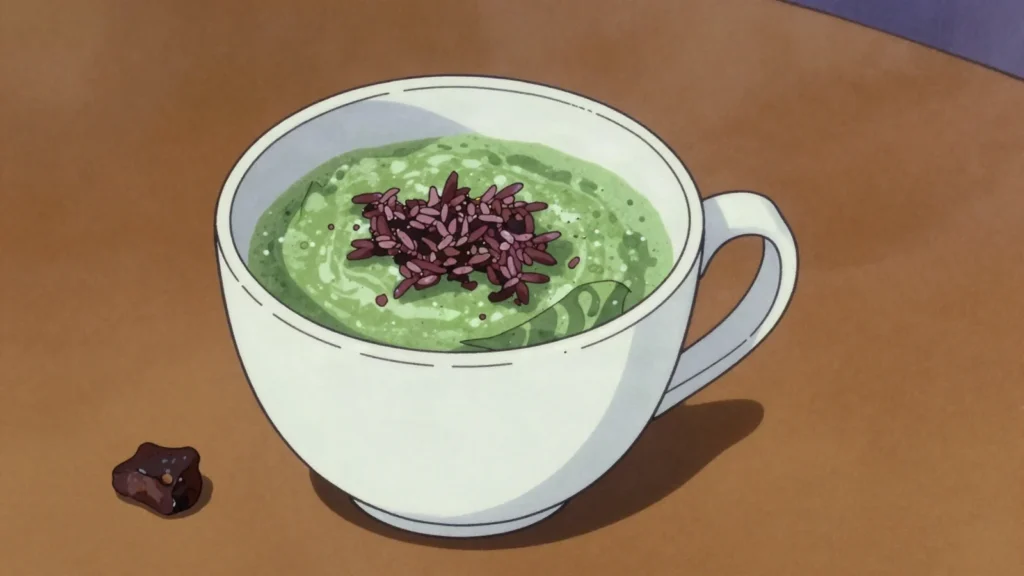
- Pour in the strained green leaf liquid and stir it through. Adding it off the heat keeps the colour bright green. Pour it into cups or mugs rather than bowls. Serve a small piece of jaggery alongside to bite between sips. Drink it warm, first thing, before eating anything else.
Technique
- The tonic claims are traditional rather than medically established.
- Gotu kola is a medicinal plant; treat it with respect, particularly if pregnant or on medication.
- Add the green leaf liquid off the heat, or the colour turns dull olive brown.
Substitutions
- Any of the traditional leaves, used one at a time.
- White rice in place of red, though red is traditional.
Variations
- Made with karapincha for a strongly aromatic version.
- With garlic and ginger, which some households add.
- Made thicker and eaten with a spoon.
History
Drunk at daybreak as a preventive tonic, drawing on ayurvedic ideas about digestion and cooling; temples serve it free on poya days.
Frequently asked questions
What is Kola Kanda?
Kola Kanda is a breakfast from Sri Lanka: green herbal porridge of rice, coconut milk and pounded medicinal leaves. Drunk at daybreak as a preventive tonic, drawing on ayurvedic ideas about digestion and cooling; temples serve it free on poya days.
How long does Kola Kanda take to make?
Kola Kanda takes 20 min of preparation and 30 min of cooking. The recipe makes 4 servings. It is rated easy to make.
What can I substitute in Kola Kanda?
Yes, within limits. Any of the traditional leaves, used one at a time. White rice in place of red, though red is traditional.
What is the most important thing to get right in Kola Kanda?
Use one leaf at a time rather than mixing several. Pick over the leaves and discard any that are yellowed or damaged. Wash them in several changes of water, since they carry grit. Rinse the rice and put it in a pot with the water. Bring it to the boil and lower the heat.