
Ingredients
Base
- 300 gfuba de milho (fine maize flour)
- 3 litreswater
- 200 gcaster sugar, or 150 g honey
- 1 pinchof fine salt
Starter and flavour
- 1pineapple skin, well washed, or 200 g grated sweet potato, for the wild yeasts
- 2wide strips of lemon peel
- 1small piece of fresh ginger, about 20 g, sliced, optional
Equipment
- 1large clay pot, glass jar or food-grade bucket, scalded
- 1clean cloth and string, to cover
Directions
- Slake 100 g of the maize flour in 400 ml of cold water until smooth, with no lumps.
- Bring the remaining water to the boil with the salt, then pour the slaked flour in slowly, whisking, and cook 10–12 minutes over low heat, stirring, until it thickens into a thin, glossy porridge with no raw flour taste.
- Stir in the sugar until dissolved, then take the pan off the heat.
- Cool the porridge to below 35°C (95°F), which takes about an hour. Adding the starter to hot liquid kills the yeasts and the drink will never ferment.
- Stir in the remaining 200 g of dry maize flour, the pineapple skin, lemon peel and ginger, and pour everything into the scalded pot.
- Cover with a cloth tied down, not a sealed lid, and leave in a warm shaded place at 25–30°C (75–85°F).
- Within 12 hours the surface should carry a fine foam and smell yeasty and sweet-sour. Stir once a day with a scalded spoon.
- Ferment 24–48 hours. At one day it is sweet and barely tangy; by two days it is sharply sour and faintly fizzy, with a very low alcohol content.
- Strain through a coarse sieve, pressing lightly, and discard the skins and peel.
- Chill and serve cold in gourds or glasses, stirred each time, since the maize settles hard at the bottom. Drink within three days.
Technique
- Kissangua is the everyday maize beverage of the Angolan interior, made for family meals and for festivals; the same technique with different grains and starters runs across central and southern Africa.
- The pineapple skin or grated sweet potato is not for flavour but for the wild yeasts and lactic bacteria living on it. Without a starter the porridge will simply spoil rather than ferment.
- Never seal the vessel. Fermenting kissangua produces carbon dioxide steadily and a closed jar can build enough pressure to burst.
- Taste as it goes. Stopped early it is a sweet family drink; left three days or more it keeps souring and becomes noticeably alcoholic.
Substitutions
- No pineapple skin: 5 g of dried baker’s yeast slaked in warm water gives a faster, cleaner ferment, ready in about 18 hours, though it lacks the lactic sourness.
- Millet or sorghum flour can replace the maize entirely, which is how it is made in the drier south.
Variations
- Kissangua doce, stopped after 24 hours and served sweet to children.
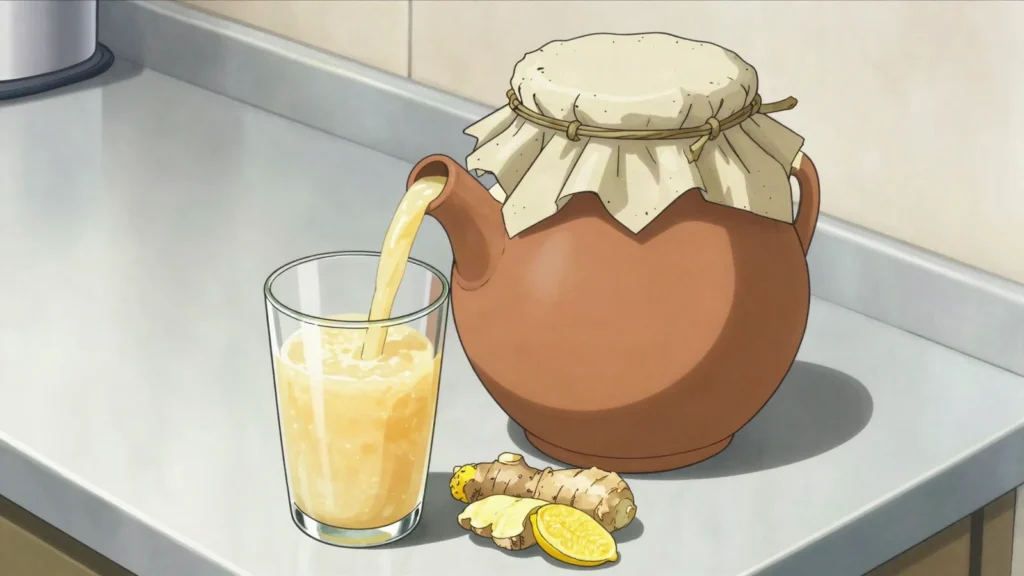
- A version flavoured with ginger and lemon, common in Luanda.
- Made with a handful of roasted maize added to the pot, which gives a darker, toasty drink.
History
A maize or millet drink, lightly fermented and barely alcoholic, brewed at home and served at community celebrations.
Frequently asked questions
What is Kissangua?
Kissangua is a drink from Angola: homemade fermented cornmeal drink, lightly sweet. A maize or millet drink, lightly fermented and barely alcoholic, brewed at home and served at community celebrations.
How long does Kissangua take to make?
Kissangua takes 20 min of preparation and 2 days fermenting of cooking. The recipe makes about 3 litres. It is rated medium to make.
What can I substitute in Kissangua?
Yes, within limits. No pineapple skin: 5 g of dried baker’s yeast slaked in warm water gives a faster, cleaner ferment, ready in about 18 hours, though it lacks the lactic sourness. Millet or sorghum flour can replace the maize entirely, which is how it is made in the drier south.
What is the most important thing to get right in Kissangua?
Cool the porridge to below 35°C (95°F), which takes about an hour. Adding the starter to hot liquid kills the yeasts and the drink will never ferment.