
Ingredients
Peanuts
- 400 graw peanuts, skins on
- 200 gcaster sugar
- 100 mlwater
- 1 pinchof fine salt
Flavour and colour
- 1 tspvanilla extract, optional
- 0.5 tspground cinnamon, optional
- a few drops of red food colouring, as sold on the street, optional
To serve
- paper cones, twisted from newspaper or greaseproof paper
Directions
- Put the sugar, water and salt in a wide, heavy pan and stir over medium heat until the sugar dissolves.
- Add the peanuts, still in their skins, and any colouring, and bring to a boil.
- Boil steadily, stirring often, for 8–10 minutes, until the syrup thickens and reduces to a heavy bubbling glaze.
- Keep stirring. Quite suddenly the syrup goes cloudy, grainy and dry, and the peanuts are coated in a rough white sand; this is the sugar crystallising and it is meant to happen.
- Lower the heat and go on stirring for 5–8 minutes. The sugar coating begins to melt again in patches against the pan and caramelises to a golden brown shell around each nut.
- Stir constantly through this stage, scraping the base; caramel goes from amber to burnt in under a minute and the peanuts inside are roasting at the same time.
- Take the pan off the heat the moment most nuts are glossy and toffee-coloured, and stir in the vanilla and cinnamon, which will hiss.
- Tip onto a lined tray and separate the clusters quickly with two forks while the coating is still soft.
- Cool completely, at least 20 minutes, until hard and crackly, then serve in twisted paper cones.
- Store airtight; in humid weather the coating softens within a day.
Technique
- The crystallise-then-caramelise method is the whole technique, and the moment when the syrup turns to dry white sand alarms people the first time. Do not add water or throw it out; keep stirring and it comes back as caramel.
- The peanuts go in raw and cook inside their sugar shell, which is why they taste roasted at the end. Pre-roasted nuts scorch during the caramel stage.
- The skins stay on. They add colour, a faint bitterness and the characteristic rustle of street paracuca.
- Sugar at this stage is well above 150°C (300°F) and sticks to skin. Use a long spoon and never taste it straight from the pan.
Substitutions
- Cashews or almonds work the same way, though cashews need 2 minutes less in the caramel stage as they colour faster.
- For a plainer, softer sweet, stop at the white crystallised stage and cool the nuts there; that is the sugared version sold in some markets.
Variations
- Paracuca vermelha, dyed bright pink, the version street sellers hawk at traffic lights in Luanda.
- Spiced with cinnamon and a pinch of chilli for a sweet-hot version.
- Pounded coarsely and scattered over ice cream or mucua desserts.
History
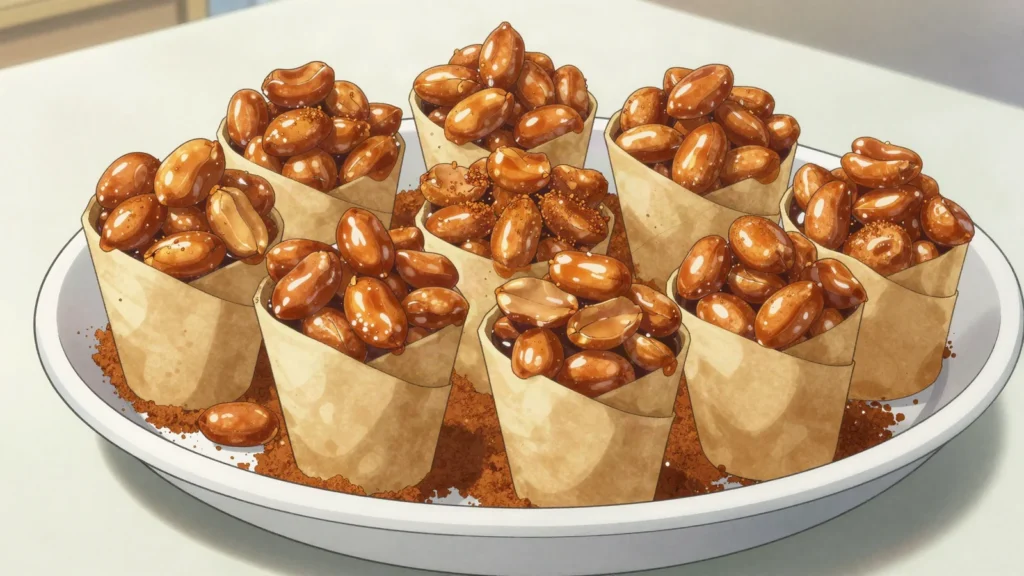
Peanuts coated in hard caramel and sold in twists of paper by street vendors across Luanda.
Frequently asked questions
What is Paracuca?
Paracuca is a snack from Angola: caramelised peanuts sold in paper cones on the street. Peanuts coated in hard caramel and sold in twists of paper by street vendors across Luanda.
How long does Paracuca take to make?
Paracuca takes 10 min of preparation and 25 min of cooking. The recipe makes about 500 g. It is rated easy to make.
What can I substitute in Paracuca?
Yes, within limits. Cashews or almonds work the same way, though cashews need 2 minutes less in the caramel stage as they colour faster. For a plainer, softer sweet, stop at the white crystallised stage and cool the nuts there; that is the sugared version sold in some markets.
What is the most important thing to get right in Paracuca?
The crystallise-then-caramelise method is the whole technique, and the moment when the syrup turns to dry white sand alarms people the first time. Do not add water or throw it out; keep stirring and it comes back as caramel.