
Ingredients
Sauce
- 80 gfresh jindungo chillies (African bird’s eye or malagueta), stems removed
- 6garlic cloves, peeled
- 1small onion, roughly chopped
- 1.5 tspfine salt
- 60 mlred palm oil, or sunflower oil
- juice of 2 limes, about 60 ml
- 60 mlwater
- 1 tspcaster sugar, optional
Optional additions
- 1small tomato, chopped, for a milder, redder sauce
- 1 tbspchopped coriander stems
Directions
- Wear gloves. Jindungo is fierce and the oils stay on your hands for hours.
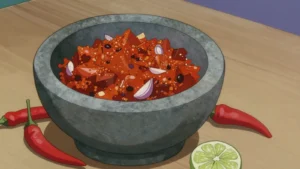
- Pound the chillies, garlic, onion and salt in a large wooden mortar, working in small batches, until you have a coarse, wet paste with flecks still visible. A short pulse in a blender does it too, but the mortar gives a better texture.
- Warm the palm oil in a small pan over low heat until it turns clear red, then take it off the heat and let it cool for 2 minutes.
- Stir the warm oil into the paste a little at a time, so it emulsifies rather than sitting on top.
- Add the lime juice, water and the sugar if using, and stir until the sauce is loose enough to spoon but still thick enough to cling.
- Taste with a fragment of bread rather than a finger, and adjust salt and lime; it should be sharply hot, salty and sour in that order.
- Let it stand 30 minutes for the raw onion edge to soften.
- Spoon into a clean jar, cover the surface with a film of oil and keep in the fridge. It sharpens over the first three days and keeps two weeks.
Technique
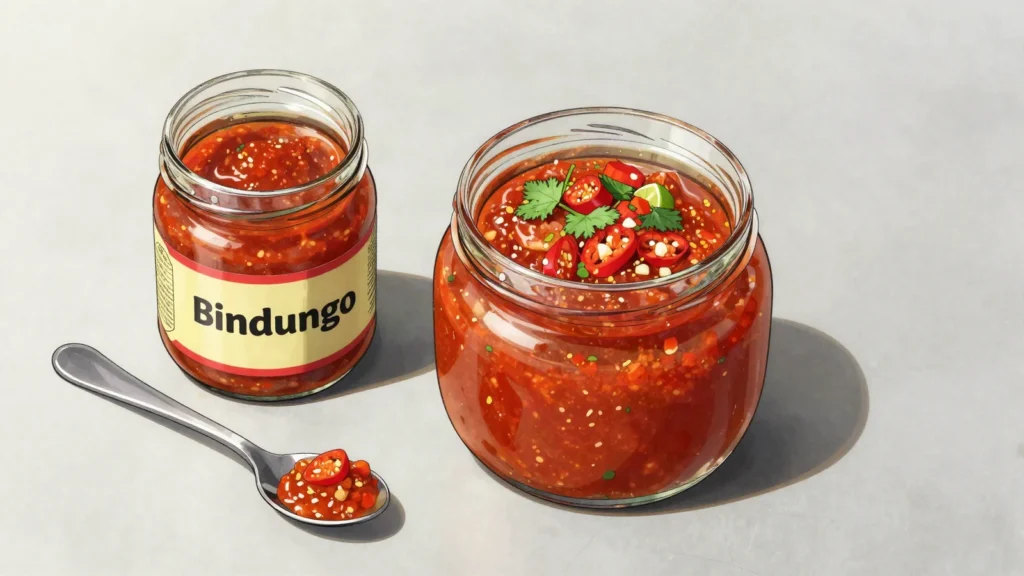
- Gindungo, or jindungo, is both the name of the chilli and of the sauce, and a dish of it stands on every Angolan table so that each person seasons their own plate. It is a condiment, not a cooking sauce.
- The lime and salt are structural, not decorative: they preserve the raw paste and keep the colour bright. A sauce made without acid darkens and ferments within days.
- Palm oil gives the Luanda version its colour and rounded body. Made with sunflower oil, the sauce is sharper and cleaner and closer to what is served inland.
Substitutions
- No jindungo: use African bird’s eye, piri-piri or Thai bird chillies, all of similar heat. Scotch bonnet works but brings a fruitier, different perfume; use half the weight.
- For a milder sauce that still tastes right, keep the same chilli count but deseed half of them and add a chopped tomato.
Variations
- A fermented version, salted at 3% and left covered at room temperature for four days before the oil and lime go in.
- Gindungo with pounded roasted peanuts stirred through, which shades it towards kitaba.
- A whole-chilli version, left in oil and lime for a week and served as pickled chillies alongside grilled food.
History
Gindungo is the Kimbundu word for chili; the small hot peppers arrived from the Americas and now define Angolan seasoning.
Frequently asked questions
What is Gindungo?
Gindungo is a sauce & condiment from Angola: fiery chili and garlic sauce set on every Angolan table. Gindungo is the Kimbundu word for chili; the small hot peppers arrived from the Americas and now define Angolan seasoning.
How long does Gindungo take to make?
Gindungo takes 15 min of preparation and 5 min of cooking. The recipe makes about 250 ml. It is rated easy to make.
What can I substitute in Gindungo?
Yes, within limits. No jindungo: use African bird’s eye, piri-piri or Thai bird chillies, all of similar heat. Scotch bonnet works but brings a fruitier, different perfume; use half the weight. For a milder sauce that still tastes right, keep the same chilli count but deseed half of them and add a chopped tomato.
What is the most important thing to get right in Gindungo?
Stir the warm oil into the paste a little at a time, so it emulsifies rather than sitting on top.