
Ingredients
Head and feet
- 1sheep’s head, split
- 4sheep’s trotters
- coarse salt, for scrubbing
- 3 tablespoonsplain flour
- juice of 3 lemons
- 2 tablespoonsvinegar
The pot
- 3onions, halved
- 2whole heads of garlic
- 1 tablespoonblack peppercorns
- 4bay leaves
- 1 tablespooncoriander seed
- about 6 litres water
- salt
To finish
- 6garlic cloves, crushed
- 1 tablespoonground cumin
- juice of 2 lemons
- black pepper
- a handful of coriander, chopped
To serve
- flatbread, torn into the bowl
- raw onion and vinegar
- green tea
- lemon wedges
Directions
- Wash hands, boards and knives carefully afterwards. Keep them away from any ready-to-eat food. Ask them to remove the eyes if you prefer. Use coarse salt and a stiff brush. Work into every fold and crevice. Rinse repeatedly until the water runs clear. Repeat until the skin is completely smooth.
- Put the pieces in a very large bowl. Cover them with plenty of cold water. Add the lemon juice, vinegar and flour. Rub the mixture hard into every surface. Flour is used across the region to clean offal.
- Leave them soaking for at least three hours. Change the water and repeat if you can. Put the cleaned pieces in a very large pot. Cover them well with cold water. Bring it slowly up to a rolling boil.
- Let it boil hard for fifteen minutes. Tip the whole pot out into the sink. Rinse every piece under running hot water. Return the rinsed pieces to the clean pot. Add the halved onions and garlic heads. Add the bay leaves and whole spices. Cover it with about six litres of water. Bringing it to temperature takes attention.
- Bring it slowly up to a gentle simmer. Skim off the foam as it rises. Keep skimming for the first half hour. Then lower it until it barely moves. Cover it partly and simmer very gently. Give it at least five full hours. Top up with boiling water if it drops. Judging when it is done takes a check. Add the salt in the last hour only. Lift out all the pieces carefully.
- Strain the broth through a fine sieve. Discard the onions, garlic and spices. Return the clear broth to a clean pot. Picking the meat takes real work. Let the pieces cool enough to handle. Pull all the meat from the skull.
- Take the cheek, the tongue and the jowl. Peel the tongue and slice it up. Pull the soft skin from the trotters. Discard every bone and hard piece. It peels off easily while still hot. Peel it as soon as you can handle it. Return the picked meat to the broth. Add the crushed garlic to the pot.
- Add the cumin and plenty of black pepper. Add the lemon juice to sharpen it. Let it simmer for ten more minutes. Taste it and adjust the salt and lemon. Serving it is done very hot in deep bowls. Tear flatbread into the bottom of each bowl. Ladle the broth and meat over it. Scatter chopped coriander over the top. Put raw onion in vinegar on the table. It keeps four days refrigerated in its jelly.
Technique
- The whole cooked head goes to the guest of honour as a genuine and observed mark of respect, and that guest then distributes parts of it by rules of seniority and role that vary between families and regions; the atlas records that the custom exists rather than setting out one fixed version.
- Some countries restrict the sale of sheep heads under controls on transmissible diseases, with skull and brain of older sheep restricted in places; the rules differ between countries and change over time, so buy from a licensed butcher who knows the local rules.
- Heads and feet carry more surface contamination than muscle and need very thorough cleaning: scrubbing with coarse salt, singeing remaining bristles, a long soak with lemon, vinegar and flour, and a hard fifteen-minute blanch that is tipped out entirely before the real cooking starts.
Substitutions
- Trotters alone make a similar broth if a head is unavailable.
- The tongue peels easily while hot and will not come off once cold.
Variations
- Kaleh pacheh, kallapocha and kawareh are the same idea elsewhere.
- Some households add chickpeas or potatoes to the finished broth.
- For a celebration the head is cooked whole and presented intact.
History
A celebration and hangover dish across Central Asia, the head presented to the most honoured guest.
Frequently asked questions
What is Kelle-bashayak?
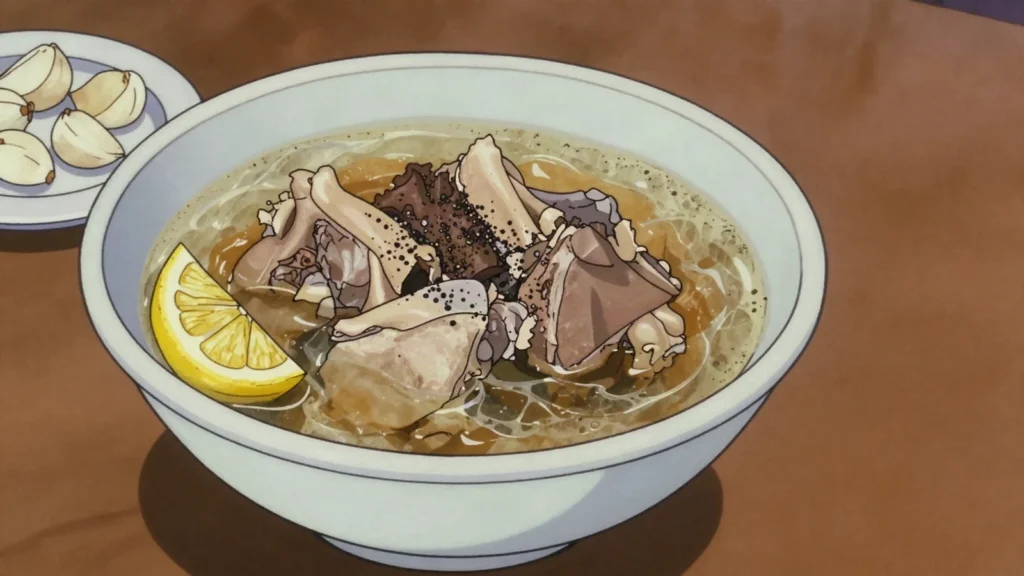
Kelle-bashayak is a soup & stew from Turkmenistan: sheep head and trotters simmered for hours into a rich gelatinous broth. A celebration and hangover dish across Central Asia, the head presented to the most honoured guest.
How long does Kelle-bashayak take to make?
Kelle-bashayak takes 1 hour 30 minutes plus soaking of preparation and 6 hours of cooking. The recipe makes serves 8. It is rated hard to make.
What can I substitute in Kelle-bashayak?
Yes, within limits. Trotters alone make a similar broth if a head is unavailable. The tongue peels easily while hot and will not come off once cold.
What is the most important thing to get right in Kelle-bashayak?
Let it boil hard for fifteen minutes. Tip the whole pot out into the sink. Rinse every piece under running hot water. Return the rinsed pieces to the clean pot. Add the halved onions and garlic heads. Add the bay leaves and whole spices. Cover it with about six litres of water. Bringing it to temperature takes attention.