
Ingredients
Meat
- 1.5 kgbeef shin, oxtail or lamb neck, on the bone
- 3 tbspoil or lard
- salt and pepper
Aromatics
- 3onions, sliced
- 6 clovesgarlic
- 2 tbspmixed spice or potjie spice
- 2bay leaves
- 1 tspground coriander
- 1 tsppaprika
Layers, bottom to top
- 6potatoes, halved
- 4carrots, in chunks
- 300 gbutternut, cubed
- 200 ggreen beans
- 1 headcabbage, in wedges
- 2peppers, sliced
Liquid
- 300 mlstock, or a bottle of beer, or red wine
To serve
- pap or rice
- chutney
- bread
Equipment
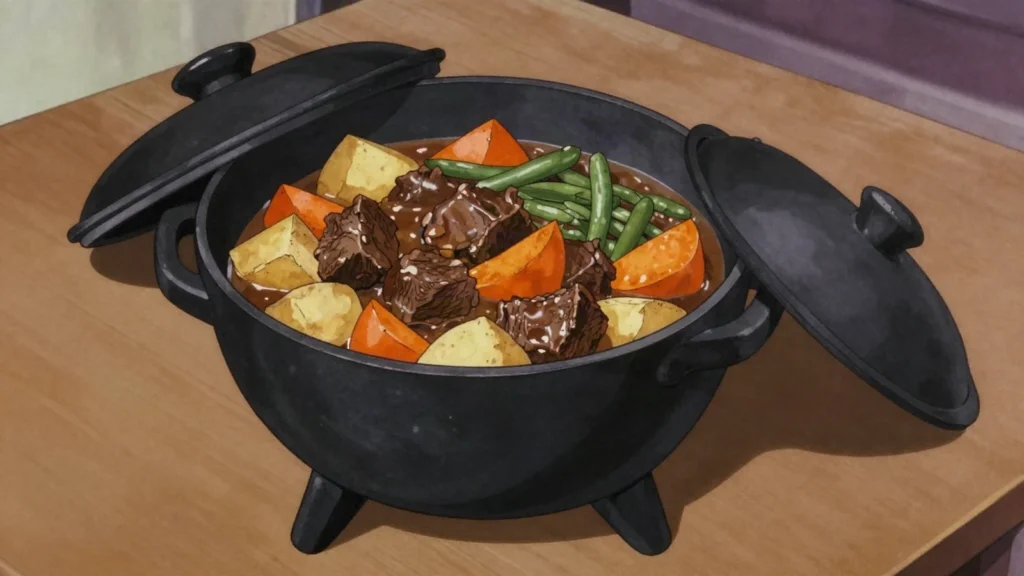
- a three-legged cast-iron potjie
- a wood or charcoal fire
Directions
- Season the cast iron and build a fire, letting it burn down to steady coals. Set the potjie over the coals and let it heat, then add the oil.
- Brown the meat hard, in batches, until it is properly coloured on all sides. Brown it thoroughly and do not crowd the pot, because this is the only stage where you can develop that colour.
- Lift the meat out, add the onions, and cook them until deep golden. Add the garlic and spices and cook a minute, then return the meat.
- Pour in the liquid, which should come only about a third of the way up the meat. Use far less liquid than for a stew. The vegetables release a great deal of their own, and a potjie should end up thick.
- Cover and let it cook gently over low coals for 1 hour 30 minutes to 2 hours, until the meat is nearly tender. Add the potatoes first, on top of the meat, then carrots, then butternut, then beans, then cabbage and peppers on top. Do not add more liquid at this stage unless the pot is genuinely dry.
- Cover and cook a further 45 minutes to an hour without lifting the lid more than once or twice. Coals on the lid are the traditional way of cooking from above as well as below, and it is how the top layers get done.
- Season and serve straight from the pot with pap, rice or bread and a good chutney. It cooks for three hours over a fire while people stand around it with a drink, and that is the point of it.
Technique
- Potjie sizes are numbered, and a number three feeds about eight.
- Seafood, chicken and vegetarian potjies all exist and cook far faster.
- The pot improves with use as the seasoning builds.
Substitutions
- A heavy cast-iron casserole on a barbecue or in a low oven.
- Any long-cooking meat on the bone.
Variations
- Made with oxtail, which is the prized version.
- Seafood potjie, cooked in under an hour.
- Vegetarian, layered the same way.
History
A stew slow-cooked in a round, three-legged cast iron pot called a potjie over an open fire, its name meaning literally small pot food in Afrikaans, developed among Afrikaner Voortrekker communities during their 1830s migration across the South African interior, when cooking over open fires using durable, portable cast iron pots was a practical necessity for a mobile, trekking population without fixed kitchens. Layering ingredients in the pot without stirring during cooking, letting each layer cook in the juices of what sits above and below it, is considered an essential technique distinguishing proper potjiekos from an ordinary stirred stew. It spread from South Africa into Namibia through shared Afrikaner settler history and remains closely tied to outdoor, social cooking occasions across both countries rather than routine indoor weekday cooking.
Frequently asked questions
What is Potjiekos?
Potjiekos is a soup & stew from Namibia: layered meat and vegetable stew slow-cooked in cast-iron pot. A stew slow-cooked in a round, three-legged cast iron pot called a potjie over an open fire, its name meaning literally small pot food in Afrikaans, developed among Afrikaner Voortrekker communities during their 1830s migration across the South African interior, when cooking over open fires using durable, portable cast iron pots was a practical necessity for a mobile, trekking population without fixed kitchens. Layering ingredients in the pot without stirring during cooking, letting each layer cook in the juices of what sits above and below it, is considered an essential technique distinguishing proper potjiekos from an ordinary stirred stew. It spread from South Africa into Namibia through shared Afrikaner settler history and remains closely tied to outdoor, social cooking occasions across both countries rather than routine indoor weekday cooking.
How long does Potjiekos take to make?
Potjiekos takes 40 min of preparation and 3 hr of cooking. The recipe makes 8 servings. It is rated medium to make.
What can I substitute in Potjiekos?
Yes, within limits. A heavy cast-iron casserole on a barbecue or in a low oven. Any long-cooking meat on the bone.
What is the most important thing to get right in Potjiekos?
Brown the meat hard, in batches, until it is properly coloured on all sides. Brown it thoroughly and do not crowd the pot, because this is the only stage where you can develop that colour.