
Ingredients
Vegetables
- 3large aubergines, in cubes
- 2onions, sliced
- 2sweet peppers, chopped
- 4garlic cloves, crushed
- 500 gtomatoes, chopped
- 2 tablespoonstomato paste
To flavour
- 4 tablespoonscapers, rinsed
- 100 ggreen olives, pitted
- 2 tablespoonsred wine vinegar
- 1 tablespoonsugar
- a handful of basil, torn
- 1 teaspoondried oregano
- salt and black pepper
To cook
- 6 tablespoonsolive oil
- salt, for the aubergine
To serve
- Maltese bread
- or crusty sourdough
- at room temperature
Directions
- Wait and it will give some back. Cut the aubergines into large cubes. Put them in a colander with salt. Toss them and leave them thirty minutes.
- Rinse them and pat them completely dry. So the salting is about texture now. Heat the olive oil in a wide pan. Add the aubergine cubes in batches. Do not crowd the pan at any point.
- Fry them until golden and soft. Give each batch about eight minutes. Lift them out and set them aside. Add the sliced onions to the pan. Cook them for a good ten minutes. Add the chopped peppers to them. Cook them for another five minutes.
- Add the crushed garlic to the pan. Cook it for a good two minutes. Stir the tomato paste into the pan. Fry it for a good two minutes. Add the chopped tomatoes to it. Cook them down for about ten minutes. Mash them against the pan as they soften. Return the aubergine to the pan.
- Add the capers and the olives. Add the vinegar and the sugar. Add the dried oregano to the pan. Season it with salt and black pepper. Add them and then taste and adjust. Let it simmer gently for twenty minutes.
- Stir it occasionally and gently. Do not stir it hard or the aubergine breaks. Adjust the vinegar and sugar to balance it. Take it off the heat entirely.
- Stir in the torn basil leaves. Adding it off the heat keeps it fresh. Stir it through and let it wilt only. Let it cool to room temperature. It is not meant to be eaten hot. Spoon it into a wide shallow dish. Serve plenty of good crusty bread. It keeps five days refrigerated. Bring it back to room temperature to serve.
Technique
- Capers grow wild all over Malta, straight out of stone walls with almost no soil or water, and are picked as unopened flower buds in spring; raw capers are bitter and must be salted or brined before they are edible, which is what develops their flavour.
- Sicilian caponata is markedly sweet and sour with sugar, vinegar and often pine nuts and raisins, while the Maltese version is generally plainer and leans more on tomato; both are made and neither is wrong.
- Aubergine absorbs oil extraordinarily readily and then releases some back as it cooks, so do not keep adding oil to a dry pan; wait and it will give some back.
Substitutions
- Salt-packed capers have the best flavour but need thorough rinsing and soaking.
- Any good crusty bread stands in for Maltese bread.
Variations
- Some cooks add pine nuts and raisins in the Sicilian manner.
- The proportion of vinegar to sugar varies from household to household.
- It is eaten as a starter, a side dish or part of a platter.
History
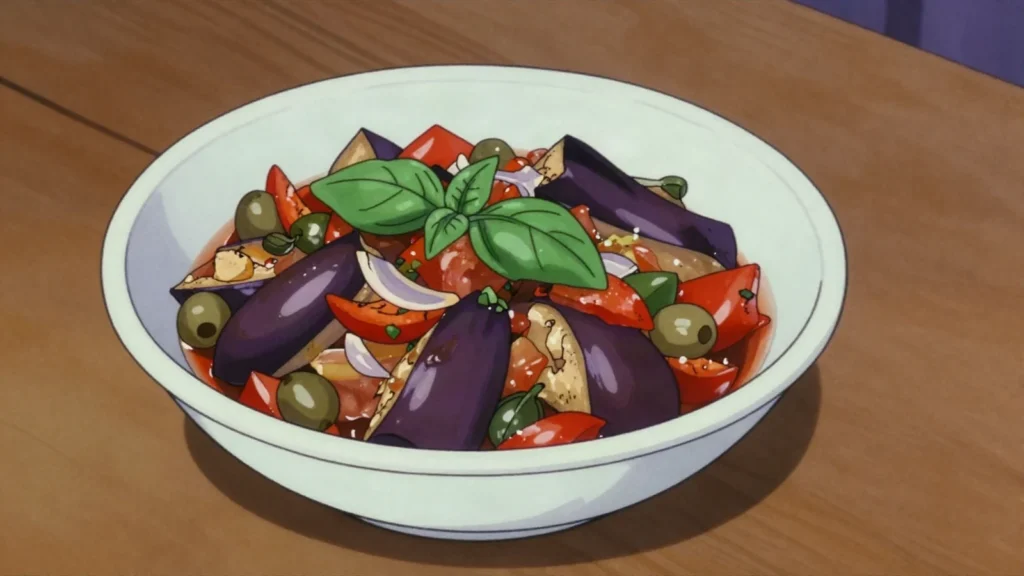
The Maltese version of Sicilian caponata, made with aubergine, tomato and the capers that grow wild across the islands.
Frequently asked questions
What is Kapunata?
Kapunata is a salad & side from Malta: maltese ratatouille of aubergine, tomatoes, capers. The Maltese version of Sicilian caponata, made with aubergine, tomato and the capers that grow wild across the islands.
How long does Kapunata take to make?
Kapunata takes 25 minutes of preparation and 45 minutes of cooking. The recipe makes serves 6. It is rated easy to make.
What can I substitute in Kapunata?
Yes, within limits. Salt-packed capers have the best flavour but need thorough rinsing and soaking. Any good crusty bread stands in for Maltese bread.
What is the most important thing to get right in Kapunata?
Rinse them and pat them completely dry. So the salting is about texture now. Heat the olive oil in a wide pan. Add the aubergine cubes in batches. Do not crowd the pan at any point.