
Ingredients
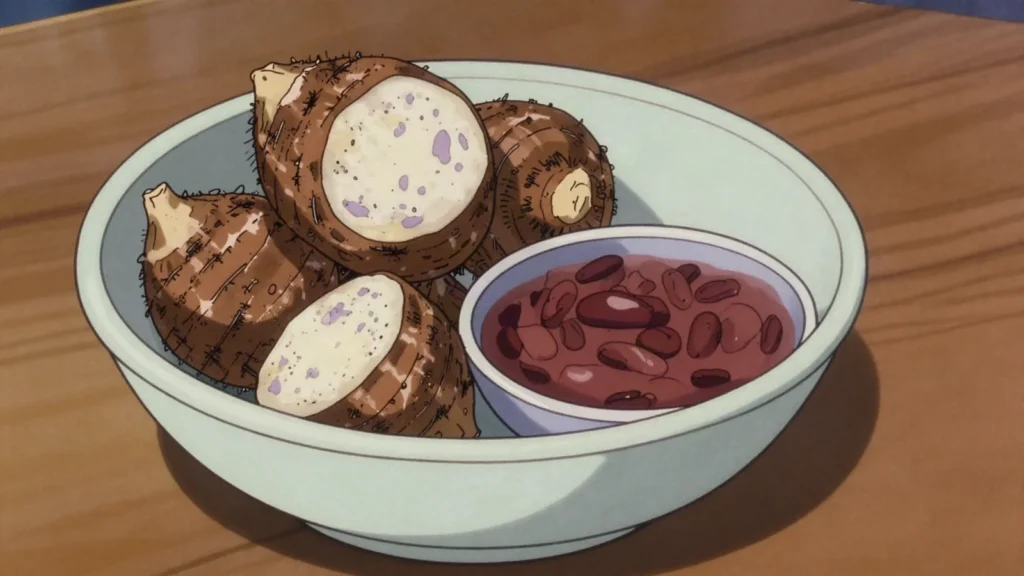
Taro
- 1.5 kgtaro corms, amateke
- water, to cover
- 1 teaspoonsalt
To serve
- ibishyimbo, stewed beans
- isombe, cassava leaf stew
- or any Rwandan stew
- salt and oil, for a plain plate
Equipment
- gloves, for peeling raw taro
- a large pot
Directions
- Rinse your hands well if sap gets on them. They should be firm with no soft spots. Cut into one to check the flesh. It should be white or faintly purple flecked.
- Use a brush to get into the hairy surface. Trim off both ends with a knife. Cut any very large corms in half.
- Put them into a large heavy pot. Cover them all with cold water. Add the salt into the cooking water.
- Bring it to the boil over a high heat. Cover the pot loosely with a lid.
- Let them cook for about thirty minutes. Larger corms may take forty-five. Cook them until they are completely soft.
- Drain them and let them cool a little. A knife helps with any stubborn patches.
- Pile them into a bowl or onto a platter. Serve them alongside beans or stew. Break off pieces and dip them in the stew. They keep two days refrigerated.
Technique
- Taro grows in Rwanda’s marshy valley bottoms, which are farmed differently from the hillsides where beans and sorghum grow.
- It sits alongside sweet potato, cassava and plantain as one of the everyday starches.
Substitutions
- Sweet potato or cassava can be boiled the same way and served identically.
- Frozen peeled taro is sold in Asian shops and needs no handling of raw sap.
Variations
- Some households mash the cooked taro with a little oil.
- Boiled taro sliced and fried is a common way of using leftovers.
- Amateke are also cooked directly into stews in some households.
History
Grown in Rwanda’s wet valley bottoms and eaten as a filling everyday starch alongside sweet potato.
Frequently asked questions
What is Amateke?
Amateke is a salad & side from Rwanda: taro corms boiled and served in their skins beside beans or stew. Grown in Rwanda’s wet valley bottoms and eaten as a filling everyday starch alongside sweet potato.
How long does Amateke take to make?
Amateke takes 15 minutes of preparation and 40 minutes of cooking. The recipe makes serves 6. It is rated easy to make.
What can I substitute in Amateke?
Yes, within limits. Sweet potato or cassava can be boiled the same way and served identically. Frozen peeled taro is sold in Asian shops and needs no handling of raw sap.