
Ingredients
Chicken and stock
- 1whole chicken, about 1.6 kg, at room temperature
- 1 tbspcoarse salt, for scrubbing the skin
- 60 gginger, sliced into coins
- 4spring onions, halved
- 2whole garlic cloves, bruised
- 3 litreswater
- 2 tspsalt
- 1 tbspsesame oil, for rubbing
Rice
- 400 glong-grain rice (jasmine), rinsed until the water runs clear and drained 20 min
- 3 tbspreserved chicken fat, chopped from the cavity
- 1 tbspshallot oil or neutral oil
- 4garlic cloves, minced
- 15 gginger, minced
- 2pandan leaves, knotted
- 600 mlhot poaching stock
- 1 tspsalt
Chilli sauce
- 10red chillies, deseeded
- 3bird’s eye chillies
- 4garlic cloves
- 25 gginger
- 2 tbsplime juice
- 1 tspsugar
- ½ tspsalt
- 5 tbsphot poaching stock
Ginger-spring onion and to serve
- 50 gginger, finely grated
- 3spring onions, minced
- ½ tspsalt
- 4 tbspneutral oil, heated to smoking
- 3 tbspdark sweet soy sauce
- 1cucumber, sliced on the angle
- coriander sprigs
Directions
- Pull the pads of fat from the chicken cavity and reserve. Scrub the whole bird with coarse salt to smooth the skin, then rinse.
- Stuff the cavity with the ginger coins, spring onions and garlic. Bring the water, sliced aromatics and 2 tsp salt to a boil in a pot just wide enough to hold the bird.
- Lower the chicken in breast-down, return to a bare shiver, then drop the heat so the surface only trembles at about 85°C (185°F). Poach 35–40 minutes, until a skewer in the thigh runs clear and the joint reads 74°C (165°F).
- Lift the bird straight into a bath of iced water for 10 minutes. This shocks the skin and sets the famous jelly layer under it. Drain, rub all over with sesame oil and rest.
- Render the reserved fat with the shallot oil in a wok over low heat until the pieces are golden crisps, 8 minutes. Discard the solids, fry the garlic and ginger 1 minute until fragrant but pale.
- Add the drained rice and toss 3 minutes until every grain is glossy and slightly translucent at the edges. Tip into a rice cooker or pot with the hot stock, salt and pandan and cook until tender with distinct grains, 15 minutes, then rest 10 minutes covered.
- Blitz all the chilli sauce ingredients to a coarse, pourable paste. Mix the grated ginger and spring onion with salt and pour the smoking oil over; it should hiss and smell sweet.
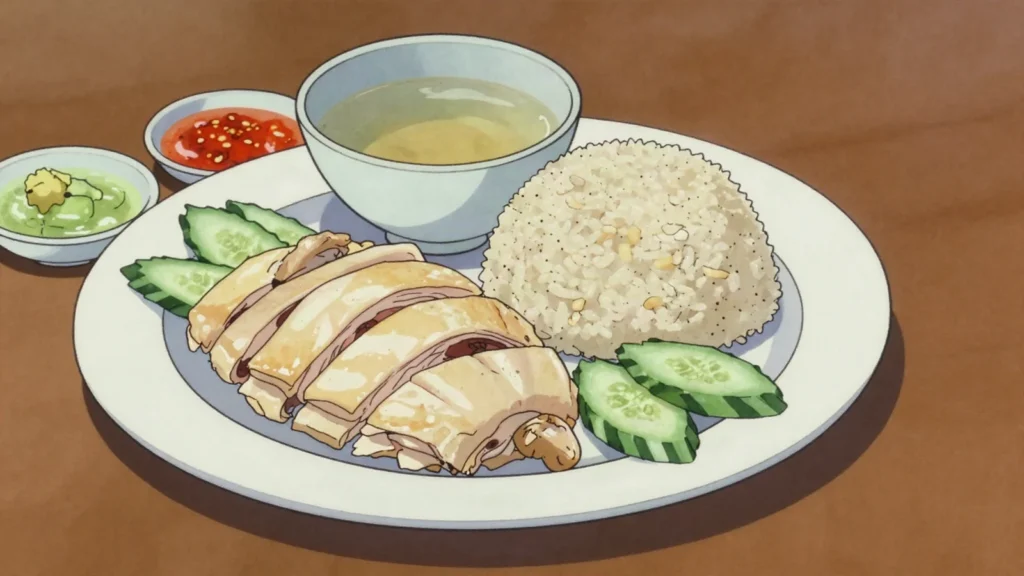
- Chop the chicken through the bone into 2 cm pieces, keeping the shape of the bird. Serve with the rice, a bowl of the clear poaching broth skimmed of fat, cucumber and the three sauces.
Technique
- The poach must never boil. A rolling boil shreds the breast and clouds the broth; the target is a lazy 80–85°C (175–185°F) for the whole time.
- The ice bath is not optional. It stops the carry-over cooking and firms the collagen just under the skin into the slippery jelly that defines the dish.
- Cook the rice in the same fat and stock the chicken gave up. Rice cooked in plain water is the single most common failure of this dish.
Substitutions
- No pandan leaves: leave them out rather than substituting; a bay leaf tastes wrong here.
- If your chicken is lean, a 3 tbsp knob of shop-bought chicken fat or 2 tbsp of skimmed fat from the top of the broth works for frying the rice.
Variations
- Soy sauce chicken rice, where the bird is braised in dark soy, rock sugar and spices instead of poached.
- Roasted chicken rice, the Cantonese-influenced hawker version with lacquered crisp skin.
History
Poached chicken served with rice cooked in chicken fat and broth, brought to Malaysia and Singapore by immigrants from Hainan, an island province in southern China, who arrived in the region during the 1800s and 1900s as part of broader Chinese immigration to British colonial Malaya and Singapore. Its preparation, poaching the chicken gently rather than roasting or frying it, and then cooking the rice separately in the resulting flavourful broth and rendered fat, reflects a Hainanese cooking technique adapted with local Malaysian and Singaporean ingredients and serving customs after the immigrant community settled in the region. It remains one of the most widely recognized dishes across both Malaysia and Singapore, with each country maintaining a genuine, long-running claim and rivalry over which nation’s version is more authentic or superior.
Frequently asked questions
What is Hainanese Chicken Rice?
Hainanese Chicken Rice is a main from Malaysia: poached chicken with fragrant rice and chili-ginger sauce. Poached chicken served with rice cooked in chicken fat and broth, brought to Malaysia and Singapore by immigrants from Hainan, an island province in southern China, who arrived in the region during the 1800s and 1900s as part of broader Chinese immigration to British colonial Malaya and Singapore. Its preparation, poaching the chicken gently rather than roasting or frying it, and then cooking the rice separately in the resulting flavourful broth and rendered fat, reflects a Hainanese cooking technique adapted with local Malaysian and Singaporean ingredients and serving customs after the immigrant community settled in the region. It remains one of the most widely recognized dishes across both Malaysia and Singapore, with each country maintaining a genuine, long-running claim and rivalry over which nation’s version is more authentic or superior.
How long does Hainanese Chicken Rice take to make?
Hainanese Chicken Rice takes 40 min of preparation and 1 hr 15 min of cooking. The recipe makes 4 servings. It is rated medium to make.
What can I substitute in Hainanese Chicken Rice?
Yes, within limits. No pandan leaves: leave them out rather than substituting; a bay leaf tastes wrong here. If your chicken is lean, a 3 tbsp knob of shop-bought chicken fat or 2 tbsp of skimmed fat from the top of the broth works for frying the rice.
What is the most important thing to get right in Hainanese Chicken Rice?
Pull the pads of fat from the chicken cavity and reserve. Scrub the whole bird with coarse salt to smooth the skin, then rinse.