
Ingredients
Fish
- 2 kgfresh anchovies, ikan bilis, whole
Salt
- 600 gcoarse sea salt, roughly a third the weight of the fish
Also
- 100 gpalm sugar
- 2 tbsptamarind pulp, optional
- a few pieces of dried tamarind slice
Equipment
- a large glazed earthenware or glass jar with a lid
- muslin
To serve
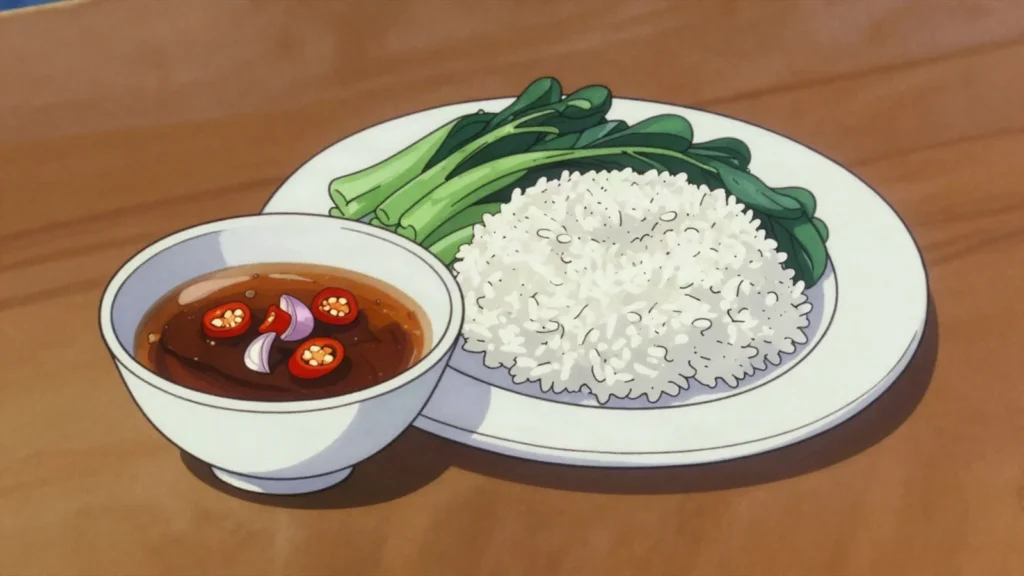
- with hot rice, raw vegetables and grilled fish
Directions
- Use very fresh whole anchovies, bought the day they are caught if possible. Do not gut or clean them, since the gut enzymes are what drive the fermentation. Rinse them briefly in seawater or lightly salted water rather than fresh water.
- Use a large glazed earthenware or glass jar, scrupulously clean and completely dry. Do not use metal, which corrodes in contact with the salty acidic liquid.
- Layer the fish and salt alternately, starting and finishing with a layer of salt. Press each layer down firmly to exclude air. Finish with a thick layer of salt on the top, which forms a protective seal.
- Place a clean weight on top so the fish stays submerged in the brine that forms. Within a few days the salt draws liquid out and the fish should be fully covered. Cover the jar with muslin and a loose lid and keep it in a warm place, traditionally in the sun. Do not seal it airtight, since gases are produced and pressure builds.
- Leave it for at least six months, and traditionally a year or more. The liquid should darken gradually to a deep brown and the fish should break down. Discard the batch entirely if you see coloured mould, if it smells of rot or ammonia, or if the fish was above the brine.
- Press the solids to extract everything, then strain again for a cleaner sauce. Boil the strained liquid with palm sugar and tamarind for twenty minutes.
- Skim the surface of it as it boils. Let it cool and bottle it in clean bottles. Use it sparingly, since it is extremely salty and strongly flavoured. It keeps for years in a sealed bottle and it deepens with age.
Technique
- The high salt ratio is what makes the ferment safe and must not be reduced.
- The fish are not gutted, since the gut enzymes drive the fermentation.
- It is finished by boiling with palm sugar and tamarind.
Substitutions
- Bought budu, which is widely sold and far more practical.
- Thai nam pla at a pinch, though it is thinner and less sweet.
Variations
- Mixed with shallot, chilli and lime, as a dip.
- Used in cooking, as in Kelantan.
- Made with a longer ferment, which is darker and stronger.
History
Kelantan and Terengganu speciality, fermented with salt and palm sugar in jars for months, then eaten with ulam and grilled fish.
Frequently asked questions
What is Budu?
Budu is a sauce & condiment from Malaysia: dark fermented anchovy sauce of the east coast, eaten with rice and raw vegetables. Kelantan and Terengganu speciality, fermented with salt and palm sugar in jars for months, then eaten with ulam and grilled fish.
How long does Budu take to make?
Budu takes 30 min plus 6 months fermenting of preparation and none of cooking. The recipe makes about 1 litre. It is rated hard to make.
What can I substitute in Budu?
Yes, within limits. Bought budu, which is widely sold and far more practical. Thai nam pla at a pinch, though it is thinner and less sweet.
What is the most important thing to get right in Budu?
Use very fresh whole anchovies, bought the day they are caught if possible. Do not gut or clean them, since the gut enzymes are what drive the fermentation. Rinse them briefly in seawater or lightly salted water rather than fresh water.