
Ingredients
Flour
- 300 gelubo, yam flour
- or 300 g plantain flour, for amala dudu variations
Water
- about 800 ml boiling water
To serve
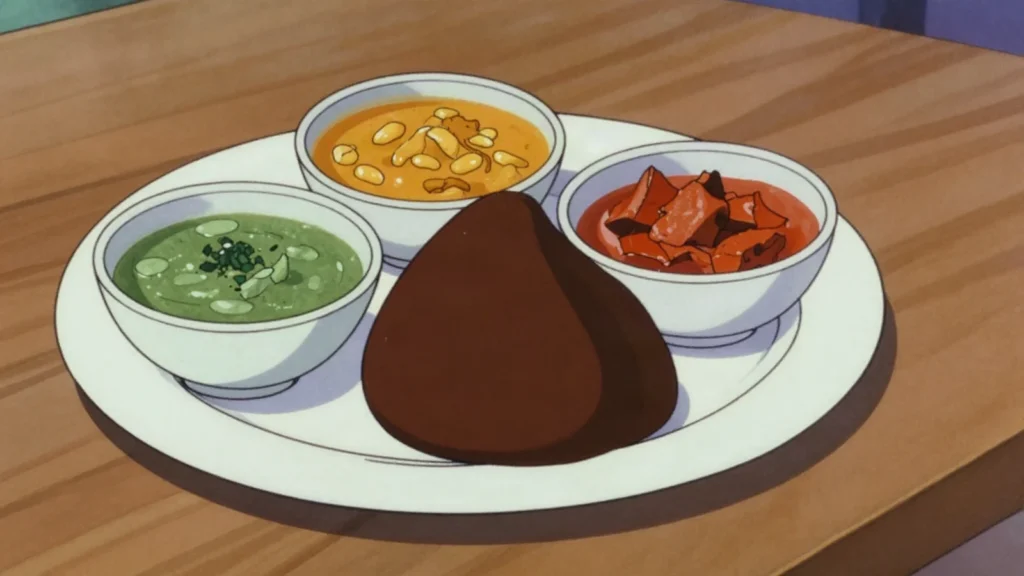
- ewedu, jute leaf soup
- gbegiri, bean soup
- obe ata, pepper stew
- assorted meats
Equipment
- a sturdy wooden turning stick, omorogun
Directions
- Bring the water to a rolling boil and keep it boiling throughout. The starch needs boiling water to gelatinise properly, and water that has gone off the boil gives lumpy, gritty amala.
- Sprinkle it in gradually with one hand while stirring hard with the other, letting it form a mound in the middle of the pot. The alternative, easier for beginners, is to mix the flour into a smooth paste with a little cold water first and then stir that into the boiling water.
- Use a sturdy wooden stick, an omorogun, rather than a spoon. Press the mixture against the side of the pot and fold it back on itself, over and over.
- Turn it firmly and continuously, working the whole mass rather than stirring in circles. It takes real effort and it is genuinely hard work, which is why the stick is used. Add more boiling water in small splashes if it is too stiff, and more flour if it is too soft.
- Add liquid or flour a little at a time, since amala goes from stiff to sloppy very quickly. It should be smooth, glossy and stretchy, holding together in a mass that pulls away cleanly from the pot.
- Keep turning it over a low heat for a further three to five minutes after it has come together. That continued cooking removes the raw floury taste, which is otherwise noticeable and unpleasant. Cover the pot and let it steam for two minutes, then turn it once more. Wet a bowl or a spoon and scoop portions out, shaping them into smooth rounds.
- Work quickly while it is hot, since it stiffens rapidly as it cools. Traditionally each portion is wrapped in cling film or in a leaf and turned to give a smooth ball. Serve it immediately, since amala hardens noticeably within twenty minutes.
Technique
- The dark colour comes from the yam oxidising as it dries into elubo.
- The water must be at a rolling boil throughout.
- Amala lafun is the pale cassava version of the same thing.
Substitutions
- Cassava flour, for amala lafun.
- Plantain flour, for amala ogede.
Variations
- Amala lafun, made from cassava flour.
- Amala ogede, made from plantain flour.
- Served with efo riro rather than abula.
History
A smooth, stretchy dough made from yam flour, which gives the dish its characteristic dark brown colour, distinguishing it from the paler pounded yam made from fresh yam, documented across Nigeria, particularly associated with the Yoruba people of the country’s southwest, as a significant staple food eaten by hand alongside a soup or stew. Its yam flour base, made by drying and grinding yam before it is later reconstituted with hot water into a smooth dough, reflects a specific Yoruba food preservation and preparation technique allowing yam-based staples to be prepared quickly without the lengthy boiling and pounding required for fresh yam. Amala remains one of the most iconic staple foods specifically associated with Yoruba culinary identity within Nigeria.
Frequently asked questions
What is Amala?
Amala is a main from Nigeria: dark yam-flour swallow served with ewedu and gbegiri. A smooth, stretchy dough made from yam flour, which gives the dish its characteristic dark brown colour, distinguishing it from the paler pounded yam made from fresh yam, documented across Nigeria, particularly associated with the Yoruba people of the country’s southwest, as a significant staple food eaten by hand alongside a soup or stew. Its yam flour base, made by drying and grinding yam before it is later reconstituted with hot water into a smooth dough, reflects a specific Yoruba food preservation and preparation technique allowing yam-based staples to be prepared quickly without the lengthy boiling and pounding required for fresh yam. Amala remains one of the most iconic staple foods specifically associated with Yoruba culinary identity within Nigeria.
How long does Amala take to make?
Amala takes 5 min of preparation and 15 min of cooking. The recipe makes 4 servings. It is rated medium to make.
What can I substitute in Amala?
Yes, within limits. Cassava flour, for amala lafun. Plantain flour, for amala ogede.
What is the most important thing to get right in Amala?
Use a sturdy wooden stick, an omorogun, rather than a spoon. Press the mixture against the side of the pot and fold it back on itself, over and over.