
Ingredients
The starch
- 2 kgarrowroot tubers
- Polynesian arrowroot
- or 300 g dried arrowroot starch
- plenty of clean water
The pudding
- 300 garrowroot starch
- 800 mlwater
- 200 gsugar
- a pinch of salt
Sometimes added
- 300 mlthick coconut cream
- grated fresh coconut
- a little pandan
To serve
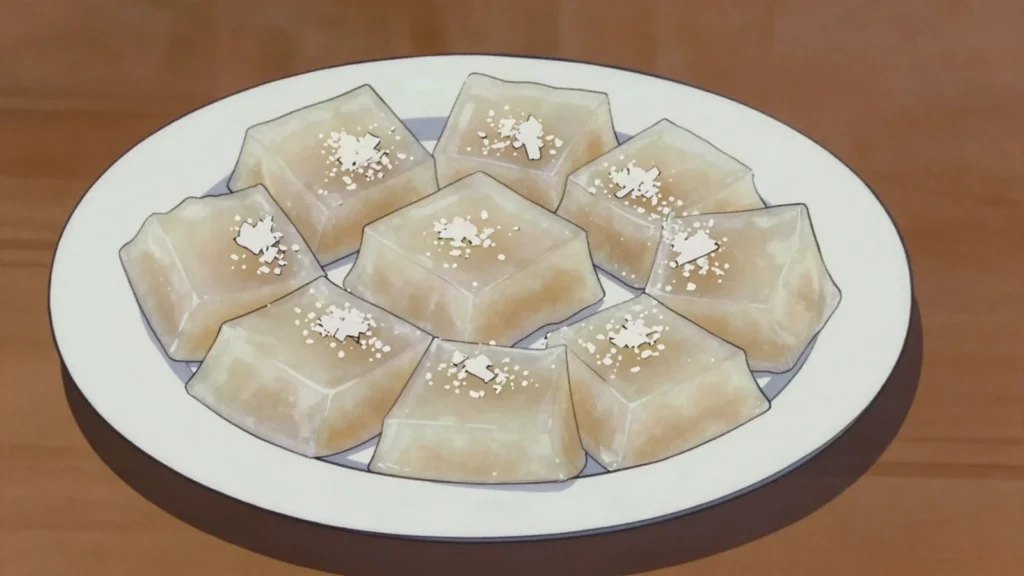
- cut into squares
- cool from the tray
Directions
- Wash all the soil off them thoroughly. Peel them all with a sharp knife. Peel it away generously rather than thinly. Discard all of the peel entirely. Grate the peeled tubers finely. Grate them as finely as you can. Put the grated pulp in a large bowl. Cover it with plenty of clean water.
- Work it hard with both your hands. Work it for several full minutes. Strain the liquid through a cloth. Squeeze the pulp hard in the cloth. Keep all of the cloudy liquid.
- Discard the fibrous pulp afterwards. Let the cloudy water stand undisturbed. Give it a good few hours there. Pour the clear water off carefully. Leave the starch layer behind. Do not disturb it as you pour. Add fresh clean water to the starch. Stir it all up thoroughly again.
- Let it all settle out once more. Pour the clear water off again. Taste the wet starch to check it. Taste a very small amount of the wet starch. It should taste of nothing at all.
- Keep going until it is entirely clean. Spread the clean starch on a tray. Dry it in the sun or a warm place. Break that cake up into powder. Store it in a sealed dry container. Put the starch into a small bowl. Add a little cold water to it.
- Whisk it into a smooth thin paste. Dry starch tipped into hot water lumps. Whisk it until it is completely smooth. Put the rest of the water in a pot. Add the sugar and the salt to it. Bring it up to a gentle simmer. Adding the paste in takes care. Pour the paste in very slowly. Whisk it hard as you pour it in. Keep whisking hard as it thickens. It goes from thin to stiff in moments.
- Whisk continuously through that change. Judging it takes a careful look. Cook it on if it is still milky. Let it cook for three more minutes. Keep stirring it the whole time. Taste a little to check for rawness. Stir coconut cream in near the end.
- Let it warm right through gently. Do not let it boil hard afterwards. Pour it into a wide shallow tray. Level the top with a wet spoon. Let it cool to room temperature. It sets firm as it cools right down. Cut it into squares in the tray.
- Lift them out with a palette knife. Serving it is always done cool. Set the squares out on a plate. Scatter grated coconut over them. It keeps three days at room temperature.
Technique
- The raw tuber is genuinely bitter and those compounds must be washed out: the pulp is grated, worked in water so the starch sinks and the bitterness dissolves and stays in the water, which is then poured off. One washing is not enough — repeat it five or six times at least, and taste the wet starch, which should taste of nothing at all before it is used.
- Dry starch supports no bacteria, so damp is the only thing that spoils it and kept dry it lasts almost indefinitely; that is what made it a famine reserve on atolls where the soil is thin, few crops grow and one storm can destroy a season, alongside pit-fermented breadfruit.
- Arrowroot thickens very suddenly, going from thin to stiff in moments, so whisk continuously through that change; watch for it turning from cloudy and opaque to clear and glassy, which is the sign it is cooked through.
Substitutions
- Bought arrowroot starch skips all the washing, though it is usually a different species; the atlas notes that plainly.
- Coconut cream stirred in near the end is a common finish.
Variations
- Grated fresh coconut is scattered over the cut squares.
- Pit-fermented breadfruit was the other atoll food that kept for years.
- Polynesian arrowroot is Tacca leontopetaloides, not the West Indian plant of the same English name.
History
Arrowroot was one of the few atoll starches that could be dried and stored for years, a famine reserve alongside pit-fermented breadfruit.
Frequently asked questions
What is Makmok?
Makmok is a salad & side from Marshall Islands: arrowroot starch washed from the root, cooked into a stiff sweet pudding. Arrowroot was one of the few atoll starches that could be dried and stored for years, a famine reserve alongside pit-fermented breadfruit.
How long does Makmok take to make?
Makmok takes several hours, for washing of preparation and 20 minutes of cooking. The recipe makes serves 6. It is rated hard to make.
What can I substitute in Makmok?
Yes, within limits. Bought arrowroot starch skips all the washing, though it is usually a different species; the atlas notes that plainly. Coconut cream stirred in near the end is a common finish.
What is the most important thing to get right in Makmok?
Wash all the soil off them thoroughly. Peel them all with a sharp knife. Peel it away generously rather than thinly. Discard all of the peel entirely. Grate the peeled tubers finely. Grate them as finely as you can. Put the grated pulp in a large bowl. Cover it with plenty of clean water.