
Ingredients
Rolls
- 12round rice papers (banh trang), 22 cm
- 300 graw shell-on prawns
- 250 gpork belly in one piece, skin on
- 150 gdried rice vermicelli (bun)
- 12garlic chives (he), or spring onion greens
- 1 headbutter lettuce, ribs removed
- 1large bunch mint and Vietnamese perilla (tia to)
- 1 tspsalt for the poaching water
Tuong xao (peanut dipping sauce)
- 3 tbsphoisin sauce
- 2 tbspsmooth peanut butter or ground roasted peanuts
- 150 mlwater or the pork poaching liquid, skimmed
- 1 tsprice vinegar
- 1garlic clove, crushed
- 1 tspvegetable oil
- 2 tbsproasted peanuts, roughly crushed
- 1red chilli, sliced
Directions
- Simmer the pork belly whole in salted water for 30 to 35 minutes, until a skewer slides through with no resistance; cool it in the liquid, then chill and slice into 3 mm sheets so each has a rim of fat.
- Poach the prawns in the same liquid for 90 seconds, until they curl into a loose C and turn opaque; drain, peel, then split each along its back so it lies flat as two pink halves.
- Cook the vermicelli 2 minutes in boiling water, rinse cold, drain very well and fluff so the strands separate.
- Blanch the garlic chives for 5 seconds so they bend without breaking, and cut them so 4 cm sticks out beyond the roll.
- For the sauce, warm the oil, fry the garlic 20 seconds until fragrant, add hoisin, peanut butter and water and simmer 3 minutes to a pourable, glossy sauce; top with crushed peanuts and chilli.
- Dip one rice paper in warm water for 2 seconds only and lay it on a damp board; it will still feel stiff and will soften as you work, which is the trick to rolls that do not tear.
- On the lower third lay lettuce, then a small nest of noodles, then mint and perilla, then two slices of pork; fold the bottom edge up, fold in both sides and roll one turn.
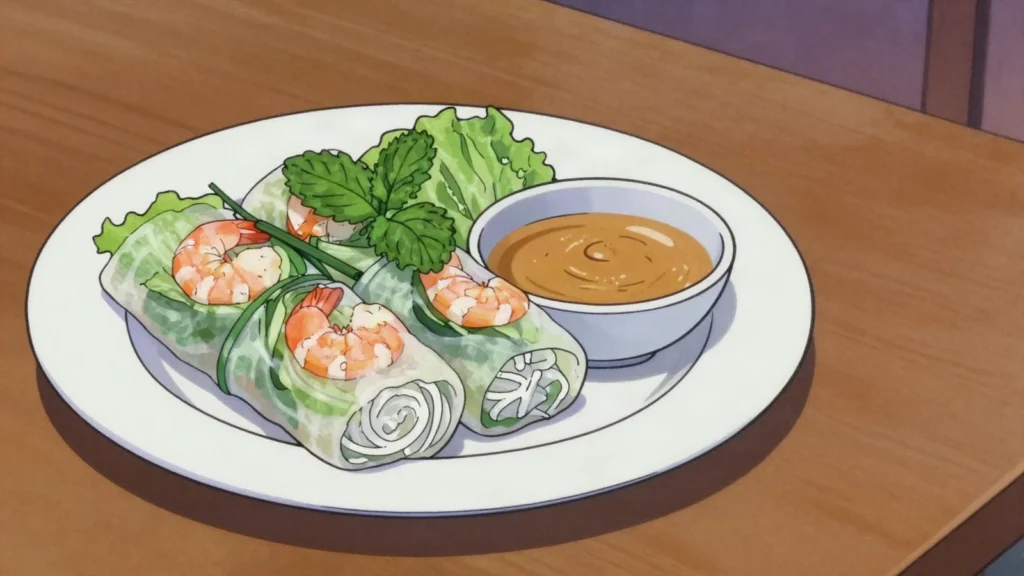
- Lay three prawn halves cut-side down along the seam, tuck a chive in so it protrudes, and finish the roll tight, so the prawns show pink through the wrapper.
- Keep the finished rolls under a damp cloth, not touching each other, and serve within the hour with the peanut sauce.
Technique
- Goi cuon are never fried and never chilled hard. Refrigeration turns the rice paper leathery, so roll them close to eating.
- The prawns go last, against the outer wrapper, for the same reason a good sandwich shows its filling: in Vietnam the roll is judged first by whether the pink stripe is straight.
- Southern Vietnam dips these in tuong xao; further north and in many Hanoi houses the bowl is nuoc cham. Both are authentic, and cooks are firm about their preference.
Substitutions
- No garlic chives: use the green tops of spring onion, blanched. Boiled pork belly can be left out for a prawn-only roll, but a Vietnamese cook would call that incomplete.
Variations
- Goi cuon chay: fried tofu, sauteed mushrooms and pickled carrot instead of pork and prawn.
- Bo bia, the Saigon street version, rolls Chinese sausage, dried shrimp, egg and jicama.
History
Fresh, unfried spring rolls, their thin rice paper wrapper enclosing shrimp, pork, rice vermicelli noodles and fresh herbs, served with a peanut or fish sauce-based dipping sauce, developed in southern Vietnamese cooking as a lighter, fresher alternative to fried spring roll varieties like cha gio. Their unfried, translucent rice paper wrapper, allowing the colourful filling to be seen through it, distinguishes goi cuon visually and texturally from most other regional spring roll traditions across Southeast and East Asia, most of which are fried rather than served fresh. Goi cuon became one of the most internationally recognized Vietnamese dishes, particularly popular abroad for being perceived as a lighter, fresher option compared to many other fried Southeast Asian appetizers.
Frequently asked questions
What is Goi Cuon?
Goi Cuon is a snack from Vietnam: fresh rice-paper rolls of shrimp, herbs and vermicelli with peanut dip. Fresh, unfried spring rolls, their thin rice paper wrapper enclosing shrimp, pork, rice vermicelli noodles and fresh herbs, served with a peanut or fish sauce-based dipping sauce, developed in southern Vietnamese cooking as a lighter, fresher alternative to fried spring roll varieties like cha gio. Their unfried, translucent rice paper wrapper, allowing the colourful filling to be seen through it, distinguishes goi cuon visually and texturally from most other regional spring roll traditions across Southeast and East Asia, most of which are fried rather than served fresh. Goi cuon became one of the most internationally recognized Vietnamese dishes, particularly popular abroad for being perceived as a lighter, fresher option compared to many other fried Southeast Asian appetizers.
How long does Goi Cuon take to make?
Goi Cuon takes 45 min of preparation and 20 min of cooking. The recipe makes 12 rolls (4 servings). It is rated medium to make.
What can I substitute in Goi Cuon?
Yes, within limits. No garlic chives: use the green tops of spring onion, blanched. Boiled pork belly can be left out for a prawn-only roll, but a Vietnamese cook would call that incomplete.
What is the most important thing to get right in Goi Cuon?
Dip one rice paper in warm water for 2 seconds only and lay it on a damp board; it will still feel stiff and will soften as you work, which is the trick to rolls that do not tear.