Ingredients
Dough
- 300 gplain flour
- 2eggs
- 2 tbspsour cream
- 2 tbspvodka or rum
- 1 tbspsugar
- ½ tspsalt
- a pinch of baking powder
To fry
- oil, for deep frying
To finish
- icing sugar
Directions
- Beat the eggs with the sour cream, vodka, sugar and salt, then work in the flour and baking powder to a firm dough.
- The spirit is not there for flavour. Alcohol evaporates in the hot fat and leaves the dough noticeably lighter and crisper, and it also stops it drinking oil.
- Knead it for 10 minutes until smooth and quite stiff.
- Keep it firm rather than soft. A slack dough cannot be rolled thin enough and it fries into something puffy and bready.
- Rest it 30 minutes under a cloth.
- Roll it out as thin as you possibly can, until you can nearly see through it.
- Thinness is the whole dish. Khvorost means brushwood, and it should shatter like dry twigs; a thick one is just a doughnut.
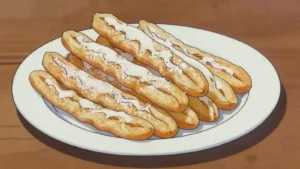
- Cut it into strips about 3 cm wide and 12 cm long.
- Cut a slit down the middle of each strip, then pull one end through the slit to make the twist.
- That pull-through twist is the traditional shape and it also stops the strip curling into a tube in the oil.
- Heat the oil to 180°C (355°F).
- Fry a few at a time for 30 to 45 seconds a side, until pale gold and blistered.
- Take them out pale. They colour a shade further as they drain, and browned khvorost tastes bitter.
- Drain them on a rack rather than paper.
- Dust heavily with icing sugar while still warm.
- Serve piled on a plate, and eat them within a day while they still shatter.
- The same pastry runs across Eastern and Central Europe under a dozen names, from Polish faworki to Lithuanian žagarėliai.
Technique
- They are made for Maslenitsa and for Christmas, and in Belarus at almost any celebration.
- They go soft within a day and are best within hours.
- The dough can be rolled through a pasta machine, which gets it thinner than a rolling pin will.
Substitutions
- Any clear spirit, or lemon juice with a pinch more baking powder.
- Crème fraîche in place of sour cream.
Variations
- Faworki, the Polish version, eaten on Fat Thursday.
- With a splash of vanilla or lemon zest in the dough.
- Cut as simple ribbons without the twist.
History
Named brushwood for its shape, fried in Belarusian homes at Shrovetide and family celebrations.
Frequently asked questions
What is Khvorost?
Khvorost is a dessert from Belarus: ribbons of dough fried into brittle twists and dusted with sugar. Named brushwood for its shape, fried in Belarusian homes at Shrovetide and family celebrations.
How long does Khvorost take to make?
Khvorost takes 30 min plus 30 min resting of preparation and 20 min of cooking. The recipe makes about 40. It is rated easy to make.
What can I substitute in Khvorost?
Yes, within limits. Any clear spirit, or lemon juice with a pinch more baking powder. Crème fraîche in place of sour cream.
What is the most important thing to get right in Khvorost?
Keep it firm rather than soft. A slack dough cannot be rolled thin enough and it fries into something puffy and bready.