
Ingredients
Taro
- 1 kgtaro corms, kalo
- water, for boiling
- 1 teaspoonsalt
Coconut cream
- 400 mlthick coconut cream
- 2onions, sliced
- 1 teaspoonsalt
- black pepper
Sometimes added
- 1tomato, chopped
- a squeeze of lemon
- a little curry powder
To serve
- grilled or tinned fish
- palusami, taro leaf parcels
- a green salad
Directions
- Cut one open to check the flesh. It should be clean white or pale purple. Peel the taro thickly with a knife. Take off all the brown hairy skin. Take off any discoloured flesh beneath.
- Rinse the peeled corms under cold water. Cut them into large even chunks. Keep them in water until you cook them. That stops them discolouring badly. Put the chunks in a pot of salted water. Bring the whole pot to a boil.
- Let it cook for about twenty-five minutes. It should be tender right through. Drain it thoroughly afterwards. Coconut cream is the thick first pressing. Use the thick part from the top of the tin. Grate the flesh of a mature coconut. Add a little warm water to it.
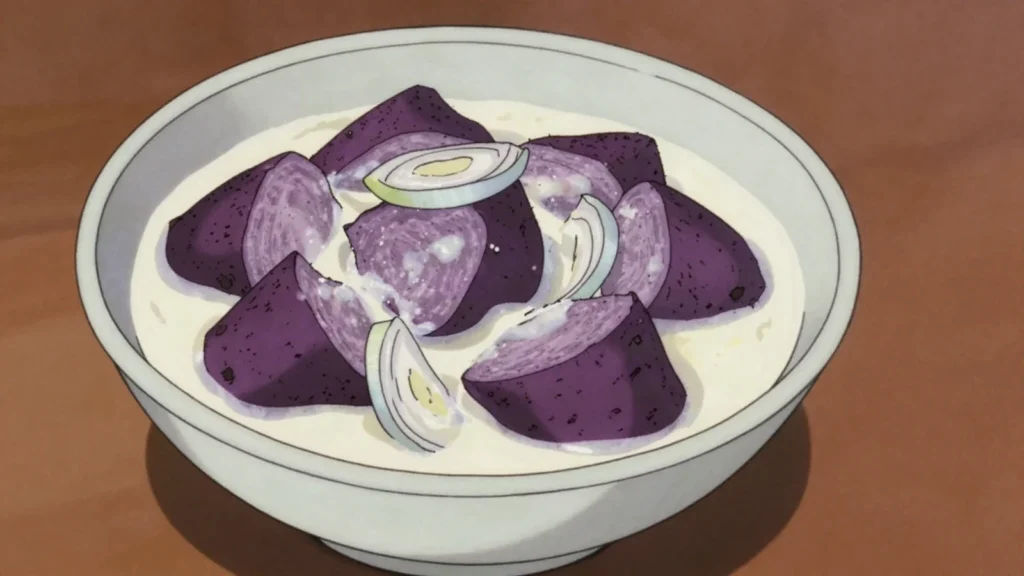
- Squeeze it hard in a clean cloth. The first pressing is the thick cream. Put the sliced onions in a wide pan. Add about half the coconut cream. Warm it gently over a low heat.
- Let the onion soften for five minutes. Never let coconut cream boil hard. Add the boiled taro chunks to the pan. Turn them over gently in the cream. Add the rest of the coconut cream.
- Season it with salt and black pepper. Let it simmer away very gently. Give it about ten full minutes. Take the lid off to reduce it if it is thin.
- Taste it and adjust the salt to suit. Serving it is done piping hot. Spoon the taro and cream into a bowl. Serve grilled or tinned fish alongside. It keeps two days refrigerated.
Technique
- Raw taro contains calcium oxalate crystals that irritate skin, mouth and throat severely, so it must be peeled with gloves and cooked thoroughly.
- Coconut cream is the thick first pressing rather than thin coconut milk, and cooked with onion in Samoa it is called pe’epe’e.
- Taro stays firmer than potato when cooked, which is normal rather than a sign it needs longer.
Substitutions
- Tinned coconut cream stands in for fresh, using the thick part from the top of the tin.
- Green banana or breadfruit can be cooked the same way.
Variations
- Some cooks add tomato or a little curry powder to the pan.
- Fa’alifu fa’i is the same dish made with green banana.
- Palusami, taro leaves baked in coconut cream, uses the other half of the plant.
History
Boiled taro is finished in coconut cream with onion and salt, the simplest way Samoans dress the everyday staple starch.
Frequently asked questions
What is Fa’alifu Kalo?
Fa’alifu Kalo is a salad & side from Samoa: taro chunks simmered in coconut cream with onion. Boiled taro is finished in coconut cream with onion and salt, the simplest way Samoans dress the everyday staple starch.
How long does Fa’alifu Kalo take to make?
Fa’alifu Kalo takes 20 minutes of preparation and 40 minutes of cooking. The recipe makes serves 4. It is rated easy to make.
What can I substitute in Fa’alifu Kalo?
Yes, within limits. Tinned coconut cream stands in for fresh, using the thick part from the top of the tin. Green banana or breadfruit can be cooked the same way.
What is the most important thing to get right in Fa’alifu Kalo?
Rinse the peeled corms under cold water. Cut them into large even chunks. Keep them in water until you cook them. That stops them discolouring badly. Put the chunks in a pot of salted water. Bring the whole pot to a boil.