
Ingredients
Flour
- 400 gfinger millet flour
- 200 gcassava flour
- 1.2 litreswater
- a pinch of salt, if wanted
To serve
- a stew such as groundnut sauce, beans or smoked fish
- greens
Equipment
- a heavy pot
- a strong flat wooden stick or paddle
Directions
- Sift the millet and cassava flours together into a bowl. Sifting breaks up lumps that would otherwise survive the cooking. Bring the water to a rolling boil in a heavy pot. A thin pot will scorch, since this is worked hard against the base.
- Add a pinch of salt if you want, though many households add none. Take a cupful of the flour mixture and mix it to a slurry with cold water. Pour the slurry into the boiling water, stirring hard. This forms a thin porridge and stops the main flour from lumping.
- Let it come back to the boil and cook for three minutes. Now adding the flour, which is done gradually. Sprinkle the rest of the flour over the surface a handful at a time. Do not stir it in immediately.
- Let each addition sit and absorb water for a moment first. Keep adding until you have used all the flour. Take the flat wooden stick in both hands.
- Press the mass against the side of the pot and fold it over. Turn the pot a little and repeat. Work steadily and firmly, since this is what develops the texture. Keep going for fifteen to twenty minutes without stopping for long. The mixture will darken and become smooth and elastic.
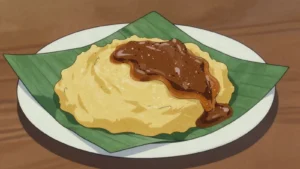
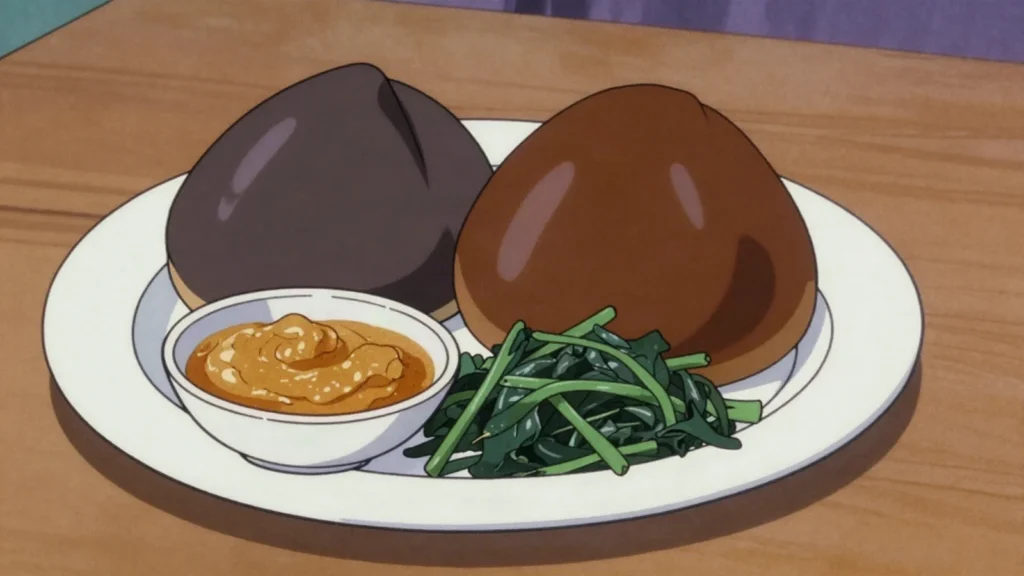
- Add a splash of hot water and work it in if it is too stiff to knead. Add a little more flour if it is too soft to hold a shape. Now shaping, which is done while it is hot. Scoop portions of the hot kalo into the bowl. Swirl the bowl so the kalo forms a smooth round ball. Turn it out onto a plate or a banana leaf.
- Repeat with the rest, wetting the bowl each time. The wetting is what stops it sticking and gives it a glossy surface. Serve it hot, with stew and greens beside it rather than over it. Press a hollow into each piece with your thumb and use it to scoop.
Technique
- Make a thin slurry first, which is what stops the main flour from lumping.
- Knead it hard against the pot for fifteen to twenty minutes; this is the whole method.
- Wet the shaping bowl each time, or the hot dough will stick fast.
Substitutions
- All millet flour, with no cassava, for a darker and denser bread.
- Sorghum flour in place of some of the millet.
Variations
- Made with a higher proportion of cassava for a paler bread.
- Atap, the same bread under its Acholi and Langi name.
- Mixed with sorghum flour, which is done in some regions.
History
Finger millet was the staple grain of eastern and northern Uganda long before maize; kalo is often stretched with cassava flour.
Frequently asked questions
What is Kalo?
Kalo is a main from Uganda: dark stiff millet bread kneaded hot and torn to scoop stew. Finger millet was the staple grain of eastern and northern Uganda long before maize; kalo is often stretched with cassava flour.
How long does Kalo take to make?
Kalo takes 5 min of preparation and 30 min of cooking. The recipe makes 6 servings. It is rated medium to make.
What can I substitute in Kalo?
Yes, within limits. All millet flour, with no cassava, for a darker and denser bread. Sorghum flour in place of some of the millet.
What is the most important thing to get right in Kalo?
Sift the millet and cassava flours together into a bowl. Sifting breaks up lumps that would otherwise survive the cooking. Bring the water to a rolling boil in a heavy pot. A thin pot will scorch, since this is worked hard against the base.