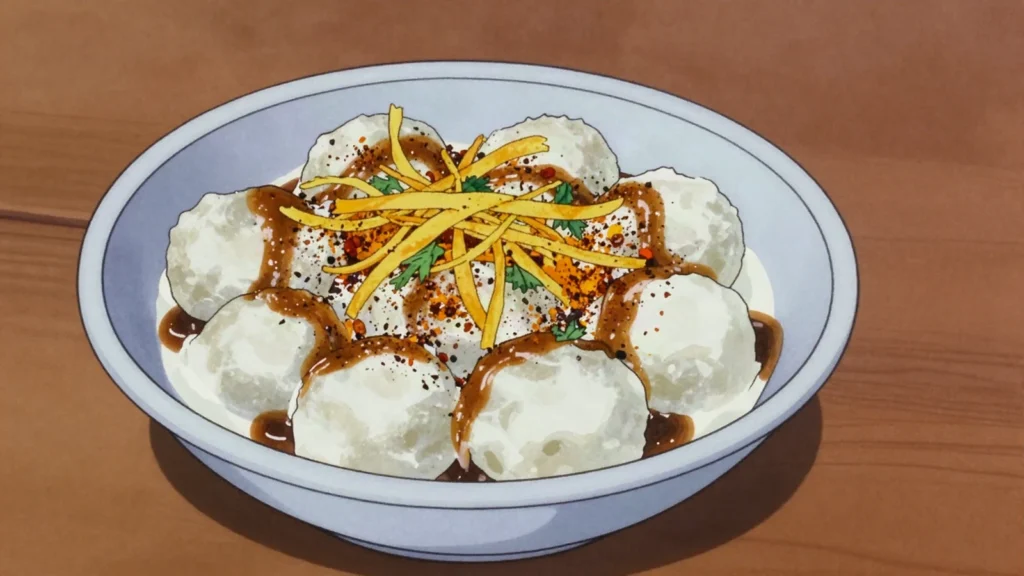

Ingredients
The dumplings
- 250 gurad dal
- skinned split black gram
- soaked overnight
- or 200 g urad dal and 50 g moong dal
- 1 teaspoonsalt
- half a teaspoon ground cumin
- a pinch of asafoetida
- hing, optional
- 1green chilli, optional
- a thumb of ginger, optional
For frying
- 1 litrevegetable oil
- or enough for 6 cm depth
For soaking the baras
- 1.5 litreswarm water
- 1 teaspoonsalt
The yoghurt
- 800 gplain yoghurt
- full fat
- 2 tablespoonssugar
- or to taste
- half a teaspoon salt
- a little milk, to loosen
To finish
- 4 tablespoonstamarind chutney
- 2 tablespoonsgreen chutney
- 1 tablespoonchaat masala
- 1 teaspoonroasted cumin, ground
- half a teaspoon chilli powder
- half a teaspoon black salt
- kala namak
- a handful of sev
- coriander leaf, chopped
- pomegranate seeds, optional
Directions
- Rinse the dal several times. Cover it with plenty of cold water. Soak it for at least six hours, or overnight. Soak it in the refrigerator in warm weather. Drain it thoroughly. Put the drained dal in a food processor. Add the ginger and chilli if you are using them. Use as little water as possible.
- Add it a tablespoon at a time. The batter must be thick, not runny. Grind it to a smooth fluffy paste. It should be light rather than dense. Whip the batter hard for five minutes. Use a whisk, a spoon or the processor. Beat air into it deliberately.
- Drop a small piece of batter into water. It should float on the surface. Add the salt, cumin and asafoetida. Add salt at this stage, not before whipping. Salt added early loosens the batter. It also helps with the digestibility of pulses. Use a deep heavy pot. Fill it no more than one third full. Never leave hot oil unattended.
- Keep a lid within reach. If it catches fire, turn off the heat and cover it. Take a small ball of batter. Or shape it on wet fingers and drop it in. Fry five or six at a time. Do not crowd the pot. Fry them for four or five minutes. Turn them so they colour evenly. They should be golden rather than dark brown.
- Lift them out with a slotted spoon. Drain them briefly on kitchen paper. Put warm salted water in a large bowl. Drop the hot baras straight into it.
- Soak them for twenty to thirty minutes. They become soft and spongy right through. Warm water works faster than cold. Lift each bara out gently. Press it flat between your palms. Squeeze out most of the water. Do it gently so they do not tear. Set them on a plate. Whisk the yoghurt until it is completely smooth.
- Add the sugar and the salt. It should pour thickly, like double cream. Adjust it to your own taste. Arrange the squeezed baras in a wide dish. Pour the yoghurt over them. Make sure each one is coated. Refrigerate it for at least an hour. Sprinkle the chaat masala and roasted cumin.
- Sprinkle the chilli powder and black salt. That note is exactly what chaat needs. Scatter sev over just before serving. Sev softens within minutes. Add coriander and pomegranate seeds. Serve it cold. Serve it as part of an iftar spread. Serve it as a snack at any time. This is a cold yoghurt dish. Keep it refrigerated until it is served. Do not leave it out for hours in warm weather.
Technique
- Grind the dal with as little water as possible, a tablespoon at a time. A runny batter gives baras that collapse in the oil and drink it — the commonest failure with this dish.
- Whip the batter hard for five minutes after grinding. It lightens, pales and grows in volume, and that air is what makes the baras spongy rather than leaden. Test it by dropping a piece into water: it should float. If it sinks, whip longer.
- Add the salt after whipping, not before. Salt loosens the batter.
- Fry to golden, not dark brown. The baras get soaked afterwards and a dark hard crust never softens properly.
- Soak the fried baras in warm salted water for twenty to thirty minutes. They swell and turn spongy right through, and the soaking washes out excess oil, which is what makes them light to eat. Warm water works faster than cold.
- Squeeze each bara gently between your palms until damp rather than dripping. Too rough and they tear; too wet and they thin the yoghurt.
- Chill the assembled dish at least an hour before topping it. The baras absorb the yoghurt as they sit and the dish is genuinely better for it.
- Get the yoghurt to the consistency of double cream — thick enough to coat, thin enough to pour. Too thick and it sits in lumps; too thin and it runs off.
- Buy black salt, kala namak. Its sulphurous note is the characteristic tang of chaat and ordinary salt does not replace it.
- Add the sev at the last moment. It goes soft within minutes and the crunch is half the point.
- Urad dal is what gives the spongy texture — whipped, it holds air in a way other lentils do not, which is why it is also the base of idli and dosa.
- Most asafoetida is blended with wheat flour, which matters for anyone avoiding gluten. A pinch is enough; it smells raw and unpleasant until cooked, when it gives a savoury onion-garlic note.
- This is a cold yoghurt dish. Keep it refrigerated until it is served and do not leave it standing for hours in warm weather, which matters especially at a large gathering.
Substitutions
- A mix of urad dal and moong dal gives a slightly lighter bara and is common.
- Shop-bought tamarind and green chutneys replace homemade with no real loss.
- Greek yoghurt loosened with milk replaces plain yoghurt.
- Crushed papri or plain crisps replace sev for the crunch.
- The chilli and ginger in the batter are both optional.
- Baked or air-fried baras are lighter but noticeably less good; the soaking removes most of the oil anyway.
Variations
- Dahi bhalla is the north Indian name and the same dish, often with more chutney.
- Dahi vada in south India is frequently tempered with mustard seeds and curry leaves instead of chaat masala.
- Medu vada, the ring-shaped fried urad dal dumpling, is the unsoaked south Indian relative.
- Chana chaat is the chickpea plate served alongside at the same iftar table.
- A version with the baras made from moong dal alone is lighter and paler.
- Some cooks stuff the baras with raisins and nuts before frying.
Frequently asked questions
What is Dahi Bara?
Dahi Bara is a snack from Pakistan: lentil dumplings soaked in whipped yoghurt with tamarind and chaat masala.
How long does Dahi Bara take to make?
Dahi Bara takes 30 minutes plus overnight soaking of preparation and 30 minutes of cooking. The recipe makes makes about 20, serves 6. It is rated medium to make.
What can I substitute in Dahi Bara?
Yes, within limits. A mix of urad dal and moong dal gives a slightly lighter bara and is common. Shop-bought tamarind and green chutneys replace homemade with no real loss. Greek yoghurt loosened with milk replaces plain yoghurt. Crushed papri or plain crisps replace sev for the crunch. The chilli and ginger in the batter are both optional. Baked or air-fried baras are lighter but noticeably less good; the soaking removes most of the oil anyway.
What is the most important thing to get right in Dahi Bara?
Add it a tablespoon at a time. The batter must be thick, not runny. Grind it to a smooth fluffy paste. It should be light rather than dense. Whip the batter hard for five minutes. Use a whisk, a spoon or the processor. Beat air into it deliberately.