
Ingredients
Pudding
- 1.5 kgfresh cassava, peeled, woody core removed, coarsely grated
- 500 gripe sweet potato or ripe plantain, grated (optional, for sweetness)
- 600 mlthick coconut cream, from 2 mature coconuts
- 80 gsugar or 4 tbsp cane syrup
- ½ tspsalt
- 100 ggrated fresh coconut
To wrap and bake
- 12large banana leaves, passed briefly over a flame until glossy and pliable
- 2m banana bark strip or kitchen string, for tying
- 20river stones and firewood, for a motu stone oven, or a lined roasting tin
To serve
- 200 mlwarm coconut cream, for pouring
- 1lime, in wedges
Directions
- Grate the peeled cassava on the fine side of a grater into a bowl. Traditionally this is done on a rough coral stone or a punched tin, and it should be a wet, sticky mash, not shreds.
- Squeeze out a little of the free liquid but keep the starch that settles in it, stirring the white starch back into the mash. That starch is what sets the pudding.
- Fold in the grated sweet potato if using, the coconut cream, sugar, salt and grated coconut until you have a heavy, spoonable batter that drops slowly from the spoon.
- Soften the banana leaves over an open flame until they turn deep green and flexible, and line a tray or an earth-oven basket two leaves deep, overlapping.
- Spread the batter 4–5 cm deep, fold the leaves over the top completely and tie the parcel so no steam escapes.
- For the motu, heat river stones in a wood fire for an hour until they glow, rake off the ash, lay the parcel on the hot stones, cover with more hot stones and then with more leaves and earth.
- Bake 1 to 1.5 hours. In a conventional oven, bake the covered parcel at 180°C (350°F) for 75–90 minutes.
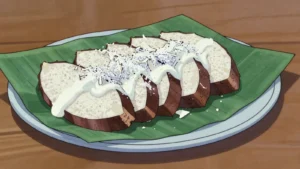
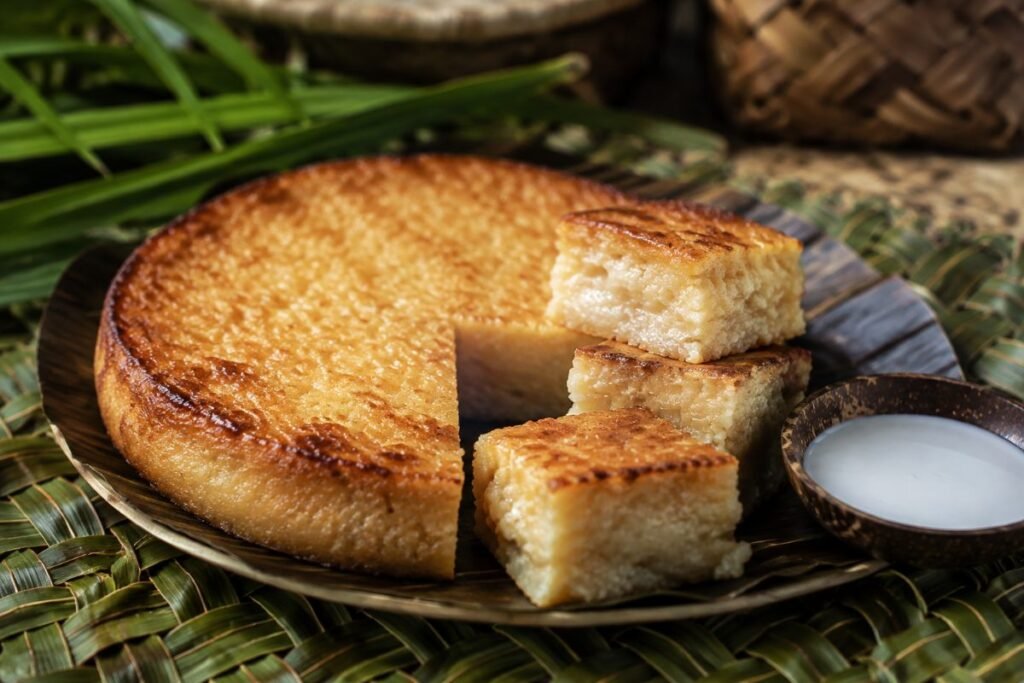
- It is ready when the pudding is set through, has pulled slightly from the leaves and a knife comes out clean; the underside will have a caramelised, faintly smoky skin. Rest 20 minutes, unwrap at the table and serve in slabs with warm coconut cream.
Technique
- Food safety: use sweet cassava, peel it thoroughly and remove the fibrous core. Cassava contains cyanogenic compounds that are destroyed by grating, draining and thorough cooking, so never eat it underdone.
- The coconut cream must be first-press and thick. Thin tinned milk gives a watery pudding that never sets properly.
- The stone oven is not decoration. Its slow, damp, smoky heat is what gives the pudding its caramelised edge and its flavour; a conventional oven gets close but stays cleaner-tasting.
Substitutions
- No banana leaves: line the tin with baking parchment and cover tightly with foil, adding 1 tsp of vanilla or pandan for a hint of aroma.
- Frozen grated cassava, thawed and drained, works well and is what most Honiara cooks use when they are in a hurry.
- Two 400 ml tins of full-fat coconut cream can replace fresh, but skim the thick top and discard the watery bottom.
Variations
- Made with grated taro or yam instead of cassava, and often with ngali nuts folded through.
- A ripe banana pudding version, sweeter and darker, made when the plantains come in.
History
Cassava arrived through colonial-era plantations and largely replaced older taro puddings because it grows on poor soil with little tending.
Frequently asked questions
What is Cassava Pudding?
Cassava Pudding is a dessert from Solomon Islands: grated cassava and coconut cream wrapped in leaves and stone-baked. Cassava arrived through colonial-era plantations and largely replaced older taro puddings because it grows on poor soil with little tending.
How long does Cassava Pudding take to make?
Cassava Pudding takes 40 min of preparation and 1 hr 30 min of cooking. The recipe makes 8 servings. It is rated medium to make.
What can I substitute in Cassava Pudding?
Yes, within limits. No banana leaves: line the tin with baking parchment and cover tightly with foil, adding 1 tsp of vanilla or pandan for a hint of aroma. Frozen grated cassava, thawed and drained, works well and is what most Honiara cooks use when they are in a hurry. Two 400 ml tins of full-fat coconut cream can replace fresh, but skim the thick top and discard the watery bottom.
What is the most important thing to get right in Cassava Pudding?
Food safety: use sweet cassava, peel it thoroughly and remove the fibrous core. Cassava contains cyanogenic compounds that are destroyed by grating, draining and thorough cooking, so never eat it underdone.