
Ingredients
Taro
- 2 kggiant swamp taro corm
- or 2 kg ordinary taro
- water, for boiling
- 1 teaspoonsalt
To serve
- 400 mlthick coconut cream
- grated fresh coconut
- reef fish, grilled or boiled
- sugar, for a sweet version
For the motu
- hot stones
- banana leaves
- an earth pit
Directions
- Wash the mud off it thoroughly first. Peel it thickly with a strong knife. Take off all the fibrous outer layer. Take off any discoloured flesh beneath it. A vegetable peeler is not strong enough.
- Cut it into large even chunks. Rinse the peeled chunks under cold water. Some cooks soak them for an hour first. Put the chunks in a large pot. Cover them well with cold water. Add the salt to the pot as well. Bring the whole pot up to a boil.
- Let it boil steadily for hours. Ordinary taro cooks in thirty minutes. Top up with boiling water as it reduces. Judging when it is done takes a test.
- Taste a small cooled piece carefully. Any itch or burn means it needs more time. Wrap the taro chunks in banana leaves. Lay them all on the hot stones. Cover them over with more leaves. Give the taro at least three hours.
- Check a piece before serving any of it. Serving it is done hot in slabs. Drain the cooked chunks thoroughly. Cut them into thick even slabs.
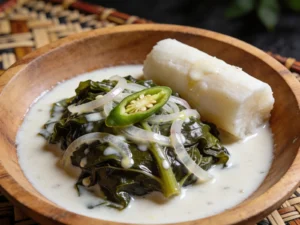
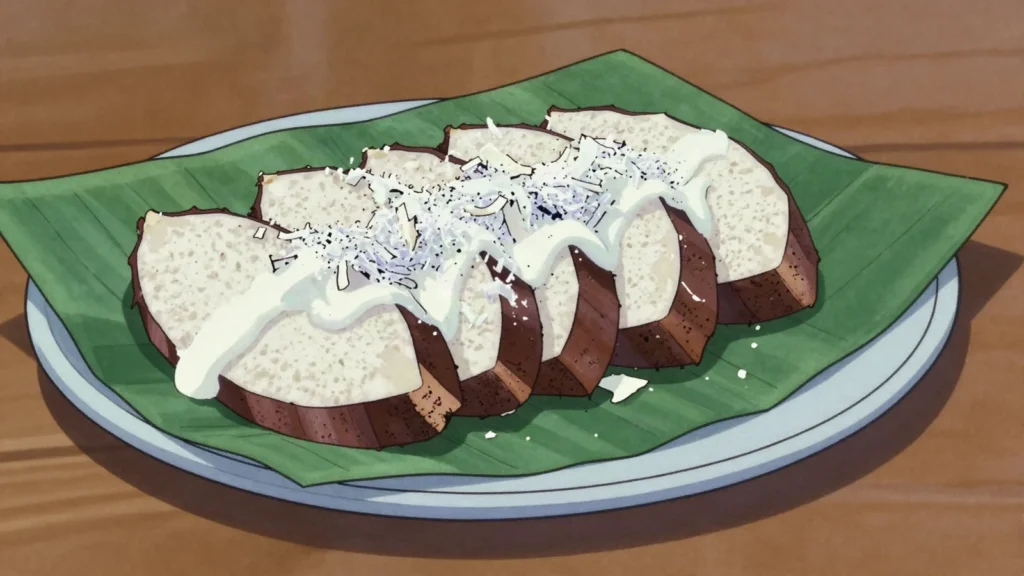
- Set them out on a platter or leaves. Pour thick coconut cream over them. Scatter grated fresh coconut over that. Serve grilled or boiled fish alongside. Mash the cooked taro while it is hot.
- Work in the thick coconut cream. Add sugar and grated fresh coconut. Beat it into a heavy smooth paste. It keeps three days refrigerated.
Technique
- This is the same plant as Micronesian giant swamp taro, listed separately in the atlas under each country; kakake is the Solomon Islands name, the species and pit growing are the same, and the earth oven and feast use differ locally.
- Giant swamp taro contains calcium oxalate crystals in quantity, so wear gloves when handling it raw and cook it for two to three hours; an undercooked piece burns the throat badly and should never be eaten.
- Low atolls have no rivers, so pits are dug by hand down to the freshwater lens and composted over years; the crop tolerates brackish water and drought and can sit in the ground for years, making it a genuine reserve against hunger, which is why digging a mature corm is a decision reserved for feasts.
Substitutions
- Ordinary taro can stand in, though it cooks far faster and is less dense.
- A conventional oven or a covered pot replaces the motu earth oven.
Variations
- A sweet version mashed with coconut cream and sugar is made for feasts.
- The same crop is grown in pits across Kiribati, Micronesia and the Marshall Islands.
- It is boiled in a pot for everyday cooking and baked in the motu for occasions.
History
Grown in dug swamp pits on low-lying atolls where ordinary taro will not take, and reserved for feasts.
Frequently asked questions
What is Kakake?
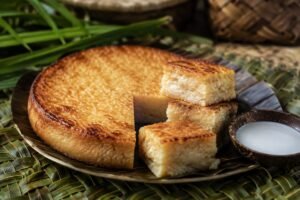
Kakake is a salad & side from Solomon Islands: giant swamp taro, dense and starchy; boiled or baked in the motu. Grown in dug swamp pits on low-lying atolls where ordinary taro will not take, and reserved for feasts.
How long does Kakake take to make?
Kakake takes 40 minutes of preparation and 3 hours of cooking. The recipe makes serves 8. It is rated medium to make.
What can I substitute in Kakake?
Yes, within limits. Ordinary taro can stand in, though it cooks far faster and is less dense. A conventional oven or a covered pot replaces the motu earth oven.
What is the most important thing to get right in Kakake?
Cut it into large even chunks. Rinse the peeled chunks under cold water. Some cooks soak them for an hour first. Put the chunks in a large pot. Cover them well with cold water. Add the salt to the pot as well. Bring the whole pot up to a boil.