
Ingredients
Pork
- 1.5 kgpork belly, skin on
- 2 tablespoonscoarse salt
- 1 teaspoonblack pepper
- 4garlic cloves, crushed
- juice of 2 limes
To fry
- 500 mllard or oil
- or enough to come halfway up the pan
- 200 mlwater, for the first stage
To serve
- coarse salt
- lime wedges
- mandioca, boiled cassava
- a tomato and onion salad
Directions
- Stand back as you lower the meat in. Keep a lid within reach at all times. Never pour water onto a fat fire. Lay the belly skin side down on a board. Cut it into long strips along its length. Aim for strips about three centimetres wide.
- Cut through the meat but not the skin at one end. Leave the strips joined at that end. Seasoning it is done in advance. Rub the strips all over with coarse salt. Add the black pepper and the crushed garlic.
- Squeeze the lime juice over them. Work it into every single surface. Let it sit for at least thirty minutes. An hour in the refrigerator is better.
- Take a set of three joined strips. Keep the braid reasonably loose. A tight braid stops the fat rendering out. Repeat with the remaining sets. Pat the braids completely dry with paper. Put the braids in a wide heavy pan.
- Add the water and a little of the lard. Set it over a steady medium heat. Let the water simmer away entirely. That takes about fifteen minutes. Add the rest of the lard if you need it. The braids should be about half submerged. Keep the heat at a steady medium. Let them fry for about twenty-five minutes.
- Turn them over every few minutes. The skin should blister and turn deep gold. Press one with tongs to check. It should feel firm rather than soft. Turn the heat up for the last two minutes. Lift them out the moment they are deep gold.
- Lift them onto a wire rack over a tray. A rack keeps every side crisp. Let the excess fat drain away. Scatter coarse salt over them at once. Serving them is done piping hot. Pull out any cocktail sticks first. Serve them whole or cut into pieces. Keep the rendered lard for other cooking.
Technique
- The braid is a practical technique rather than a decoration, since plaited strips lie flat and cook evenly instead of curling up.
- Starting the pork in a little water lets the meat cook through gently before the rendered fat takes over and fries it.
Substitutions
- Pork belly is essential, since the layers of fat, meat and skin are what make the dish.
- Oil can replace lard, though lard gives a better flavour.
Variations
- Some stalls sell it unbraided in plain strips.
- A version rubbed with cumin and oregano is made in some households.
- Chicharron is fried in various forms across Latin America.
History
Sold at Paraguayan markets and roadside stalls; the braid keeps the strips from curling as they fry.
Frequently asked questions
What is Chicharõ trenzado?
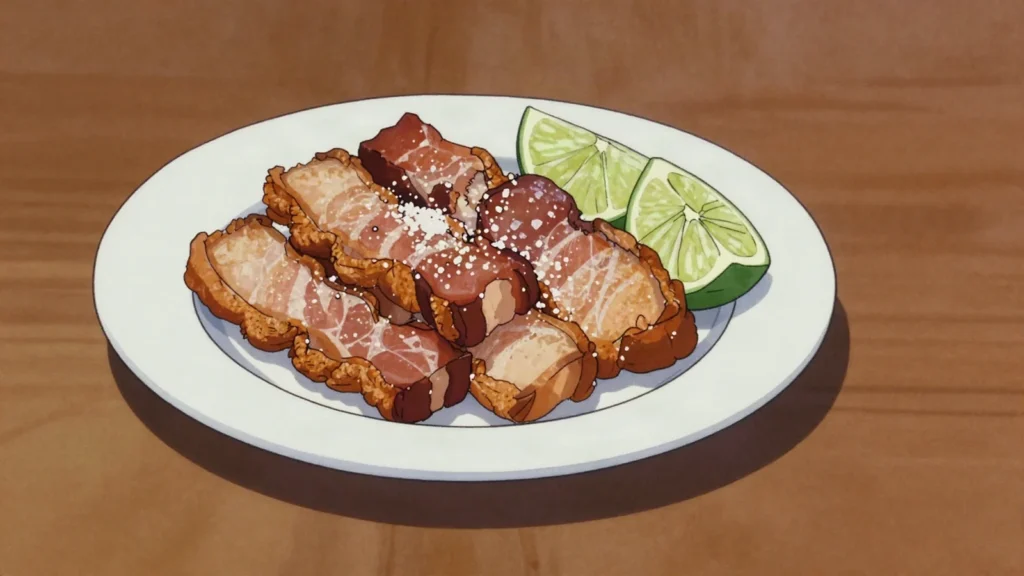
Chicharõ trenzado is a snack from Paraguay: braided strips of pork belly fried crisp and salted. Sold at Paraguayan markets and roadside stalls; the braid keeps the strips from curling as they fry.
How long does Chicharõ trenzado take to make?
Chicharõ trenzado takes 40 minutes of preparation and 40 minutes of cooking. The recipe makes serves 6. It is rated medium to make.
What can I substitute in Chicharõ trenzado?
Yes, within limits. Pork belly is essential, since the layers of fat, meat and skin are what make the dish. Oil can replace lard, though lard gives a better flavour.
What is the most important thing to get right in Chicharõ trenzado?
Stand back as you lower the meat in. Keep a lid within reach at all times. Never pour water onto a fat fire. Lay the belly skin side down on a board. Cut it into long strips along its length. Aim for strips about three centimetres wide.