
Ingredients
Coconut
- 500 gfresh coconut, finely grated
- or 400 g desiccated coconut
Syrup
- 400 gsugar
- 150 mlwater
- or 300 g sugar and 150 ml coconut milk
To flavour
- 1 teaspoonvanilla extract
- a pinch of salt
- 1/2 teaspoonground ginger, optional
- a few drops of food colouring, optional
Equipment
- a heavy pan
- a long wooden spoon
- an oiled tray
Directions
- Crack a mature brown coconut open. Peel off the brown skin with a vegetable peeler. Grate the white flesh finely on a box grater. Soak it in a little warm water first. Give it ten minutes to soften.
- Keep children out of the kitchen while it cooks. Never touch or taste the syrup in the pan. Put the sugar and water in a heavy pan. Stir over a low heat until the sugar dissolves. Brush the sides of the pan with a wet brush. Once clear, stop stirring entirely.
- Let it boil until it thickens slightly. Give it about five minutes at a steady boil. Tip the grated coconut into the syrup.
- Stir it through thoroughly so every strand is coated. Add the vanilla, salt and ginger. Turn the heat right down to its lowest setting. Cooking it down takes patience. Stir it continuously with a wooden spoon. The mixture is loose and wet at first. Tip the hot mixture onto an oiled tray.
- Press it flat with an oiled spatula. Aim for about one and a half centimetres thick. Press it firmly so it holds together. Work fast, since it stiffens as it cools. Cutting it needs the right moment.
- Let it cool for about five minutes. It should be warm and still pliable. Cut it into squares with an oiled knife. Cut right down through to the tray. Wait too long and it becomes hard to cut. Cooling it takes about an hour. Leave the squares on the tray until cold. They firm up but should stay chewy. Break them apart along the cuts.
- Wrap each square in a twist of paper. The wrapping stops them sticking together. Keep the wrapped squares in an airtight tin. They keep for about two weeks that way.
Technique
- Coconut and sugar cane both grow along the Malagasy coast, which is where the sweet comes from.
- Similar coconut and sugar sweets are made across the Indian Ocean islands and the Caribbean.
Substitutions
- Desiccated coconut soaked in warm water stands in for fresh grated coconut.
- Coconut milk in place of water gives a richer and softer sweet.
Variations
- Some makers caramelise the sugar first for a darker sweet.
- A pink version coloured with food colouring is sold at markets.
- Adding ginger gives a warmer and spicier bonbon.
History
Sold in twists of paper at Malagasy markets and bus stations, made from coconut and cane grown on the coast.
Frequently asked questions
What is Bonbon coco?
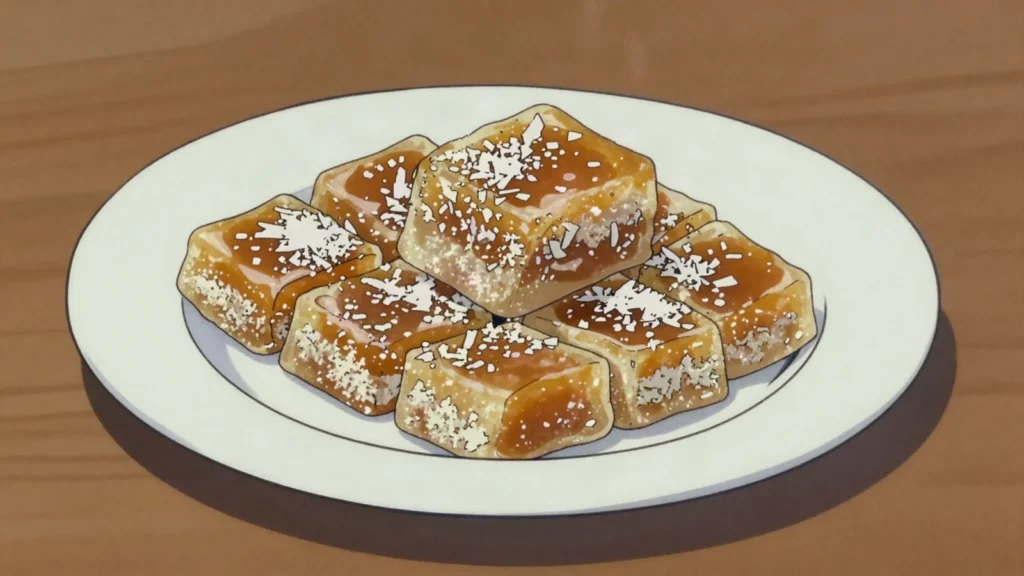
Bonbon coco is a dessert from Madagascar: grated coconut cooked with caramelised sugar and set into chewy squares. Sold in twists of paper at Malagasy markets and bus stations, made from coconut and cane grown on the coast.
How long does Bonbon coco take to make?
Bonbon coco takes 15 minutes of preparation and 40 minutes of cooking. The recipe makes about 30 squares. It is rated medium to make.
What can I substitute in Bonbon coco?
Yes, within limits. Desiccated coconut soaked in warm water stands in for fresh grated coconut. Coconut milk in place of water gives a richer and softer sweet.
What is the most important thing to get right in Bonbon coco?
Keep children out of the kitchen while it cooks. Never touch or taste the syrup in the pan. Put the sugar and water in a heavy pan. Stir over a low heat until the sugar dissolves. Brush the sides of the pan with a wet brush. Once clear, stop stirring entirely.