
Ingredients
Ice
- 1solid block of ice
Syrups
- amarena syrup
- tamarind syrup
- mint syrup
- coconut syrup
- lemon syrup
Fruit
- fresh coconut chunks
- amarena cherries in syrup
- a wedge of lemon
Directions
- Freeze a solid block of ice, in a plastic container if you have nothing better. Not cubes and not crushed ice.
- The block is the whole thing. Grattachecca means scraped ice, and it is scraped in flakes from a standing block with a curved blade, which gives loose feathery shards rather than the dense snow a machine produces.
- Hold the blade at a shallow angle and draw it across the surface of the block towards you in long strokes.
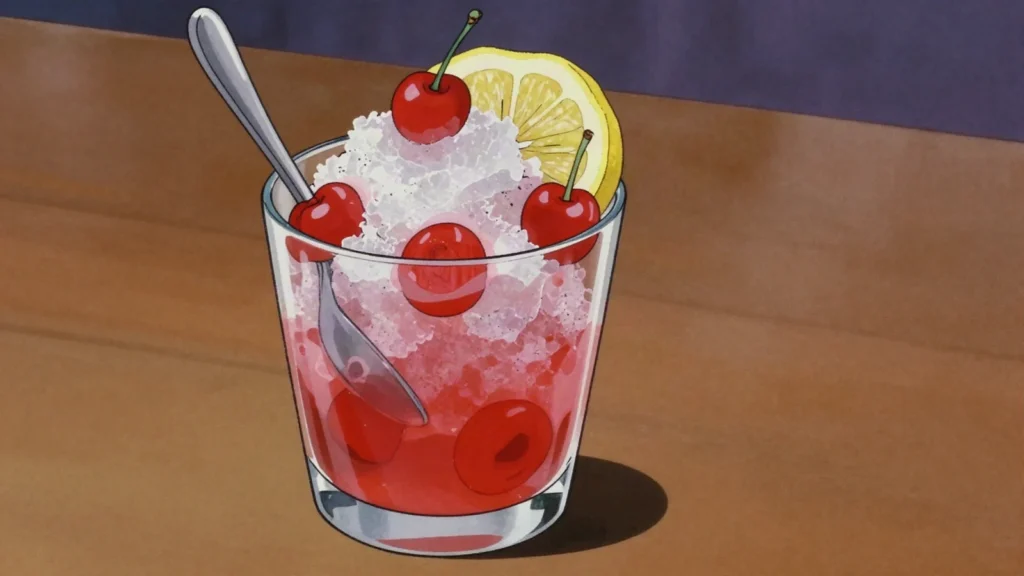
- Scrape the flakes into a tall glass, filling it loosely.
- Do not pack it down. Pressed ice melts into a solid lump and the syrup runs straight to the bottom, while loose flakes hold the syrup all the way through.
- Pour the syrup over generously, in one flavour or two.
- Add pieces of fresh fruit: coconut, amarena cherries with a little of their syrup, a wedge of lemon.
- Finish with another splash of syrup, and a little cold water if the syrup is very thick.
- Serve at once with both a straw and a long spoon, because it is drunk and eaten in roughly equal measure.
- It has been sold from kiosks along the Tiber since the nineteenth century, back when ice was cut in winter and stored in caves through the summer.
Technique
- The classic pairings are amarena with sour cherries and coconut with fresh coconut chunks.
- It is not a granita. Granita is churned as it freezes; this is scraped from solid ice, and the texture is entirely different.
- Nobody makes it at home in Rome. The riverside kiosk is half the point.
Substitutions
- A hand-crank ice shaver, which comes closer than anything else.
- A blender pulsed very briefly, accepting that the texture will be wetter.
Variations
- Al tamarindo, dark and sour, which is the old Roman order.
- Con cocco, with coconut syrup and fresh coconut.
- Mixed, with two syrups poured on opposite sides of the glass.
History
Sold from riverside kiosks along the Tiber since the nineteenth century, when ice was cut and stored in caves.
Frequently asked questions
What is Grattachecca?
Grattachecca is a dessert from Vatican City: ice shaved by hand from a block, drenched in fruit syrup and fresh fruit. Sold from riverside kiosks along the Tiber since the nineteenth century, when ice was cut and stored in caves.
How long does Grattachecca take to make?
Grattachecca takes 10 min of preparation and no cooking at all. The recipe makes 1 glass. It is rated easy to make.
What can I substitute in Grattachecca?
Yes, within limits. A hand-crank ice shaver, which comes closer than anything else. A blender pulsed very briefly, accepting that the texture will be wetter.
What is the most important thing to get right in Grattachecca?
The block is the whole thing. Grattachecca means scraped ice, and it is scraped in flakes from a standing block with a curved blade, which gives loose feathery shards rather than the dense snow a machine produces.