
Ingredients
The soybeans
- 250 gdried yellow soybeans
- soaked overnight and drained
- or 250 g roasted soybeans
- sold ready roasted
- oil for frying, if frying
The dressing
- 1red onion, finely chopped
- 2green chillies, finely chopped
- or to taste
- 4 clovesgarlic, crushed
- a thumb of ginger, grated
- juice of 1 lemon
- or 2 limes
- 2 tablespoonsmustard oil
- see the safety note
- or 2 tablespoons any neutral oil
- 1 teaspoonsalt
- or to taste
The spices
- 1 teaspoonground cumin
- toasted and ground, ideally
- half a teaspoon ground coriander
- half a teaspoon turmeric
- a quarter teaspoon timur
- Nepali Sichuan pepper, optional
- a pinch of chilli powder
To finish
- a large handful of coriander leaf
- chopped
- 1tomato, chopped, optional
- half a cucumber, diced, optional
To serve
- as a snack with drinks
- or alongside a dal bhat
- beaten rice, chiura, optional
Directions
- Soak the dried soybeans overnight in plenty of water. Soak them in the refrigerator in warm weather. Drain them thoroughly the next day. Spread them on a cloth and dry them well. Wet beans spit violently in hot oil. Heat oil to about one hundred and sixty degrees. Fry the beans in batches for about eight minutes. They should turn golden and become crunchy.
- Use a deep pot and a splatter guard. Fill the pot no more than one third full. Never leave hot oil unattended. Keep a lid within reach to smother a fire. Never throw water onto burning oil.
- Drain them on kitchen paper and salt them. Let them cool before dressing them. Hot beans wilt the raw onion immediately. Stir them constantly over a medium heat. Give them about fifteen minutes.
- Check they are unsalted or account for the salt. Chop the onion as finely as you can. Chop the green chillies finely too. Crush the garlic and grate the ginger. Use less than you think if that concerns you. Toast whole cumin seeds in a dry pan. Give them about a minute until fragrant.
- Grind them in a mortar. It is not hot in the way chilli is. Put the cooled soybeans in a bowl. Add the onion, chilli, garlic and ginger.
- Add the ground spices and the salt. Add the lemon juice and the mustard oil. Toss everything together thoroughly. Use your hands, which mixes it best. It should be sharply sour first of all. Add more lemon or salt as needed.
- Add the tomato and cucumber if you are using them. Some cooks include them and some do not. Keep them airtight or they go soft. That is how it is actually done.
Technique
- Dress it shortly before serving, about ten or fifteen minutes ahead. The beans soften in the dressing, and a sadeko left standing loses the crunch that is the whole point of it.
- Mustard oil is sold labelled for external use only in the EU, UK and US and is not approved there as a cooking oil, because of its erucic acid content. That labelling is a regulatory fact; the human evidence behind it is less settled than the label implies, and hundreds of millions of people cook with it daily. The atlas states the position without arguing with it and without pretending the oil is not traditional — using it as food where it is labelled otherwise is your decision. Low-erucic-acid mustard oil is approved as food where it is sold, and a neutral oil makes a good dish with a different flavour.
- Dry the soaked beans thoroughly before they go into hot oil. Wet beans spit violently and beans pop as their moisture escapes, so use a deep pot no more than a third full and a splatter guard.
- Let the beans cool before dressing them. Hot beans wilt the raw onion immediately and the raw sharpness is the character of a sadeko.
- Season it boldly — sharply sour, clearly hot, well salted. A timid sadeko has missed the point; taste and push it further than feels comfortable.
- Chop the onion and chilli as finely as you can. Coarse pieces dominate a dish this small.
- Toast and grind whole cumin rather than using pre-ground. It is a minute’s work and the difference is real.
- Raw crushed garlic gets stronger as it sits in the dressing. Use less than you think if that matters to you.
- Ready-roasted soybeans, sold by Nepali and Indian grocers and by health food shops, skip the soaking and frying entirely. Check whether they are already salted.
- Sadeko is a technique rather than a dish — aloo sadeko with potato, mula sadeko with radish and wai wai sadeko with crushed uncooked instant noodles all use the same dressing.
- Timur, the Nepali Sichuan pepper, gives a citrus aroma and a numbing tingle rather than heat. Sichuan pepper substitutes closely and the dish works without either.
Substitutions
- Ready-roasted soybeans replace soaking and frying entirely.
- Dry-roasting the soaked beans in a pan replaces frying and gives a drier, less rich result.
- Any neutral oil replaces mustard oil where mustard oil is labelled for external use.
- Lime replaces lemon and is used interchangeably.
- Sichuan pepper replaces timur closely; both are optional.
- Boiled potato, radish or crushed instant noodles replace the soybeans for the other sadeko dishes.
Variations
- Aloo sadeko, made with boiled potato, is the most widely eaten of the family.
- Wai wai sadeko crushes uncooked instant noodles into the same dressing and is a Kathmandu street snack.
- Mula sadeko uses raw or lightly cooked radish.
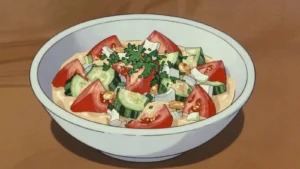
- A version with chopped tomato and cucumber worked through is fresher and less concentrated.
- Bhatmas eaten plain, roasted and salted, is a snack in its own right.
- Chiura, beaten rice, is often mixed in and turns it into a fuller snack.
Frequently asked questions
What is Bhatmas Sadeko?
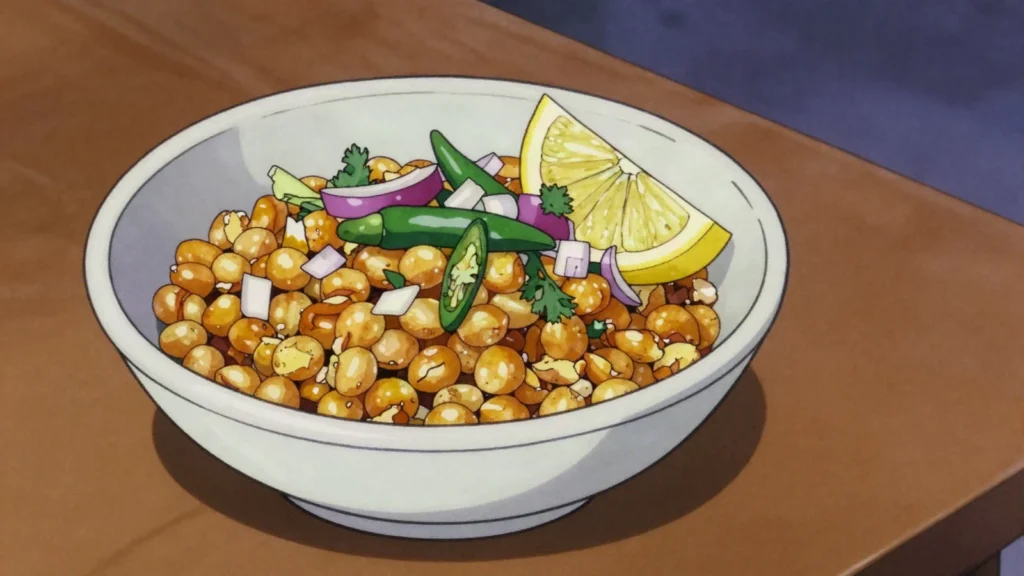
Bhatmas Sadeko is a salad & side from Nepal: fried soybeans tossed with onion, chilli, lemon and mustard oil.
How long does Bhatmas Sadeko take to make?
Bhatmas Sadeko takes 15 minutes of preparation and 15 minutes of cooking. The recipe makes serves 4 as a snack. It is rated easy to make.
What can I substitute in Bhatmas Sadeko?
Yes, within limits. Ready-roasted soybeans replace soaking and frying entirely. Dry-roasting the soaked beans in a pan replaces frying and gives a drier, less rich result. Any neutral oil replaces mustard oil where mustard oil is labelled for external use. Lime replaces lemon and is used interchangeably. Sichuan pepper replaces timur closely; both are optional. Boiled potato, radish or crushed instant noodles replace the soybeans for the other sadeko dishes.
What is the most important thing to get right in Bhatmas Sadeko?
Use a deep pot and a splatter guard. Fill the pot no more than one third full. Never leave hot oil unattended. Keep a lid within reach to smother a fire. Never throw water onto burning oil.