
Ingredients
Rice
- 500 gglutinous rice, malagkit
- 400 mlcoconut milk
- 100 mlwater
- 80 gsugar
- 1 teaspoonsalt
To wrap
- banana leaves, cut into rectangles
- kitchen string or strips of leaf
To serve
- white or muscovado sugar, for dipping
- ripe mango, sliced
- latik, toasted coconut curds, optional
Directions
- Rinse the rice two or three times in cold water. Cover it with fresh water and leave it for two hours. Drain it thoroughly before you start cooking.
- Cut them into rectangles about twenty centimetres across. Pass each piece briefly over a gas flame or a hot pan. Trim away the thick central rib if it runs through your piece. Put the drained rice in a heavy pan with the coconut milk.
- Add the water, the sugar and the salt. Bring it slowly to a simmer, stirring all the time. Keep stirring until the liquid has been absorbed. This takes about fifteen minutes over a low heat. Let it cool until you can handle it comfortably. Wrapping them takes practice and gets fast quickly.
- Lay one leaf rectangle shiny side up on the board. Spoon two tablespoons of rice in a line along one edge. Shape it into a log with the back of the spoon. Roll the leaf over the rice into a tight cylinder.
- Fold both ends underneath the roll to close them. Do not wrap it tightly, because the rice swells as it steams. Tie the parcels together in pairs with string. Stack the parcels in a steamer basket in loose layers. Set the basket over a pan of boiling water. Cover it and steam them for one hour. Check the water level every twenty minutes or so.
- Top it up with boiling water when it runs low. The rice is done when it is translucent and completely tender. Lift the parcels out and let them cool at room temperature. They firm up considerably as they cool down.
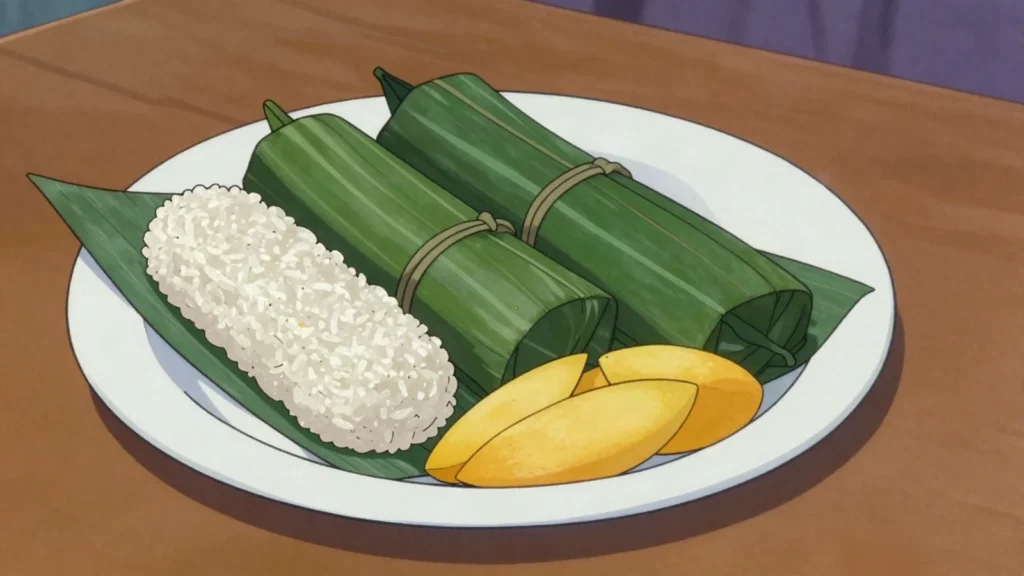
- Put a small dish of sugar beside it for dipping. Suman keeps for two days wrapped at room temperature. Steam a refrigerated piece briefly to soften it again.
Technique
- Suman sa lihiya is a separate and widely eaten version made with food-grade lye water, which gives the rice an amber colour and a springy bite.
- Lye water is caustic in concentrate and must be food grade, measured exactly and kept away from skin and eyes.
Substitutions
- Palm or buli leaves are used in some provinces and give a different aroma.
- Foil can be used at a pinch, though the leaf flavour is a real part of the dish and is lost entirely.
Variations
- Suman sa ibus is wrapped in woven palm leaf into a long thin tube.
- Moron from Leyte layers chocolate rice with plain rice in the same wrapper.
- Suman sa lihiya is served with latik and is a distinct regional style.
History
A pre-colonial Philippine rice cake with dozens of regional wrappings, eaten with ripe mango at breakfast.
Frequently asked questions
What is Suman?
Suman is a snack from Philippines: sticky rice cooked in coconut milk, wrapped in leaf and dipped in sugar. A pre-colonial Philippine rice cake with dozens of regional wrappings, eaten with ripe mango at breakfast.
How long does Suman take to make?
Suman takes 30 minutes plus soaking of preparation and 1 hour 30 minutes of cooking. The recipe makes about 16 pieces. It is rated medium to make.
What can I substitute in Suman?
Yes, within limits. Palm or buli leaves are used in some provinces and give a different aroma. Foil can be used at a pinch, though the leaf flavour is a real part of the dish and is lost entirely.
What is the most important thing to get right in Suman?
Fold both ends underneath the roll to close them. Do not wrap it tightly, because the rice swells as it steams. Tie the parcels together in pairs with string. Stack the parcels in a steamer basket in loose layers. Set the basket over a pan of boiling water. Cover it and steam them for one hour. Check the water level every twenty minutes or so.