
Ingredients
The vegetables
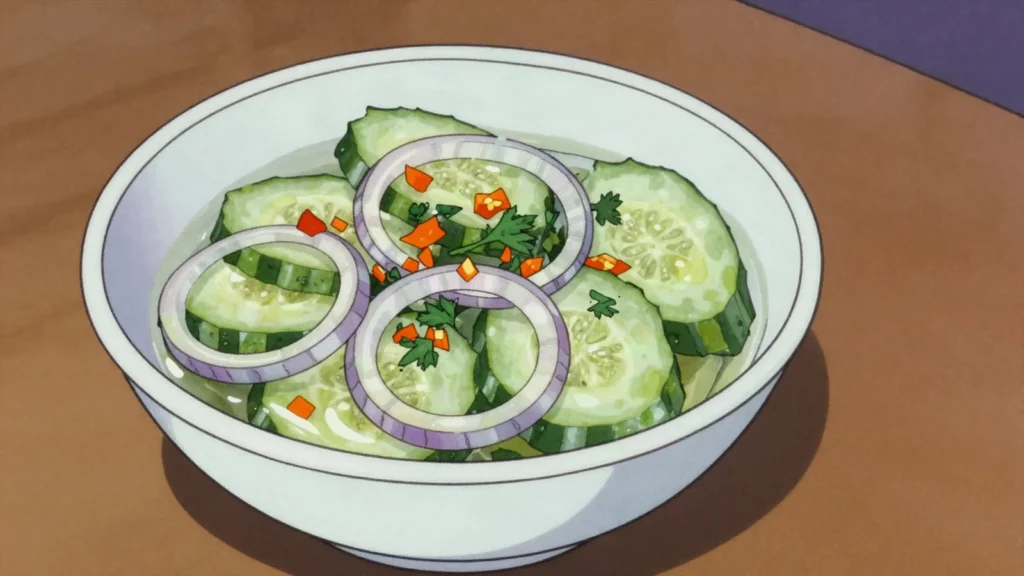
- 2cucumbers, finely diced
- seeds scooped out first
- 2onions, finely diced
- 1small carrot, finely diced
- optional
- a few cabbage leaves, shredded
- optional
The heat
- 3to 6 scotch bonnet peppers
- or Bajan yellow peppers
- finely chopped, seeds in or out
- see the safety note
- wear gloves
The liquid
- juice of 6 limes
- 150 mlwhite vinegar
- at 5 percent acidity
- 2 teaspoonssalt
- 1 teaspoonsugar
- optional, to round it
The seasoning
- 3 clovesgarlic, crushed
- 1 tablespoonfresh thyme leaves
- a small bunch of parsley
- or Bajan seasoning herbs
- 1 teaspoonblack pepper
- 1 teaspoonmustard, prepared
- optional
- a pinch of turmeric
- for colour, optional
Directions
- Wash with soap and oil, or with milk. Rub cooking oil over your hands, then wash with soap. Do not lean over the board and breathe in. Rinse with plenty of cool water or milk. Seek medical advice if it does not settle.
- Cut everything very fine. Large pieces do not sit on a fork with anything else. Scoop the watery seed core out first. It dilutes the pickle and goes soft.
- Salt the diced cucumber and leave it twenty minutes. It also keeps the cucumber crisp. Use plenty of onion. The acid takes the raw edge off the onion within an hour. Use fresh lime juice. Roll the limes firmly before juicing them.
- Use vinegar at five percent acidity. Vinegar gives reliable acidity and keeps it longer. Combine everything in a glass or ceramic bowl. Do not use aluminium or copper.
- Cover it and refrigerate it two hours at least. The vegetables need to take up the acid and the heat. Taste it before you serve a lot of it to anyone. Spoon it over the food rather than serving it beside.
- Roast breadfruit. Sharp, hot and cold against rich, soft and warm. Serve it in a small dish and let people take what they want. This is too hot for most children.
- Make a mild version alongside if that matters. Bread and rice help by absorbing it. Keep it in glass with a tight lid.
Technique
- Wear gloves. Capsaicin binds to skin and water does not wash it off — it transfers from your hands hours later, and touching your eyes, a contact lens or a child is genuinely painful. Oil then soap removes it, because capsaicin dissolves in fat rather than water.
- Do not lean over the board and breathe in. Chopping this many hot peppers puts capsaicin into the air and makes people cough. Ventilate the kitchen.
- If you get it in an eye, rinse with plenty of cool water or milk. It is intensely painful and it passes; seek medical advice if it does not settle.
- Most of the heat is in the white pith inside the pepper, and the seeds carry it only by contact with the pith. Removing the pith reduces the heat considerably — that is the actual chemistry rather than the common belief about seeds.
- This is genuinely fiercely hot, not a mild condiment with a kick, and the atlas says so rather than understating it. Three peppers is hot; six is what a Bajan cook might use.
- It gets hotter as it sits. A pickle that was manageable on Friday can be fierce by Sunday, as the capsaicin spreads through the liquid and vegetables. Taste before serving a lot of it to anyone.
- Serve it in a small dish and let people take what they want. Tolerance varies enormously and heaping it onto someone’s plate is not a kindness. It is too hot for most children.
- For too much heat, use dairy rather than water — milk, yoghurt or ice cream — because capsaicin dissolves in fat and in the casein of milk, while water just spreads it around the mouth. Bread and rice help by absorbing it.
- This is a fresh pickle, not a preserve. It lives in the refrigerator for a week, not in a cupboard, and there is no fermentation to go wrong.
- Scoop the watery seed core out of the cucumber, then salt the dice for twenty minutes and drain it. That stops the pickle watering down and keeps the cucumber crisp.
- Cut everything very fine. This is eaten by the spoonful over other food, and fine dice also takes up the lime faster.
- Use fresh lime juice — bottled tastes flat and slightly cooked, and the freshness is what this pickle is. Roll the limes firmly before juicing for considerably more.
- Lime gives the flavour and vinegar gives reliable acidity and keeps it longer. Some households use lime alone, and those pickles must be eaten within a couple of days.
- Rest it two hours at least and overnight if you can. Eaten straight away it tastes of separate raw things; the acid takes the raw edge off the onion within an hour, which is the whole reason for the wait.
- Use glass or ceramic, never aluminium or copper — lime and vinegar react with both.
Substitutions
- Habanero replaces scotch bonnet directly; both are Capsicum chinense.
- Any hot chilli works, at the cost of the fruitiness.
- Lemon juice replaces lime, giving a different but workable sharpness.
- Cabbage, carrot, christophene or green papaya extend or replace the cucumber.
- A spoonful of ready-made Bajan green seasoning replaces the fresh herbs.
- Cider vinegar replaces white for a rounder flavour.
Variations
- A milder version with the pith and seeds removed suits children.
- Trinidadian pepper sauce cooks the same peppers into a bottled sauce.
- Jamaican escovitch pickle uses vinegar, onion and scotch bonnet over fried fish.
- Bajan pepper sauce is the blended mustard-and-scotch-bonnet bottle sauce.
- Souse itself uses the same lime and cucumber dressing on pork.
- A cabbage-heavy version is made when cucumbers are dear.
History
The sharp pickle heaped over pudding and souse every Saturday, made fresh with scotch bonnet and lime.
Frequently asked questions
What is Bajan pickle?
Bajan pickle is a fermented & pickled from Barbados: cucumber, onion and hot pepper in lime and vinegar, fiercely hot. The sharp pickle heaped over pudding and souse every Saturday, made fresh with scotch bonnet and lime.
How long does Bajan pickle take to make?
Bajan pickle takes 25 minutes plus 2 hours of preparation and none of cooking. The recipe makes makes about 500 ml. It is rated easy to make.
What can I substitute in Bajan pickle?
Yes, within limits. Habanero replaces scotch bonnet directly; both are Capsicum chinense. Any hot chilli works, at the cost of the fruitiness. Lemon juice replaces lime, giving a different but workable sharpness. Cabbage, carrot, christophene or green papaya extend or replace the cucumber. A spoonful of ready-made Bajan green seasoning replaces the fresh herbs. Cider vinegar replaces white for a rounder flavour.
What is the most important thing to get right in Bajan pickle?
Wash with soap and oil, or with milk. Rub cooking oil over your hands, then wash with soap. Do not lean over the board and breathe in. Rinse with plenty of cool water or milk. Seek medical advice if it does not settle.