
Ingredients
Dough
- 400 gatta, wholewheat chapati flour
- 1 teaspoonsalt
- 1 tablespoonoil
- about 280 ml warm water
Filling
- 600 gfloury potatoes
- 1green chilli, finely chopped
- 2cm ginger, grated
- 3 tablespoonschopped coriander
- 1 teaspoonground cumin
- 1 teaspoonamchur, dried mango powder
- 1/2 teaspoongaram masala
- 1/2 teaspoonred chilli powder
- 1 teaspoonsalt
To cook
- ghee or oil, for the griddle
- extra atta, for dusting
To serve
- plain yoghurt
- mango or lime pickle
- a knob of white butter
- sliced onion
Directions
- Put the atta and salt into a large bowl. Add the oil and rub it through the flour. Pour in the water gradually while mixing. Different flours take different amounts of water. Bring it together into a soft dough. It should be softer than a bread dough.
- Knead it for about eight minutes until smooth. It should feel supple and slightly tacky. Cover it with a damp cloth and rest it. Give it at least thirty minutes. Boil the potatoes whole in their skins. Boiling them whole keeps water out of the flesh.
- Cook them until a knife slides in easily. Drain them and let them steam dry completely. Peel them while they are still warm. Mash them thoroughly with a masher or a ricer. There must be no lumps left at all.
- Spread it out on a plate to cool completely. Warm filling makes the dough soggy and sticky. Give it at least twenty minutes. Add the chilli, ginger and coriander to the cold mash. Add the cumin, amchur, garam masala and chilli powder. Add the salt and mix everything thoroughly.
- Taste it and make it slightly saltier than seems right. Divide the filling into eight equal balls. Filling them takes a little practice. Divide the dough into eight balls as well. Roll one dough ball into a small disc. Make it about eight centimetres across. Keep the centre thicker than the edges. Set a ball of filling in the middle. Pinch the top of it firmly closed.
- Twist off any excess dough at the top. A thick knot of dough there cooks unevenly. Flatten the stuffed ball gently with your palm. Dust the ball lightly with flour. Roll from the centre outward with light pressure. Turn it a quarter turn after every stroke. That turning keeps it round and even.
- Roll it out to about eighteen centimetres. Cooking them needs a properly hot griddle. Heat a heavy tawa or frying pan over medium-high heat. It should be hot enough that a drop of water skips.
- Lay the paratha on the dry griddle first. Cook it for about one full minute. Small bubbles should rise on the surface. Flip it and cook the other side for a minute. Flip it again and press it with a spatula. Press around the edges, working in a circle. Brush the second side with ghee and flip once more. Cook until both sides carry deep brown spots. The whole thing takes about three minutes.
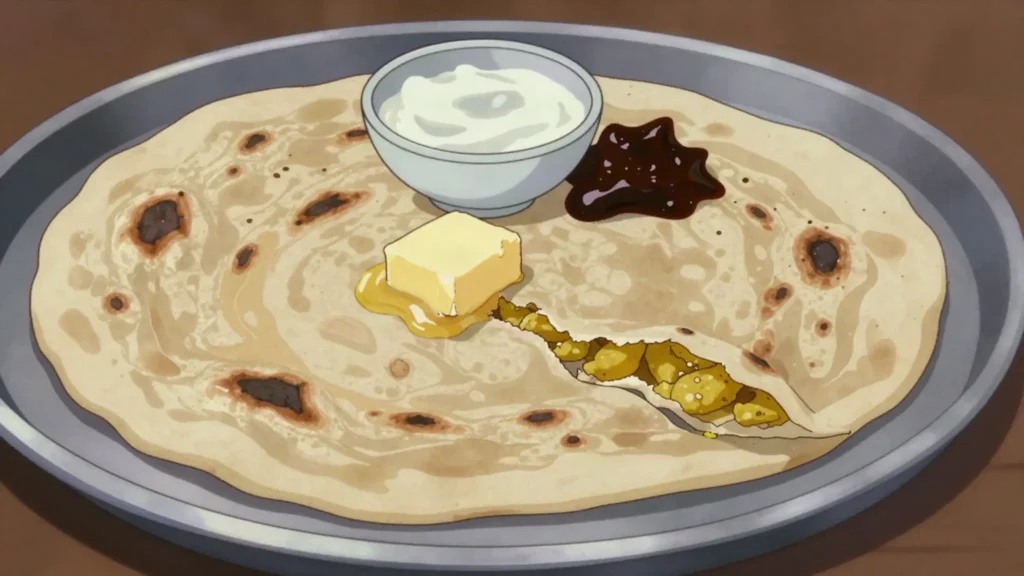
- Take it off before it dries out and turns hard. Serving them is done hot from the griddle. Stack them in a cloth-lined container as they come off. The cloth traps steam and keeps them soft. Serve them with cold yoghurt and pickle. Set a knob of white butter on top of each one. A cup of hot chai goes alongside.
Technique
- Amchur is dried unripe mango ground to a powder, and it gives sourness without adding any liquid to the filling.
- That dryness is why it is preferred to lemon juice in a stuffed paratha.
Substitutions
- Wholemeal flour can replace atta, though atta is more finely milled and gives a softer bread.
- Oil replaces ghee and makes the recipe suitable for anyone avoiding dairy.
Variations
- Gobi paratha uses grated cauliflower squeezed dry.
- Mooli paratha uses grated radish, also squeezed hard.
- Paneer paratha uses crumbled fresh cheese with green chilli.
History
A whole wheat flatbread stuffed with spiced mashed potato, then pan-fried with ghee or oil, developed across North India, particularly Punjab, as a hearty breakfast food, with potato itself only becoming a widely available Indian staple after the vegetable, a South American crop, was introduced through European trade and colonization beginning in the 1500s and 1600s, meaning aloo paratha in its now-standard form is a comparatively recent expression of a much older flatbread-stuffing tradition. Stuffed parathas more broadly, using various vegetable, lentil or paneer fillings depending on region and season, are documented in North Indian cooking well before the potato-specific version became dominant. It is traditionally served with yoghurt, pickle and a pat of butter melting on top.
Frequently asked questions
What is Aloo Paratha?
Aloo Paratha is a breakfast from India: griddled flatbread stuffed with spiced potato, served with curd and pickle. A whole wheat flatbread stuffed with spiced mashed potato, then pan-fried with ghee or oil, developed across North India, particularly Punjab, as a hearty breakfast food, with potato itself only becoming a widely available Indian staple after the vegetable, a South American crop, was introduced through European trade and colonization beginning in the 1500s and 1600s, meaning aloo paratha in its now-standard form is a comparatively recent expression of a much older flatbread-stuffing tradition. Stuffed parathas more broadly, using various vegetable, lentil or paneer fillings depending on region and season, are documented in North Indian cooking well before the potato-specific version became dominant. It is traditionally served with yoghurt, pickle and a pat of butter melting on top.
How long does Aloo Paratha take to make?
Aloo Paratha takes 40 minutes plus resting of preparation and 25 minutes of cooking. The recipe makes 8 parathas. It is rated medium to make.
What can I substitute in Aloo Paratha?
Yes, within limits. Wholemeal flour can replace atta, though atta is more finely milled and gives a softer bread. Oil replaces ghee and makes the recipe suitable for anyone avoiding dairy.
What is the most important thing to get right in Aloo Paratha?
Cook them until a knife slides in easily. Drain them and let them steam dry completely. Peel them while they are still warm. Mash them thoroughly with a masher or a ricer. There must be no lumps left at all.