
Ingredients
Batter
- 250 gfine maize flour
- 150 gplain flour
- 500 mlmilk
- 4eggs
- 1 tspsalt
- 1 tspbaking powder
Cheese
- 400 gfresh sheep’s or cow’s cheese, brânză de vaci or a fresh curd cheese
- 150 mlsmântână, soured cream
Also
- 80 gbutter, melted
- 1large bunch dill, chopped
- 3spring onions, chopped, optional
To finish
- more soured cream
- melted butter
To serve
- warm, cut into squares
Directions
- Use fine maize flour, the same kind used for mămăligă, rather than coarse polenta. Use a fresh, moist, slightly sour curd cheese rather than an aged one. Now the moisture in it, which needs managing. Drain the cheese if it is very wet, pressing it in a sieve for half an hour.
- Break it up with a fork rather than blending it, since some texture is wanted. Dill is a defining flavour here rather than a decoration, and it should be used generously. Chop a large bunch, stems and all, and stir it right through the batter. Use fresh dill rather than dried, which gives almost nothing.
- Chop it just before using it, since it loses its scent quickly once cut. Separate the eggs and whisk the whites to soft peaks. Whisk the yolks with the milk, melted butter and soured cream. Stir in the maize flour, wheat flour, baking powder and salt.
- Add the crumbled cheese, dill and spring onion. Now the consistency, which needs judging. Fold them through in two additions with a spatula, gently.
- Fold rather than stir, since beating knocks out the air you have just whisked in. Stop while a few streaks of white are still visible. Butter the tin generously, since a maize batter sticks readily. Now bake it at 180°C for forty to forty-five minutes.
- Bake at a moderate heat rather than a high one, since the cheese and egg set gently and a hot oven browns the top before the middle cooks. It is done when the top is golden and a skewer pushed into the centre comes out clean.
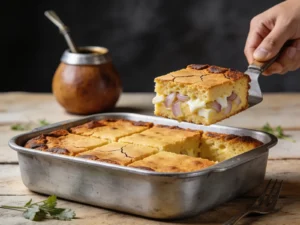
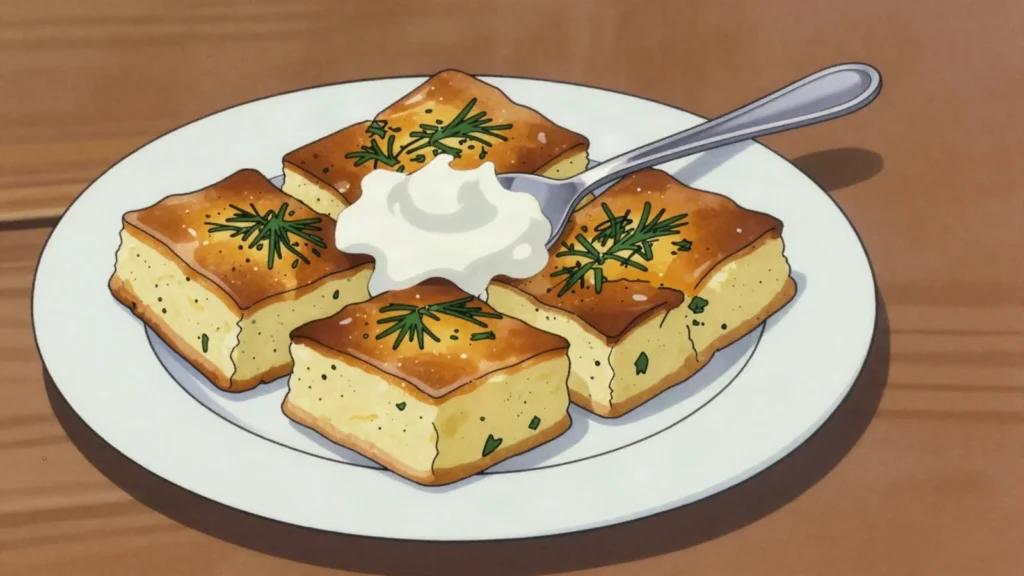
- Let it stand for fifteen minutes, which lets it set and firm up. Cut straight from the oven it slumps and crumbles. Serve it warm rather than hot, cut into squares, with soured cream and melted butter over the top.
Technique
- Fine maize flour is essential; coarse polenta gives a gritty result.
- Dill is a main flavour rather than a garnish.
- Whisked egg whites folded in lift it considerably.
Substitutions
- Ricotta or drained cottage cheese in place of brânză de vaci.
- Crème fraîche in place of smântână.
Variations
- Baked on cabbage or vine leaves, as traditionally.
- Made with sheep’s cheese, which is tangier.
- Made sweet, with sugar and no dill.
History
A northern Moldovan bake of maize flour and fresh cheese, served warm under a spoonful of smântână.
Frequently asked questions
What is Alivenci?
Alivenci is a bread & pastry from Moldova: cornmeal and cheese cakes baked with dill and sour cream. A northern Moldovan bake of maize flour and fresh cheese, served warm under a spoonful of smântână.
How long does Alivenci take to make?
Alivenci takes 25 min of preparation and 45 min of cooking. The recipe makes 8 servings. It is rated easy to make.
What can I substitute in Alivenci?
Yes, within limits. Ricotta or drained cottage cheese in place of brânză de vaci. Crème fraîche in place of smântână.
What is the most important thing to get right in Alivenci?
Use fine maize flour, the same kind used for mămăligă, rather than coarse polenta. Use a fresh, moist, slightly sour curd cheese rather than an aged one. Now the moisture in it, which needs managing. Drain the cheese if it is very wet, pressing it in a sieve for half an hour.