
Ingredients
Bread
- 500 gdark rye bread
- stale is better than fresh
- 4 litreswater
Ferment
- 250 gsugar
- 10 gdried yeast
- or a live kvass starter
- a handful of raisins
Sometimes added
- a few mint leaves
- the zest of 1 lemon
- 1 tablespoonhoney
- a piece of horseradish
Equipment
- a large pot
- a large jar or bucket
- muslin
- strong bottles
Directions
- Taste and time it rather than assuming. Cut the rye bread into thick slices. Cut those into rough even cubes. Spread them out on a baking tray. Heat the oven to 180C for this. Bake them for about fifteen minutes.
- Turn them over halfway through. They should be dark brown and dry. Let them cool completely first. Bring the water to a boil in a large pot.
- Take it off the heat entirely. Add the toasted bread cubes to it. Stir them down under the water. Cover the pot and leave it alone. Let it steep for at least six hours. Pour it all through a muslin-lined sieve.
- Squeeze the bread gently to release the liquid. Do not squeeze it hard at all. Discard the spent bread entirely. You should have a dark brown liquid. Warm the strained liquid to body temperature. It should feel barely warm to a clean finger.
- Stir in the sugar until it dissolves. Sprinkle the yeast over the surface. Stir it in gently and thoroughly. Add the mint or lemon zest if using them. Fermenting it takes about two days.
- Pour it into a large jar or bucket. Cover it with a cloth rather than a lid. Leave it somewhere warm to work. Give it about forty-eight hours. Taste it again after a full day. It should be sweet-sour and slightly fizzy. Warm weather ferments it much faster. Strain it again through muslin. Pour it into strong clean bottles.
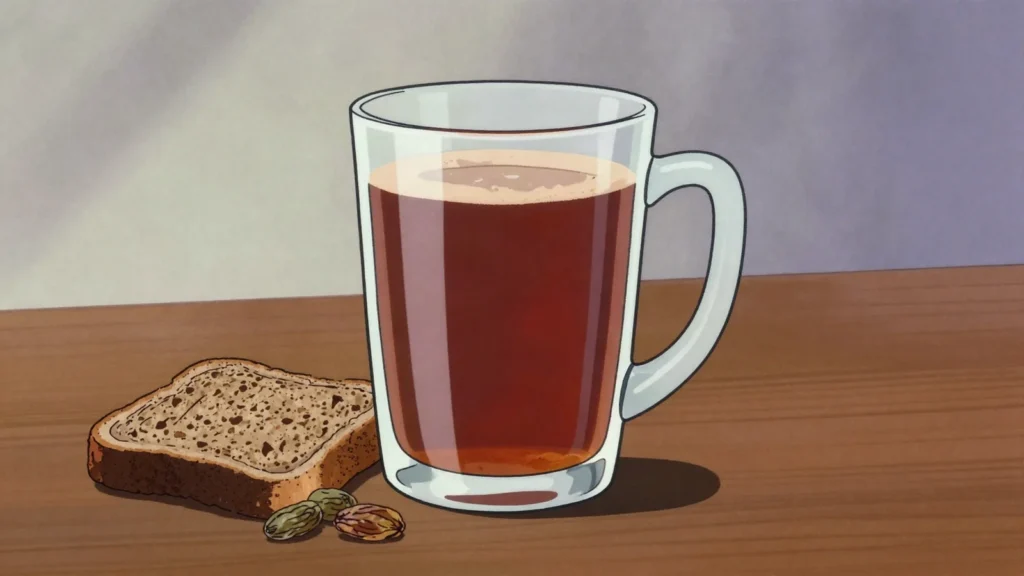
- Drop two or three raisins into each bottle. Leave a good gap at the top of each bottle. Use bottles made for carbonated drinks. A plastic bottle goes hard when it is ready. Pour it out into glasses or cups. It should be dark brown and lightly fizzy.
Technique
- Cvas is fermented and does contain alcohol, usually under one percent, and is treated and sold as a soft drink across the region.
- Dark rye bread supplies the colour, flavour and sugars, and is dried and toasted first, which deepens both.
- Bottled cvas keeps fermenting and builds real pressure, so plastic bottles are far safer at home and the hardness of the bottle is the pressure gauge.
Substitutions
- Any dark rye or pumpernickel bread works, and stale is better than fresh.
- A live kvass starter from a previous batch replaces the dried yeast.
Variations
- Some makers add mint, lemon zest or honey to the ferment.
- A version with horseradish is made in some households.
- Cvas is also the base of okroshka, the cold summer soup.
History
Poured from street tanks in Moldovan towns each summer, a habit shared across the former Soviet space.
Frequently asked questions
What is Cvas?
Cvas is a drink from Moldova: lightly fizzy sour drink fermented from dark rye bread, sold from barrels. Poured from street tanks in Moldovan towns each summer, a habit shared across the former Soviet space.
How long does Cvas take to make?
Cvas takes 30 minutes plus 2 days fermenting of preparation and 20 minutes of cooking. The recipe makes about 4 litres. It is rated medium to make.
What can I substitute in Cvas?
Yes, within limits. Any dark rye or pumpernickel bread works, and stale is better than fresh. A live kvass starter from a previous batch replaces the dried yeast.
What is the most important thing to get right in Cvas?
Taste and time it rather than assuming. Cut the rye bread into thick slices. Cut those into rough even cubes. Spread them out on a baking tray. Heat the oven to 180C for this. Bake them for about fifteen minutes.