
Ingredients
The dough
- 700 gstrong white bread flour
- plus extra for dusting
- 2 teaspoonsfine salt
- 1 tablespoonsugar
- 7 gsachet fast-action dried yeast
- about 450 ml warm water
The enrichment
- 3 tablespoonsmild vegetable oil
- or 40 g melted butter
- 3 tablespoonsplain yoghurt
- or 3 tablespoons milk
The topping
- 2 tablespoonssesame seeds
- or 2 tablespoons nigella seeds
- or a mixture of both
- a little water, to brush
To serve
- clotted cream or qishta
- runny honey
- date syrup
- a bowl of ful medames
- sweet mint tea
Directions
- Start by putting the flour into a very large bowl. Add the salt to one side of the bowl of flour. Add the sugar and the yeast to the opposite side. Keep the salt and yeast apart until you begin mixing. Stir the dry ingredients together with your hand. Make a well in the centre of the flour mixture.
- Pour in the oil and the yoghurt into the well. Add most of the warm water but hold some back. Flour absorbs different amounts on different days. The water should be warm and never hot to the touch.
- Mix with your hand until a shaggy dough forms. Add the remaining water only if it looks too dry. The dough should be soft and slightly sticky. Turn it out onto a lightly floured work surface. Knead it steadily for about ten full minutes.
- Turn it a quarter and repeat the same movement. The dough is ready when it feels smooth and elastic. Use the dough hook on a low to medium setting. Shape the dough into a smooth round ball.
- Put it into a lightly oiled bowl and turn it over. Cover the bowl with a damp cloth or with cling film. Leave it somewhere warm for about two hours. It should roughly double in size during that time. Divide it into four equal pieces on the work surface. Weigh them if you want them genuinely the same size.
- Roll each piece into a smooth ball with cupped hands. Cover the balls with a cloth and rest them properly. Rest them for twenty minutes before you shape them. Now heat the oven as hot as it will possibly go.
- Put a baking steel or heavy tray in to heat up. Let it heat for a full thirty minutes at least. A cold tray gives a pale and disappointing base. Turn on the grill element as well if your oven has one. Overhead heat helps mimic the tandoor a little. Press it flat with your fingertips from the centre out.
- Work outwards and leave the very edge a little thicker. Aim for about thirty centimetres across at least. Press deep parallel grooves across the whole surface. Use three or four fingers held together to do it.
- Press right down almost to the surface underneath. The grooves stop the middle ballooning up in the oven. Brush the surface very lightly with a little water. Scatter sesame or nigella seeds over the wet surface. Press them in gently so they do not fall off. Open the oven and slide it onto the hot stone quickly.
- Work fast so the oven loses as little heat as possible. Bake it for about eight to ten minutes in total. It should puff, blister and colour in patches. Take it out with a peel or with long tongs. A very hot oven and a large bread need real care. Use long oven gloves rather than short ones here. Wrap the baked bread in a clean cloth straight away. The trapped steam keeps it soft rather than crisp.
- Bake the remaining breads one at a time in the same way. Let the stone recover its heat between each bread. Give it five minutes with the oven door shut. Serve tamees hot, torn by hand rather than cut. It is never sliced with a knife at the table. Spread it thickly and pour honey generously over it. The other classic partner is a bowl of hot ful.
- Wrap leftovers tightly in foil once fully cooled. Reheat wrapped in foil in a hot oven for five minutes. Freeze it flat and reheat straight from frozen. Do not refrigerate it, because that stales bread faster.
Technique
- A real tandoor bakes this bread in three or four minutes against a wall far hotter than a domestic oven can reach. A home oven with a preheated stone and the grill on gets close, but the blistering will be gentler. That difference is worth knowing rather than glossing over.
- The pressed finger grooves are not decoration. They stop the centre inflating into a single balloon and give the bread its even, striped structure.
- Handling a very large flatbread in a very hot oven is the real hazard here. Long oven gloves, a peel or long tongs, and a clear landing space on the counter are all worth setting up before you open the door.
- Wrapping the bread in a cloth immediately after baking is what keeps it soft. Left uncovered on a rack it crisps and loses the chew that defines it.
- Tamees bakeries in Saudi cities are overwhelmingly run by Afghan bakers, and the bread is a direct descendant of Afghan tandoor naan. It is a genuinely migrant bread that became a local breakfast staple.
Substitutions
- Melted butter replaces the oil and gives a richer, softer crumb. Ghee is also used.
- Milk replaces the yoghurt without difficulty, though yoghurt gives a slightly softer bread and a faint tang.
- Nigella seeds, sesame seeds, or a mixture of both are all correct toppings. Some bakers use none at all.
- Clotted cream stands in for qishta closely. Thick Greek yoghurt is a poorer but workable substitute.
- Date syrup replaces honey and is equally traditional in the region.
- Strong bread flour gives the best chew, but plain flour makes a softer, more tender bread that is still good.
Variations
- Afghan naan-e-tandoori is the direct ancestor, usually longer and narrower with the same pressed grooves.
- Some Jeddah bakeries sell a sweet tamees brushed with butter and sugar, eaten as a treat rather than at breakfast.
- A cheese tamees, folded around soft white cheese before baking, is sold in some shops.
- Tamees with nigella seeds is common in the Riyadh area, while sesame is more usual on the Red Sea coast.
- In Pakistan and Afghanistan, closely related tandoor breads are eaten with tea rather than with cream and honey.
History
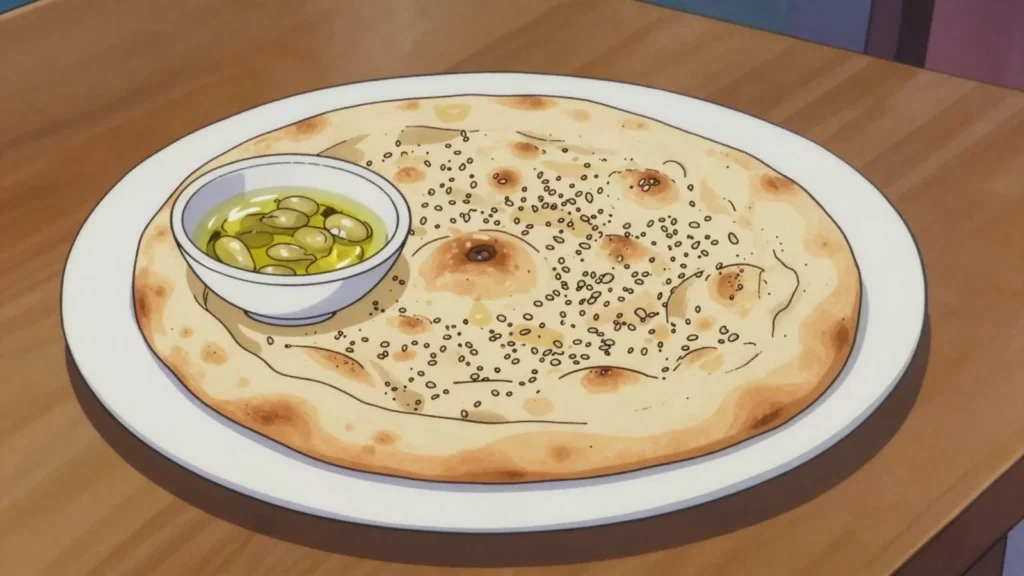
Tandoor flatbread of the Afghan bakeries in Saudi cities, eaten hot with cream and honey for breakfast.
Frequently asked questions
What is Tamees?
Tamees is a bread & pastry from Saudi Arabia: giant Afghan-style tandoor bread, Hejazi breakfast partner for ful. Tandoor flatbread of the Afghan bakeries in Saudi cities, eaten hot with cream and honey for breakfast.
How long does Tamees take to make?
Tamees takes 30 minutes plus 2 hours rising of preparation and 20 minutes of cooking. The recipe makes makes 4 large flatbreads. It is rated medium to make.
What can I substitute in Tamees?
Yes, within limits. Melted butter replaces the oil and gives a richer, softer crumb. Ghee is also used. Milk replaces the yoghurt without difficulty, though yoghurt gives a slightly softer bread and a faint tang. Nigella seeds, sesame seeds, or a mixture of both are all correct toppings. Some bakers use none at all. Clotted cream stands in for qishta closely. Thick Greek yoghurt is a poorer but workable substitute. Date syrup replaces honey and is equally traditional in the region. Strong bread flour gives the best chew, but plain flour makes a softer, more tender bread that is still good.
What is the most important thing to get right in Tamees?
Pour in the oil and the yoghurt into the well. Add most of the warm water but hold some back. Flour absorbs different amounts on different days. The water should be warm and never hot to the touch.