
Ingredients
Cassava dough
- 1 kgfermented cassava dough
- or 1 kg cassava, grated and fermented for 2 days
- 1 teaspoonsalt
To steam
- banana leaves, wilted
- or a lined steamer basket
- water, for the steamer
To serve
- grilled or fried fish
- a tomato and chilli sauce
- sliced raw onion
Directions
- Peel the root thoroughly and remove the pink layer under the skin. Cut out the woody core running down the middle. Grate it, ferment it and then cook it thoroughly. Never eat cassava raw at any stage of the process.
- Peel and wash the cassava thoroughly. Grate it finely on a box grater or in a processor. Put the grated cassava in a cloth and squeeze hard. Press out as much liquid as you possibly can.
- Add a spoonful of dough from a previous batch if you have it. Cover the pressed dough with a cloth. Leave it somewhere warm for one to two days. It should smell clearly sour but not rotten.
- Discard it if it grows coloured mould of any kind. Break up the fermented dough with your hands. Work out any lumps between your fingers. Add the salt and work it through evenly. The dough should be moist and crumbly. Add a little water if it is very dry. Take a handful of the fermented dough.
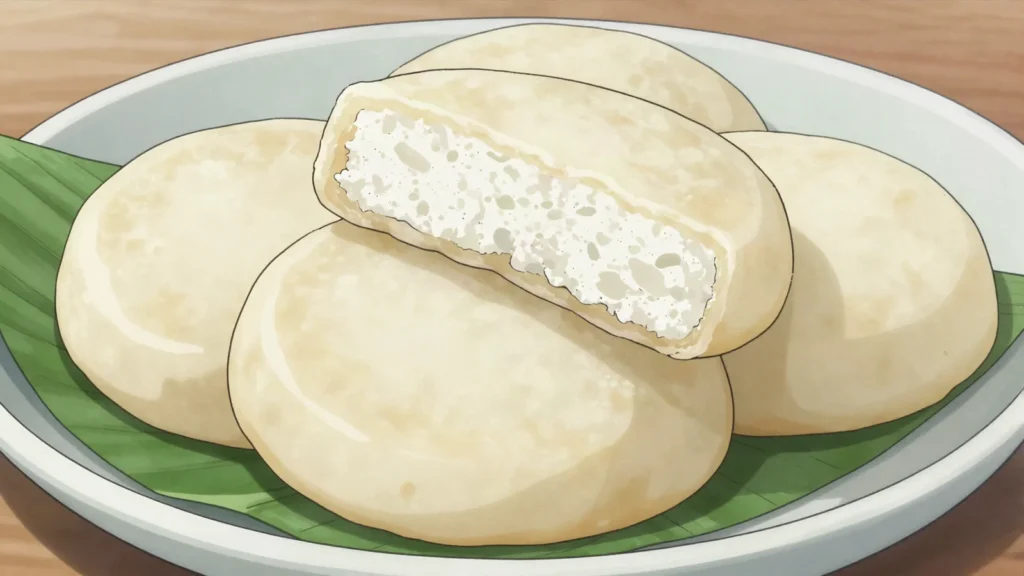
- Press it firmly into a flat round cake. Aim for about a centimetre and a half thick. Make them about twelve centimetres across. Press them firmly so they hold their shape. Set each one on a piece of wilted banana leaf. Set up a steamer with plenty of boiling water. Lay the cakes in the basket in a single layer. Do not stack them on top of each other.
- Cover the steamer with a cloth-wrapped lid. Steam them for about thirty minutes. Testing them tells you when they are ready. Break one open and taste a small piece. It should taste cooked with no raw starchiness.
- Steam them another ten minutes if so. Serving them is done hot from the steamer. Peel the banana leaf away from each cake. Cut them into wedges or serve them whole. They keep a day and go hard as they cool.
Technique
- Attieke and attoukpou are made from the same fermented cassava dough and differ only in how it is shaped before steaming.
- Attieke holds a protected geographical indication in Cote d’Ivoire, recognising it as a product of specific lagoon communities.
Substitutions
- Ready-made fermented cassava dough from an African shop is by far the easiest starting point.
- Frozen attieke can be pressed into cakes and resteamed, though the texture differs.
Variations
- Attieke is the granulated version of the same dough.
- Some villages make thicker cakes and others much thinner ones.
- Placali is a related Ivorian cassava dish cooked into a smooth paste.
History
Made from the same fermented cassava dough as attiéké, steamed as a flat cake instead of granulated, a lagoon-village economy of the whole root.
Frequently asked questions
What is Attoukpou?
Attoukpou is a snack from Côte d’Ivoire: flat round steamed cassava cake, denser cousin of attiéké. Made from the same fermented cassava dough as attiéké, steamed as a flat cake instead of granulated, a lagoon-village economy of the whole root.
How long does Attoukpou take to make?
Attoukpou takes 30 minutes of preparation and 40 minutes of cooking. The recipe makes about 8 cakes. It is rated medium to make.
What can I substitute in Attoukpou?
Yes, within limits. Ready-made fermented cassava dough from an African shop is by far the easiest starting point. Frozen attieke can be pressed into cakes and resteamed, though the texture differs.
What is the most important thing to get right in Attoukpou?
Peel the root thoroughly and remove the pink layer under the skin. Cut out the woody core running down the middle. Grate it, ferment it and then cook it thoroughly. Never eat cassava raw at any stage of the process.