
Ingredients
The fruit
- 6ripe bananas
- firm rather than soft
- peeled and halved lengthways
- or 4 ripe plantains
- for a firmer result
The coconut
- 100 gfresh grated coconut
- or 80 g desiccated coconut
- unsweetened
- plus 100 ml coconut milk
- optional, for a wetter dish
The citrus and sweetening
- juice of 2 oranges
- grated zest of 1 orange
- juice of 1 lemon
- or 1 lime
- 60 gbrown sugar
- or honey
- a pinch of salt
The fat
- 50 gbutter
- melted
- or 50 ml coconut oil
- a little extra, to grease
Sometimes added
- a little grated nutmeg
- a pinch of cinnamon
- a splash of rum
- chopped toasted nuts
Directions
- Oil was discovered in the 1990s and transformed the economy. Choose bananas that are ripe but still firm. Use ripe plantains for that, with yellow skins and black patches.
- Crack a mature coconut by holding it over a bowl. Never chop at a coconut on a board, because it rolls and the knife slips. Grate the flesh out with a scraper or a box grater. Add a little coconut milk alongside it if you use desiccated. That compensates for what it takes up.
- Zest the orange before you juice it, which is far easier that way. Wash the orange first, since the zest goes into the dish.
- Heat the oven to one hundred and eighty degrees. Butter an ovenproof dish generously. Lay the halved bananas in a single layer in the dish. Do not stack them, because they will steam rather than bake.
- Pour the melted butter over them evenly. Pour over the orange juice and the lemon juice. Scatter the orange zest across the surface. Sprinkle the sugar over the top of everything. Add the pinch of salt, which sharpens the sweetness noticeably.
- Spread it evenly rather than piling it in the middle. Add nutmeg or cinnamon now if you are using them. Add a splash of rum if you want it, which is a common addition. Bake it uncovered for about twenty to twenty-five minutes. The coconut should turn golden and lightly toasted on top.
- Cover the dish loosely with foil if it browns too fast. Serve it warm, straight from the dish. Spoon the syrupy juices over each portion. It is good on its own and it needs nothing else.
Technique
- The atlas cannot verify this dish’s attribution. Akwadu appears in Western collections of African recipes, usually credited to Equatorial Guinea, and the atlas has not found it widely documented in Equatorial Guinean sources. That does not mean it is not made there — it means the atlas cannot confirm what those collections assert, and it flags that rather than repeating an attribution it has not checked. What is clear is that bananas, coconut and citrus all grow abundantly there, and cooked banana dishes are made across Central and West Africa, so a dish of this kind sits naturally in that setting.
- Choose bananas that are ripe but still firm. Heavily blackened ones collapse into a purée in the oven. Ripe plantain gives a firmer result that holds its shape, and many cooks prefer it for exactly that reason.
- Do not reduce the citrus. The lemon or lime juice is what balances the sugar, and without that acid the dish is simply sweet and rather flat.
- Lay the fruit in a single layer. Stacked bananas steam rather than bake and the edges never caramelise.
- Watch the coconut from about fifteen minutes onwards. It burns quickly once it begins to colour, and burnt coconut is bitter enough to spoil the whole dish — cover loosely with foil if it is browning too fast.
- The pinch of salt is not optional. It sharpens the sweetness and the dish tastes flat without it.
- Fresh grated coconut is considerably better than desiccated, which is drier and absorbs moisture from the dish. If you use desiccated, add a little coconut milk to compensate.
- Crack a coconut by tapping around its middle with the back of a heavy knife while holding it over a bowl. Never chop at one on a board — it rolls and the knife slips.
- Equatorial Guinea is a former Spanish colony, independent since 1968, and the only African country with Spanish as an official language. Oil discovered in the 1990s transformed the economy, and that wealth has been very unevenly distributed.
Substitutions
- Ripe plantain replaces banana and gives a firmer result that holds its shape better.
- Desiccated unsweetened coconut replaces fresh; add a little coconut milk to make up for what it absorbs.
- Coconut oil replaces butter and reinforces the coconut flavour.
- Honey replaces sugar for a rounder sweetness.
- Lime replaces lemon; either supplies the acid the dish needs.
- A splash of rum, nutmeg or cinnamon are all common additions and none is required.
Variations
- A version cooked on a griddle or in a pan rather than baked is quicker and gives more caramelisation.
- Grilled bananas in their skins, split and dressed afterwards, are made across the region.
- A version with pineapple alongside the banana is made in some households.
- Chopped toasted peanuts or cashews scattered over add texture and are a common finish.
- Related baked banana and coconut dishes are made across West and Central Africa and the Caribbean.
- Some cooks wrap the fruit in banana leaf and bake it, which perfumes it noticeably.
Frequently asked questions
What is Akwadu?
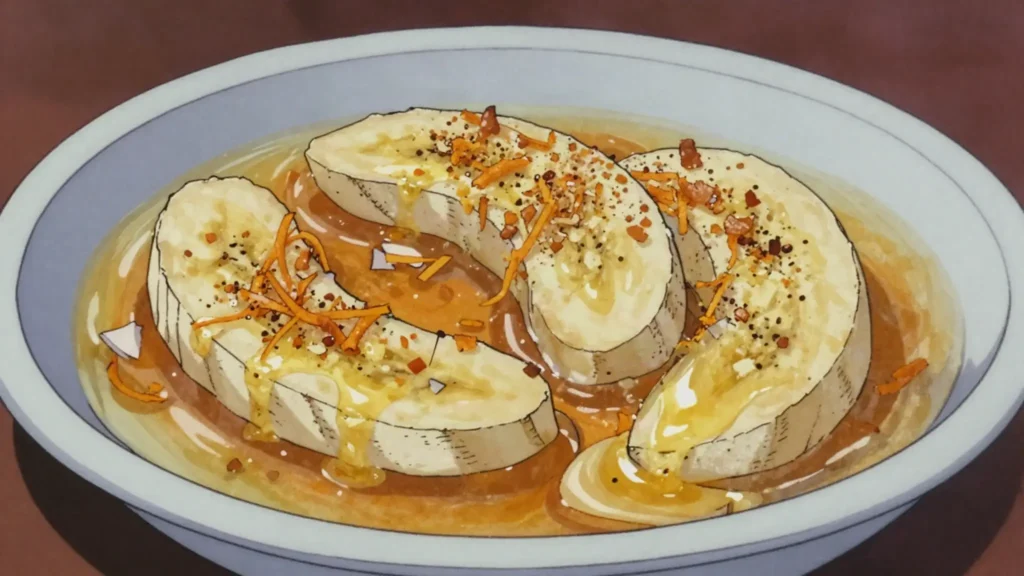
Akwadu is a dessert from Equatorial Guinea: baked banana with coconut and citrus.
How long does Akwadu take to make?
Akwadu takes 10 minutes of preparation and 25 minutes of cooking. The recipe makes serves 4. It is rated easy to make.
What can I substitute in Akwadu?
Yes, within limits. Ripe plantain replaces banana and gives a firmer result that holds its shape better. Desiccated unsweetened coconut replaces fresh; add a little coconut milk to make up for what it absorbs. Coconut oil replaces butter and reinforces the coconut flavour. Honey replaces sugar for a rounder sweetness. Lime replaces lemon; either supplies the acid the dish needs. A splash of rum, nutmeg or cinnamon are all common additions and none is required.
What is the most important thing to get right in Akwadu?
Crack a mature coconut by holding it over a bowl. Never chop at a coconut on a board, because it rolls and the knife slips. Grate the flesh out with a scraper or a box grater. Add a little coconut milk alongside it if you use desiccated. That compensates for what it takes up.