
Ingredients
The base
- 400 gfrozen unsweetened açaí pulp, in packets, broken up
- 1large banana, frozen in chunks
- 60 mlcold water or apple juice
- 1–2 tbspguaraná syrup or honey, to taste
On top
- 60 ggranola
- 1banana, sliced
- fresh fruit — mango, strawberry or kiwi
- 1 tbspdesiccated coconut
Directions
- Take the açaí pulp from the freezer and let it sit for 2 minutes, just long enough to break into pieces without thawing.
- Blend the açaí, frozen banana and the smaller quantity of liquid on high until it turns glossy and holds a peak, stopping to scrape down the sides. Add liquid a spoonful at a time only if the blades stall.
- Taste and sweeten. Unsweetened açaí is earthy and faintly bitter, and Brazilian bowls are sweetened with guaraná syrup rather than sugar.
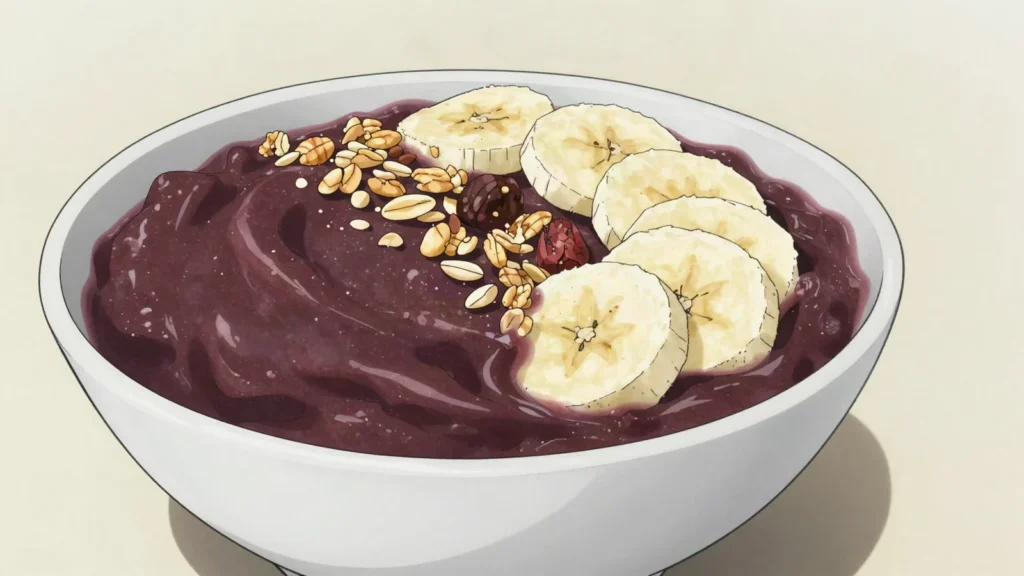
- Spoon into chilled bowls — the texture should be thick enough to stand a spoon in, closer to soft-serve than to a smoothie.
- Top with granola, sliced banana, fresh fruit and coconut, and serve at once before it slackens.
Technique
- Frozen pulp, not juice. Açaí juice or powder will not thicken and produces a drink rather than a bowl.
- Keep the liquid to a minimum: the single most common mistake is a runny bowl that separates within a minute.
- Chill the bowls. Açaí softens fast at room temperature.
Substitutions
- A tablespoon of almond butter thickens a bowl that has gone loose.
- Frozen mango or blueberry can replace some of the banana for a less sweet base.
Variations
- In Pará, where the fruit comes from, açaí is eaten unsweetened and savoury with fried fish and cassava flour.
- Açaí na cuia, served in a gourd bowl with tapioca pearls stirred through.
History
A thick, frozen purée made from açaí berries, a small dark fruit native to the Amazon rainforest, served in a bowl and topped with granola, banana and other fruit, documented across Brazil, particularly the Amazon region and later popularized nationally and internationally as a health-focused dish. Its base ingredient, açaí, was long consumed by Indigenous Amazonian communities and traditionally served in a savory form alongside fish and manioc flour in the Amazon region itself, a considerably different preparation from the sweetened, topped version that became popular in southern Brazilian cities like Rio de Janeiro from the late 1900s onward, particularly among surfers and the fitness community. Açaí na tigela remains one of Brazil’s most significant modern culinary exports internationally.
Frequently asked questions
What is Açaí na tigela?
Açaí na tigela is a snack from Brazil: frozen açaí blended thick, topped with granola and banana. A thick, frozen purée made from açaí berries, a small dark fruit native to the Amazon rainforest, served in a bowl and topped with granola, banana and other fruit, documented across Brazil, particularly the Amazon region and later popularized nationally and internationally as a health-focused dish. Its base ingredient, açaí, was long consumed by Indigenous Amazonian communities and traditionally served in a savory form alongside fish and manioc flour in the Amazon region itself, a considerably different preparation from the sweetened, topped version that became popular in southern Brazilian cities like Rio de Janeiro from the late 1900s onward, particularly among surfers and the fitness community. Açaí na tigela remains one of Brazil’s most significant modern culinary exports internationally.
How long does Açaí na tigela take to make?
Açaí na tigela takes 10 min of preparation and no cooking at all. The recipe makes 2 bowls. It is rated easy to make.
What can I substitute in Açaí na tigela?
Yes, within limits. A tablespoon of almond butter thickens a bowl that has gone loose. Frozen mango or blueberry can replace some of the banana for a less sweet base.
What is the most important thing to get right in Açaí na tigela?
Taste and sweeten. Unsweetened açaí is earthy and faintly bitter, and Brazilian bowls are sweetened with guaraná syrup rather than sugar.