
Ingredients
Chew
- 400 gcaster sugar
- 200 gglucose syrup
- 120 mlwater
- 30 gpowdered gelatine
- 100 mlcold water, to bloom
- 2 tsppineapple flavouring
- yellow food colouring
- 1 tspcitric acid
Coating
- 400 gmilk chocolate, chopped
Equipment
- a sugar thermometer
- a lined tin, about 20 cm square
- a dipping fork
- cornflour, for dusting
Note
- the commercial sweet is a branded product and this is an approximation
Directions
- Sprinkle the gelatine over the hundred millilitres of cold water. Stir it once and leave it for ten minutes. Do not add it to hot liquid without blooming it first. Put the sugar, glucose and the other water in a heavy pan. Stir it over a low heat until the sugar dissolves completely. Brush the sides of the pan down with a wet brush. Stop stirring once it is clear and turn the heat up.
- Keep children and pets out of the kitchen. Never touch it or taste it while hot. Boil it steadily to 118C, the soft ball stage. Take it off the heat the moment it reaches that. Higher and the finished sweet is too hard to chew. Melt the bloomed gelatine in a bowl over hot water.
- Pour the hot syrup into a stand mixer bowl. Let it cool for about two minutes. Pour in the melted gelatine with the mixer on low. Whip it for eight to ten minutes. It will turn from clear syrup to a thick pale opaque mass. Add the pineapple flavouring, citric acid and colouring.
- Whip for another thirty seconds to combine. The citric acid is what stops it tasting flatly sweet. Taste it carefully once it has cooled a little. Setting it takes several hours. Dust the lined tin with cornflour. Work quickly, since it stiffens as it cools. Dust the surface with more cornflour. Leave it at room temperature for at least four hours. Do not refrigerate it, which makes it weep.
- Turn the set slab out onto a cornfloured surface. Cut it into logs about four centimetres long. Oil the knife and wipe it between cuts. Toss the cut pieces in cornflour so they do not stick together. Let them sit uncovered for an hour to dry the surface. A dry surface takes the chocolate far better.
- Melt two thirds of the chopped chocolate over hot water to 45C. Take it off and stir in the remaining third. Stir until it cools to about 31C and the chocolate is smooth. Untempered chocolate sets dull and soft.
- Brush the excess cornflour off each piece. Drop it into the tempered chocolate. Lift it out with a dipping fork and let the excess drip off. Set it on baking paper to harden. Work in small batches so the chocolate stays in temper. Let them set at room temperature for an hour. They keep for about two weeks.
Technique
- This is a homemade approximation; the commercial sweet is a branded product with an unpublished recipe.
- Boil the syrup to exactly 118C, since higher gives a sweet too hard to chew.
- Temper the chocolate, or the coating sets dull and soft instead of cracking.
Substitutions
- Any good milk chocolate for the coating.
- Golden syrup in place of glucose, though the texture is softer.
Variations
- Coated in dark chocolate.
- Made with other fruit flavourings.
- Left uncoated, as a plain chew.
History
Created in the 1950s at the Regina confectionery factory in Oamaru, reportedly from surplus pineapple flavouring, and still a national souvenir.
Frequently asked questions
What is Pineapple Lumps?
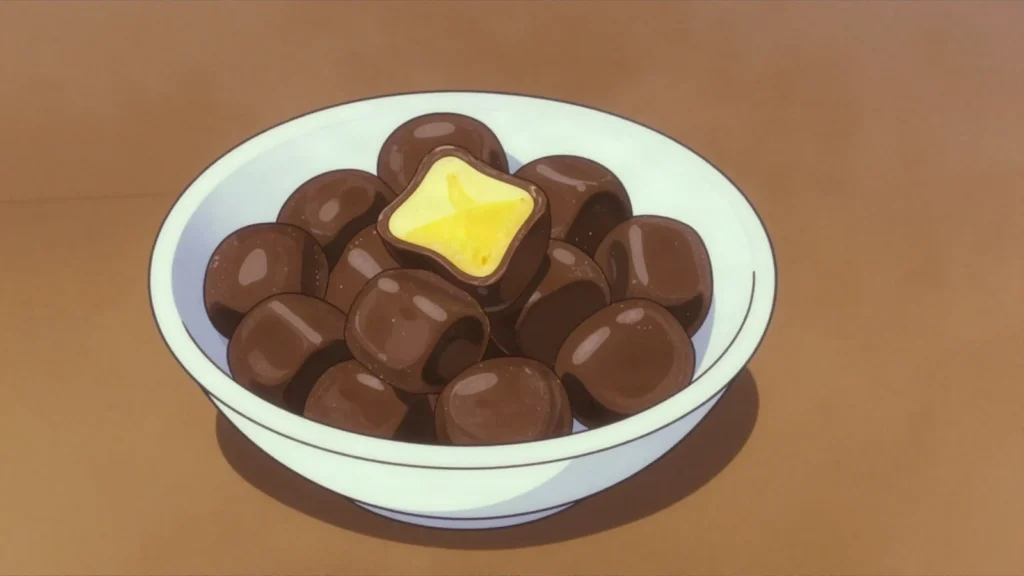
Pineapple Lumps is a snack from New Zealand: chewy pineapple-flavoured candy logs coated in chocolate, sold in yellow bags. Created in the 1950s at the Regina confectionery factory in Oamaru, reportedly from surplus pineapple flavouring, and still a national souvenir.
How long does Pineapple Lumps take to make?
Pineapple Lumps takes 30 min plus 4 hours setting of preparation and 20 min of cooking. The recipe makes about 40 pieces. It is rated hard to make.
What can I substitute in Pineapple Lumps?
Yes, within limits. Any good milk chocolate for the coating. Golden syrup in place of glucose, though the texture is softer.
What is the most important thing to get right in Pineapple Lumps?
Sprinkle the gelatine over the hundred millilitres of cold water. Stir it once and leave it for ten minutes. Do not add it to hot liquid without blooming it first. Put the sugar, glucose and the other water in a heavy pan. Stir it over a low heat until the sugar dissolves completely. Brush the sides of the pan down with a wet brush. Stop stirring once it is clear and turn the heat up.